
- U.S. Said Readying Suits Against Anthem, Aetna Insurer Deals (bloomberg.com)
U.S. antitrust officials are poised to file lawsuits to block Anthem Inc.’s takeover of rival health-insurer Cigna Corp. and Aetna Inc.’s deal to buy Humana Inc...Justice Department officials, who are responsible for protecting competition, are concerned that the deals, which would transform the health-insurance industry by turning its five biggest companies into three, would harm customers, according to several people familiar with the situation. While the companies may offer to sell assets to gain approval for the deals, that’s unlikely to sway antitrust officials...The final decision on whether to sue to block the deals could come this week or next, another of the people said. The companies could settle a lawsuit before or after one is filed...
- Medicare fraud investigators wary of soaring compounded drug prices (medcitynews.com)

Government spending on compounded drugs that are handmade by retail pharmacists has skyrocketed, drawing the attention of federal investigators who are raising fraud and overbilling concerns...Spending on these medications in Medicare’s Part D program, for example, rose 56 percent last year, with some of the costliest products, including topical pain creams, priced at hundreds or thousands of dollars per tube. The federal workers’ compensation program has also seen a recent spike in spending...The spending jump, along with a sharp increase in the number of patients getting the compounded drugs "may indicate an emerging fraud trend,"...
- 2016 national health spend to surpass $10K per person, total $2.7 trillion by 2025 (drugstorenews.com)

Between 2015 and 2025, according a new article in Health Affairs, growth in U.S. health spending is projected to increase about 5.8% on average — a number that surpasses growth in the gross domestic product by 1.3 percentage points. And in 2016...the...national health spending per capita will surpass $10,000 for the first time...Despite the cost per capita, aggregate national spending growth, Medicaid spending growth is expected to slow this year, to 5.3% from an average of 10.8% in 2014-2015, with an expected from in prescription spending growth to 4.9% from the 17.7% growth seen in 2015. Private payers will also see steady low spending growth of 4.9%, down from 5.1% in 2015. Medicare, on the other hand, is expected to see its spending growth rise this year to 5.2%, an increase from the 4.6% growth it saw last year...The report expects prescription drugs to have a smaller impact on health spending in the next 10 years than they did in 2014 and 2015, which it attributes to an expected drop in the number of approved new drugs, and the anticipated increase in availability of biosimilars.
- This Week in Managed Care: July 16, 2016 (ajmc.com)
This Week in Managed Care...Cate Douglass with The American Journal of Managed Care.
- Lawyers for Roche, Biocon trade contempt charges in Herceptin biosim case (fiercepharma.com)

A long-running court case filed in India by Roche seeking to prevent the use of label language by...Biocon and Mylan from claiming similarity to its aging breast cancer med Herceptin (trastuzumab) has turned tense--with both sides now seeking contempt-of-court charges...In the case of Roche...Biocon "violated a previous court order" temporarily barring any claims to similarity by using such language in a presentation at an international scientific conference on clinical trials with trastuzumab...At the same time, Biocon accused Roche of "disparaging statements" about the company as part of a campaign to block approval efforts for a trastuzumab biosimilar by Biocon in other countries...noting that Phase III trials are underway in the U.S. for a version of the breast cancer therapy...At the heart of the case is...that Biocon and...Mylan could not use the label biosimilar for versions of Roche's med.
- Pharma relying more on non-GAAP accounting and the SEC is noticing (fiercepharma.com)

Valeant Pharmaceuticals got chastised by the SEC this year for its use of non-GAAP (Generally Accepted Accounting Principles) accounting to make its performance look better than it might have actually been, one in a long list of issues that are dogging the company. But Valeant is far from the only pharma company playing a little loose with the rules and the trend is getting worse, even as investors and the SEC are watching more closely...GAAP accounting was developed so investors can get an apples-to-apples comparison of how companies are doing quarter to quarter and year after year. But some companies are not all that crazy that the rules make it harder to make themselves look good to investors. Companies have been using non-GAAP measurements, sometimes on individual line items, and the SEC has been taking note...the SEC updated guidance on the use of non-GAAP reporting, detailing how it should and--more importantly--shouldn’t be used...
- Gilead avoided nearly $10 billion in taxes last year thanks to tax dodges (statnews.com)
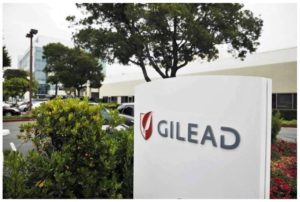
Thanks to a pair of pricey hepatitis C treatments, Gilead Sciences has become one of the world’s largest drug makers. Since 2013, revenues have tripled to more than $32 billion and profits grew sixfold, exceeding $18 billion. But beyond successful marketing of lifesaving medicines, the company has excelled in another way — using loopholes to avoid paying billions of dollars in taxes...By transferring certain key assets to Ireland, Gilead was able to take advantage of tax laws that allowed some US sales to be shifted overseas and yield a significantly lower tax rate. Those overseas profits, meanwhile, mushroomed to $28.5 billion, and Gilead was able to escape paying $9.7 billion in US taxes last year, according to a new report...
- Lax FDA Oversight Of ‘Compounded Drugs’ Is A Matter Of Life And Death (forbes.com)
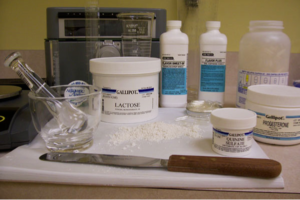
People naturally assume that the medicines prescribed by doctors are tightly regulated and have been approved by the Food and Drug Administration, but that’s not true. Loopholes in the regulations that set the standards for a practice called "drug compounding" have enabled dangerous products to injure and kill untold numbers of unsuspecting patients...FDA exempted compounding pharmacies from many of the manufacturing, labeling and other requirements other drugs are subject to...FDA does not require pharmacies to report adverse events associated with compounded drugs...the FDA has the authority to take action when compounding pharmacies violate the law and can act quickly if there is an "imminent hazard to public health," regulators have failed in several critical areas, including inspecting pharmacy records, enforcing quality standards and being able to identify the facility that made a particular drug...In order to create an acceptable risk-benefit paradigm for drug compounding, FDA needs to increase its scrutiny over compounding pharmacies. When a pharmacy is allowed to morph into a large-scale drug manufacturer without adequate oversight, it’s a matter of life and death.
- Missouri Law Protects Patients Against Ineffective Medications (pharmacytimes.com)

Patients in Missouri will no longer have to repeat ineffective medications... Step therapy is a cost-savings measure used by some insurers that requires patients to take different medications from what their health care provider prescribed before agreeing to cover the cost of the original medication... Missouri Governor Jay Nixon recently signed into law the "Step Therapy for Prescription Drugs" bill (HB 2029), which prohibits insurers from requiring patients to take medications they’ve already tried when they switch their coverage or change jobs, or if the medication is reclassified...Importantly, the law doesn’t ban the practice of step therapy altogether. It also doesn’t preclude insurers from having patients try a generic version of a medication. Rather, it prohibits insurers from going through step therapy more than once for a given medication...
- The Future of Connected Devices in Medication Therapy Management (specialtypharmacytimes.com)
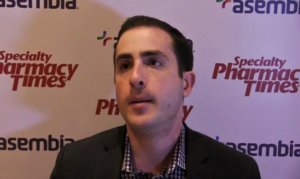
Josh Stein, CEO and co-founder of AdhereTech, discusses how technology can enhance the ability of specialty pharmacies to manage their patients' therapy regimen.