
- WSJ Op-Ed Calls for Including Pharmacists on Patient Care Teams (ashp.org)How to Make Hospitals Less Deadly (wsj.com)

A recent Wall Street Journal op-ed assessing ways to reduce medical errors in the U.S. strongly recommends including pharmacists on care teams. "How to Make Hospitals Less Deadly" by James B. Lieber notes that pharmacists’ extensive knowledge of medications offers an important barrier to common medical errors... "Doctors have only glancing knowledge of how an ever-multiplying number of drugs interact with diet, age, disease, body type and each other," he writes, pointing to a study that showed placing pharmacists in patient areas decreased errors by 45% and cut errors leading to death or severe harm by 94%..."Studies have long demonstrated that pharmacists have much to offer in terms of ensuring appropriate prescribing and optimal medication therapy outcomes," said ASHP CEO Paul W. Abramowitz, Pharm.D.
- The Plan to Avert Our Post-Antibiotic Apocalypse (theatlantic.com)

Under instructions from U.K. Prime Minister David Cameron, economist Jim O’Neill has spent the last two years looking into the problem of drug-resistant infections—bacteria and other microbes that have become impervious to antibiotics. In that time, he estimates that a million people have died from such infections. By 2050, he thinks that ten million will die every year...The problem of drug-resistant microbes isn’t just about biology and chemistry; it’s an economic problem at heart, a catastrophic and long-bubbling mismatch between supply and demand. It’s the result of the many incentives for misusing our drugs, and the dearth of incentives for developing new ones...The scope of that problem is clear in O’Neill’s final report...resistance is not futile...O’Neill’s report includes ten steps to avert the crisis.
- improve sanitation
- global surveillance network
- reduce the unnecessary use of antibiotics in agriculture
- better, faster, cheaper diagnostic tools
- public-awareness campaign
- promoting effective alternatives like vaccines
- improve the numbers, pay and recognition of people working in infectious disease.
- market-entry rewards
- global innovation fund for early-stage research
- build a global coalition
- This Week in Managed Care: May 21, 2016 (ajmc.com)
Justin Gallagher, associate publisher of The American Journal of Managed Care. Welcome to This Week in Managed Care, From the Managed Markets News Network.
- Pharmacy Week in Review: May 20, 2016 (pharmacytimes.com)

Mike Glaicar, Business Development: Pharmacy Times...(PTNN) This weekly video program provides our readers with an in-depth review of the latest news, product approvals, FDA rulings and more.
- France faults Bial and Biotrial over fatal drug trial (reuters.com)

Portuguese drugmaker Bial and French laboratory Biotrial are at fault "on several counts" for a failed drug trial that left one person dead and five others hospitalized in January, French Health Minister Marisol Touraine said...All trials of the drug, designed to treat mood and anxiety issues as well as coordination disorders linked to neurological issues, have since been suspended...The victims were given the experimental drug made by Bial during a phase one trial at a private facility in Rennes, Brittany, run by France's Biotrial...A final investigation report confirms that the conditions under which the test was approved did not breach existing legislation...Inspectors consider, however, that Bial and Biotrial are responsible on several counts; regarding the dosage prescribed (...) and the time taken to alert authorities...An initial inquiry in February had already established that Biotrial had been too slow to react when the first subject became sick...
- Genentech accused again of cheating health care providers (statnews.com)

Yet another health care provider is accusing Genentech of fudging the amount of the Herceptin medicine that the company provides in each vial, causing the facility and many other hospitals to overpay for the pricey treatment...the Comanche County Memorial Hospital filed a lawsuit alleging that Genentech...shortchanges hospitals by placing less of the breast cancer medication in vials, or alternatively, misrepresenting the amount of the drug that must be mixed in a solution. Under either scenario, the lawsuit contends providers would unnecessarily be forced to purchase additional vials...Genentech maintains that its medicine comes in vials as a freeze-dried powder, which must be mixed with a liquid. But the hospitals and health care providers contend that the resulting solution yields less than the amount claimed by the drug maker...
- Hiring Hurdle: Finding Workers Who Can Pass a Drug Test (cnbc.com)

Ray Gaster, the owner of Gaster Lumber & Hardware who says the company is always short of drivers and that drug testing is part of it...
...the heavy-equipment manufacturer JCB held a job fair in the glass foyer of its sprawling headquarters near here, but when a throng of prospective employees learned the next step would be drug testing, an alarming thing happened: About half of them left...That story still circulates within the business community...But the problem has gotten worse...All over the country, employers say they see a disturbing downside of tighter labor markets as they try to rebuild from the worst recession since the Depression: They are struggling to find workers who can pass a pre-employment drug test...That hurdle partly stems from the growing ubiquity of drug testing, at corporations with big human resources departments, in industries like trucking where testing is mandated by federal law for safety reasons, and increasingly at smaller companies...employers' difficulties also reflect an increase in the use of drugs, especially marijuana — employers' main gripe — and also heroin and other opioid drugs much in the news...Data on the scope of the problem is sketchy because figures on job applicants who test positive for drugs miss the many people who simply skip tests they cannot pass...
- Governor Sandoval announces prescription drug abuse summit (kolotv.com)
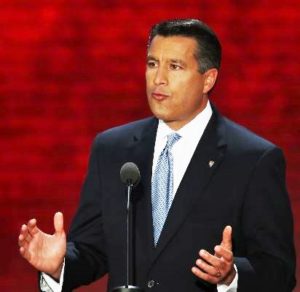
Governor Brian Sandoval and First Lady Kathleen Sandoval have announced they will host a State Summit on Prescription Drug Abuse in June 2016. The summit will provide the opportunity for the First Lady’s Drug Abuse Prevention Task Force and subsequently the Multidisciplinary Prevention Advisory Committee to update the community on existing laws put into place as a result of the 78th Legislative Session and Nevada’s Strategic Prescription Drug Abuse Prevention Plan...This Summit will bring together all stakeholders as well as community advocates and leaders in a united effort to eradicate this growing epidemic and create safe and livable communities...The Summit will focus on four priority topics:
- Duties and responsibilities of healthcare licensing boards
- Overview of current coordination and opportunities for expanded collaboration with local, state and federal law enforcement
- Review of existing rehabilitation practices and substance abuse treatments
- Cooperation and oversight for private sector issues, including sale and availability of pharmaceuticals
- Vermont poised to become first state to require pharma to justify pricing (statnews.com)

Vermont could become the first state in the country to require drug makers to justify price hikes on their medicines, a move that may prompt others to take similar action but also spark a battle with the pharmaceutical industry...A bill that would force companies to explain their pricing recently passed the legislature, but must still be signed by Governor Peter Shumlin…The development comes amid mounting furor over prescription drug costs. Several states have responded by proposing legislation that requires drug companies to either reveal their costs or explain their pricing. These demands reflect industry arguments that rising prices reflect rising R&D costs...Transparency is the first step in getting prices under control...I don’t think this bill will lower prices next year, but hopefully it will get other states to pass similar laws and pressure Congress to act...Some companies will resist turning over this information because it looks at the most important business metrics that they don’t want to share with the world...the language in the bill is troublesome, because it is "virtually impossible" to comply with what he described as an "open-ended" requirement for companies to provide all of the relevant information and documents to justify price hikes.
- Former pharma exec headed to trial on kickback allegations (statnews.com)

- Between 2009 and 2012, W. Carl Reichel allegedly orchestrated a campaign to give doctors money, free meals, and phony speaking fees in exchange for prescribing medicines sold by Warner-Chilcott, where he had been the president of the pharmaceutical division...he goes on trial in what is expected to be a closely watched case in the pharmaceutical industry. That’s because the case marks one of the relatively few instances in which federal prosecutors have sought to hold a high-ranking executive from a drug maker accountable for such activities...drug company executives have faced penalties for illegal activities. Notably, three former executives at Purdue Pharma pleaded guilty in 2007 to misleading the public about the risk of addiction posed by the OxyContin painkiller. They were also banned from any dealings with federal health care programs...such instances are relatively rare...In the Reichel case, the feds allege that he developed and oversaw an illegal strategy to boost prescriptions for several drugs, including the Actonel osteoporosis treatment and the Doryx acne medicine. Among the charges: Reichel provided sales reps with unlimited expense accounts in order to wine and dine doctors, and he suggested targeting doctors who were already frequent prescribers, according to the indictment...He faces no more than five years in prison, three years of supervised release, and a fine of $250,000.