
- VA scandal: Average wait times up to 71 days for care (fiercehealthcare.com)

GAO report also finds inconsistent wait times at individual hospitals...Two years after a nationwide scandal prompted an investigation, unacceptably long wait times persist at Veteran Affairs facilities...An audit by the Government Accountability Office found the VA's method of calculating wait times often conceal the actual time it takes before a patient sees a clinician...The report found that according to the most generous estimate, the official VA wait times underestimate wait times by a factor of two...This report proves what we've long known: wait-time manipulation continues at VA and the department's wait-time rhetoric doesn't match up with the reality of veterans' experiences," said House Veterans Affairs' Committee Chair Jeff Miller, according to the Washington Post. "But given the fact that VA has successfully fired just four people for wait-time manipulation while letting the bulk of those behind its nationwide delays-in-care scandal off with no discipline or weak slaps on the wrist, I am not at all surprised these problems persist."
- Theranos wasn’t ‘forthcoming’: business school professors (cnbc.com)Theranos CEO 'devastated' amid lab testing issues (cnbc.com)Theranos Adds SEC Investigation to Blood Test Scrutiny (bloomberg.com)
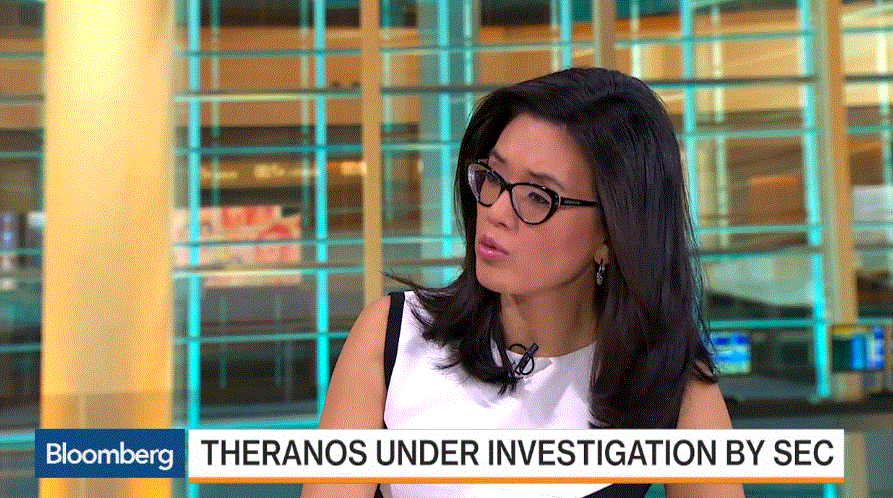
Blood-testing start-up Theranos took a number of management missteps that led to its most recent tangle with health regulators...For several months, federal health regulators have raised concerns about the accuracy of the company's blood-testing technology...the Centers for Medicare and Medicaid Services threatened to impose stiff sanctions on the company — including a ban that could prohibit Theranos CEO Elizabeth Holmes from owning or running a lab for at least two years...Theranos has never been forthcoming about its test results...If Theranos is ultimately sanctioned, however, it could spell out the company's demise...
- California lawmaker wants to allow supervised heroin use (kolotv.com)

A lawmaker wants to allow California addicts to use heroin, crack and other drugs at supervised facilities to cut down on overdoses, joining several U.S. cities considering establishing the nation's first legal drug-injection sites...The proposal...comes as San Francisco, Seattle, New York City and Ithaca, New York, weigh ordinances to set up the facilities, citing the success of a site operating in Canada since 2003...law enforcement has opposed the move in California, saying it will worsen addiction. And lawmakers seemed reluctant to support it, postponing a committee vote...The bill from Democratic Assemblywoman Susan Talamantes Eggman would make it legal for local and state health departments to allow the use of controlled substances in clinics that would offer medical intervention...Supporters say the facilities would reduce deaths and transmissions of HIV and hepatitis C...
- Glaxo probing bribery accusations in Yemen (statnews.com)
GlaxoSmithKline is conducting an internal investigation into allegations that its subsidiary in Yemen hired government employees to influence purchasing decisions and boost sales of its medicines...more than a half-dozen Glaxo employees allegedly have also held various paid positions...at the government health ministry. The allegations are similar to those made two years ago concerning its operations in Iraq..."GSK has received allegations about staff conduct in Yemen and is investigating them thoroughly,"...The drug maker is currently being investigated by the US Department of Justice and the US Securities and Exchange Commission for potential violations of the Foreign Corrupt Practices Act. The UK’s Serious Fraud Office is also investigating Glaxo for possible criminal violations of the Bribery Act...
- Painkiller critics take aim at hospital surveys, procedures (hosted.ap.org)Joint Commission Statement on Pain Management (jointcommission.org)

Critics of how prescription painkillers are administered in the U.S. are calling on health officials to phase out hospital procedures and questionnaires used to manage pain...They say the current system inadvertently encourages the overprescribing of addictive drugs like Vicodin and OxyContin, fueling an epidemic of overdoses tied to the opioid medications. Deaths linked to misuse and abuse of prescription opioids increased to nearly 19,000 in 2014, the highest figure on record, according to the Centers for Disease Control and Prevention...More than five dozen nonprofit groups and medical experts sent a letter...to the Joint Commission, a nonprofit agency that accredits U.S. hospitals, asking it to revisit its standards for pain management...The letter specifically takes issue with guidelines instructing doctors to ask patients to assess their pain...Aggressive management of pain should not be equated with quality health care as it can result in unhelpful and unsafe treatment...a bipartisan group of senators introduced legislation that would eliminate the connection between pain survey questions and the payment rates hospitals receive from Medicare.
- Nurofen maker deserves $6m fine for false claims, court told (theguardian.com)

The Australian consumer watchdog says manufacturer Reckitt Benckiser profited substantially and should be fined accordingly...Nurofen’s manufacturer Reckitt Benckiser should be fined $6m for misleading consumers over a range of “targeted” pain products that cost twice as much as its standard painkillers despite all products in the range having the same active ingredient and effect, the Australian Competition and Consumer Commission has found...the federal court found the British company...had engaged in “misleading conduct” by representing that its Nurofen Specific Pain products targeted a type or area of pain despite being identical, and ordered they be removed from supermarket shelves...There needs to be some serious taking away of profit...Targeted painkillers zero in on one vital organ – the wallet...Nurofen did not set out to mislead consumers. Nurofen has cooperated with the ACCC in relation to these proceedings and will fully comply with the court order….
- Pfizer delay, alleged price gouging earns wrath of British watchdog (fiercepharma.com)

In case anyone thought it was just the U.S. where pharma has been accused of hiking prices, the U.K. has been quick to remind everyone it happens across the pond as well, after hitting Pfizer with a £10,000 ($14,100) penalty this week...What for? Technically, because it was late to submit documents demanded by the country’s Competition and Markets Authority --but in reality, this all revolves around one thing: pricing, and this is just the warm up act ahead of the watchdog’s bigger decision this fall--which could see Pfizer with a fine in the billions of pounds...in September of that year (2012) the drug (phenytoin sodium) lost its patent, and Pfizer sold it to Stevenage...while several other drugmakers also sold their generic versions. Cue a massive spending hike: the NHS paid £50 million for the drug in 2013, and £40 million in 2014. This left the pricing watchdog scratching its head: aren’t generics supposed to be cheaper?...The CMA is still sifting through all the documents and will come to a decision in August on whether Pfizer did abuse its market position. The maximum fine for this is a far more substantial 10% of its global turnover--which would work out as $4.89 billion based on last year’s revenues.
- America’s biggest health insurer UnitedHealth bails on Obamacare, citing big losses (washingtonexaminer.com)

UnitedHealth, the largest health insurer in the United States, is planning a widespread exit of the Obamacare market due to mounting losses from participating in the program...the Obamacare market has continued to show high risk...Next year we will only remain in a handful of states...UnitedHealth lost $425 million last year due to Obamacare...though United is the most prominent insurer to announce widespread exit from Obamacare, there has been a broader trend of participating insurers struggling to turn a profit...The program has suffered from lower-than-expected enrollment, particularly among younger and healthier customers who are necessary to offset the costs of covering older and sicker enrollees. If insurers start to exit, it will mean less competition, which will drive already rising premiums up even further.
- The FDA Wants Pharma to Ditch its Archaic Drug Making Process (fortune.com)

The old process is slow and prone to errors...The process of biopharmaceutical drug manufacturing is stuck in the past. And the Food and Drug Administration is now openly calling for drugmakers to spring it forward into the 21st century..."batch" manufacturing technique used by the industry to an archaic relic...batch manufacturing in pharma involves regular breaks between spurts of production. Continuous manufacturing is usually a persistent, unbroken process wherein production plants keep humming... continuous manufacturing is more reliable...the (FDA) agency’s pioneering decision last week to approve Johnson & Johnson biotech arm Janssen’s request to switch over from batch to continuous manufacturing for the production of the HIV drug Prezista. And now, regulators are declaring outright that other biopharma players should "consider similar efforts."
- Pharmacy Week in Review: April 15, 2016 (pharmacytimes.com)

Mike Glaicar, Business Development: Pharmacy Times...(PTNN) This weekly video program provides our readers with an in-depth review of the latest news, product approvals, FDA rulings and more.