
- Teva Said to Seek Fast EU Approval for Allergan Unit Bid (bloomberg.com)

Teva Pharmaceutical Industries Ltd. will try to win an early European Union approval for its takeover of Allergan Plc’s generics unit by making concessions to regulators this week...Teva and Allergan will meet a deadline to propose remedies aimed at allaying any EU antitrust concerns...If EU regulators are satisfied with the proposals, they could clear the transaction without an extended probe that can last about 90 working days. The companies plan to close the deal by the end of March...Teva’s $40.5 billion cash-and-stock bid for Allergan’s generics drugs business will make it the world’s largest maker of generic medicines, giving it greater negotiating power with governments and private-health insurers. Allergan will receive a $1 billion termination fee from Teva if the deal fails to close due to regulatory issues.
- Congressman Heck pushing for EMS to continue to use controlled substances (kolotv.com)
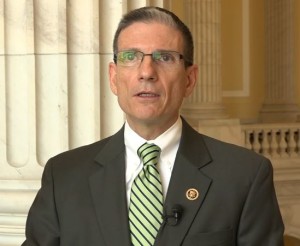
Representative Joe Heck, Nevada's 3rd district
A Nevada Congressman is pushing to make sure emergency medical teams retain the ability to administer life-saving medicine in the field. Congressman Joe Heck says the Drug Enforcement Agency wants certain drugs to be used only in hospitals, because of fears over the accountability of controlled substances and how they are administered. Heck says paramedics should be able to do the job they’re trained to do...current law states that medical directors can create standing orders that apply to emergency situations. If a patient meets certain criteria, a substance can be administered in the field...He says the DEA wants to take that ability away from paramedics, saying they can no longer use controlled substances, even under these standing orders from medical directors. Heck says this will hinder a paramedic’s ability to give quality care to a patient. He says this is an issue especially in rural areas, where a patient could be in an ambulance for a long time without proper care..."There’s a way to make sure that we can ensure the accountability of these controlled substances while still allowing the paramedics to administer these life-saving materials...this bill will specify the protocol for a physician creating a standing order. The bill also says standing orders must be made available for Attorney General Loretta Lynch at her request...
- With drug costs rising, it’s time for pharma companies to open their books (statnews.com) Budget of the United States Government, Fiscal Year 2017 (whitehouse.gov)

For years, drug makers have argued that the rising prices of prescription medicines reflect, in part, the rising costs of discovery and development...Buried inside the White House budget proposal released last week is language (on page 62) that would require drug makers to publicly disclose various data, including research and development costs. The administration hopes to use the information as part of a plan to negotiate lower prices for the Medicare drug program, known as Part D...Obama joins a growing list of lawmakers seeking transparency in order to understand drug pricing...From California to Massachusetts, state legislators have proposed bills that would force drug companies to open their books so the public can see how much is spent to develop, manufacture, and market new medicines. Just last month, New York Governor Andrew Cuomo included a disclosure demand in his own state budget proposal...Whether these efforts will succeed is unclear. Drug makers have been lobbying aggressively to defeat the bills and, indeed, in many states the legislation has stalled.
- Burwell says HHS is considering ‘march-in’ on skyrocketing drug prices (fiercepharma.com)

Last month, a group of lawmakers urged the National Institutes of Health and the U.S. Department of Health and Human Services to take "extraordinary" action to fight rising drug prices. HHS Secretary Sylvia Burwell responded this week that her agency got the lawmakers' message and is considering rolling out new guidelines to counter skyrocketing prices...The...letter from Doggett and his colleagues asked HHS to issue guidelines for "march-in rights" to address "price gouging" by pharma companies. March-in-rights give the agency the power to skirt patent protections for pricey meds developed with federal funding, effectively opening them up to generic competition...HHS has never used this tactic since the law was enacted in 1980, contending that it is an "extraordinary remedy" that should only be rolled out in extreme situations...Congressional reps contend that the recent price hikes, some of which have run to 5,000%, constitute immediate grounds for action by the agency. "Too many families and providers are facing an extraordinary challenge from unreasonably priced pharmaceuticals" and "too many drugs are not 'available to the public on reasonable terms," the lawmakers said in their letter.
- Community pharmacy reforms (rpharms.com)
Changes to community pharmacy in 2016/17 and beyond...In a letter to the Pharmaceutical Services Negotiating Committee...the Department of Health and NHS England announced there would be a...reduction in funding through the community pharmacy contractual framework...this reduction in funding will have a substantial impact on pharmacy business owners, their employees and locums...it was announced that funding...would be cut by at least 6%, equating to £170 million ($242 million); lowering the funding available through the community pharmacy contractual framework from £2.8 billion ($4 billion) to £2.63 billion (3.75 billion). It is anticipated these changes will take effect in October 2016...Alongside the cut in funding...further changes that the Government would like to see, including:
- To better integrate pharmacy into the wider primary care and community health system – such as closer working with GP surgeries, care homes and urgent and emergency care departments - so that patients can benefit from pharmacists’ clinical skills through a "Pharmacy Integration Fund".
- A "Pharmacy Access Fund", which would provide more NHS funds to certain pharmacies compared to others, considering factors such as location and the health needs of the local population.
- The potential for automation and centralising dispensing to provide efficiencies. Also, in some areas, the distribution and number of pharmacies does not match local patients' needs.
- The view of the Government that patients would like to order prescriptions online and that "click and collect" and delivery options would be easier to arrange.
- More College Students Misusing ADHD Med as Study Aid (realclearhealth.com)
College students aiming for an academic edge may explain a surge in the misuse of a stimulant commonly prescribed for attention-deficit hyperactivity disorder...Among U.S. adults, the number of Adderall prescriptions stayed stable from 2006 to 2011, but misuse of the drug jumped 67 percent and related visits to emergency rooms went up by 156 percent...The majority of adults who are using Adderall nonmedically are in the age range of 18 to 25...The researchers speculate that college students may prefer Adderall over the other stimulants because it increases two brain chemicals linked with better cognitive functioning and has a reputation for making people smarter...Many students mistakenly believe these drugs will make them smarter and more efficient at studying, so in their view the risk is worth the reward...because Adderall can improve focus, it may also give some students an unfair advantage, thus constituting academic dishonesty...
- Indonesia clears decks for foreign API manufacturers

The administration of Indonesian President Joko Widodo has cleared the decks for foreign firms to own 100% of active pharmaceutical ingredient operations....Indonesia's three largest pharmaceutical companies are the biggest importers of raw materials and the change is expected to help them meet soaring demand as the country widens access to medical insurance...The change in foreign investment restrictions could help reduce the reliance on importing raw materials used to make drugs...domestic industry needs investments of more than $1 billion to cut dependence on imports of APIs and related raw materials...
- Report calls out weak FDA stance on medical device cybersecurity, favors stronger regulation (healthcareitnews.com)Assessing the FDA's Cybersecurity Guidelines for Medical Device Manufacturers: Why Subtle 'Suggestions' May Not Be Enough (icitech.org)

...the Institute for Critical Infrastructure Technology, a bipartisan collaborative meant to bridge the gap between federal agencies and private-sector leaders in the interest of protecting the nation's technology backbone, claims recent guidance from Food and Drug Administration for device makers falls way short...In practically all matters of cybersecurity within the health sector, the FDA seems to be in a constant state of offering subtle suggestions where regulatory enforcement is needed..."Assessing the FDA's Cybersecurity Guidelines for Medical Device Manufacturers: Why Subtle 'Suggestions' May Not Be Enough," knocks the agency for failing to implement enforceable regulations for manufacturers...It may be beneficial to healthcare providers, healthcare payers, and legislators to petition the FDA to make the guidelines regulatory. Otherwise, medical device manufacturers could ignore the guidelines altogether...
- DEA Reaches $8 Million Settlement Agreement with CVS for Unlawful Distribution of Controlled Substances (dea.gov)

CVS Pharmacy, Inc. has agreed to pay $8 million to the United States to resolve allegations that its Maryland pharmacies violated the Controlled Substances Act by dispensing controlled substances pursuant to prescriptions that were not issued for a legitimate medical purpose...According to the settlement agreement, CVS acknowledged that between 2008 and 2012 certain CVS pharmacy stores in Maryland dispensed controlled substances, including oxycodone, fentanyl and hydrocodone, in a manner not fully consistent with their compliance obligations under the CSA and related regulations. This included failing to comply with a pharmacist’s liability to ensure the controlled substance prescriptions were issued for a legitimate medical purpose. This settlement caps off an investigation that began as part of the DEA’s crackdown on prescription drug abuse in Maryland..
- Dreaded U.S. FDA Form 483s in the spotlight in China (fiercepharmaasia.com)
While much of the news in recent months on warnings issued by the Food and Drug Administration centered on alerts issued to Indian pharmaceutical manfacturers, active pharmaceutical ingredient and drug manufacturers in China have also received their own set of alerts under the FDA's Form 483 regime, according to a report by the Regulatory Affairs Professionals Society... 41 pharmaceutical manufacturing sites in China and 5 in Hong Kong are currently included on the agency's import alert list and are banned from shipping drugs to the United States, compared to the 42 sites listed as banned in India...RAPS found that in 2015 more than 80 Form 483s were issued to Chinese manufacturers after 132 inspections...the FDA conducted 203 inspections at Indian facilities...Some of the findings of the FDA reports include data manipulation at several companies where computer files were altered or deleted, missing logbooks, contamination issues and other serious failures in good manufacturing practices...