
- China ingredient maker’s plant found in ‘devastated state’ by authorities (fiercepharmamanufacturing.com)

China, which manufactures most of the ingredients for Western products, has a reputation for having some pretty questionable manufacturing operations. Czech inspectors got a firsthand look at one plant that they said posed "extreme risks" to consumers...According to two reports on the plant posted by the European Medicines Agency, authorities dropped by the Huanggang City facility of Hubei Hongyuan Pharmaceutical in October after the plant had been mentioned as an intermediate manufacturing site for the antibiotic metronidazole. The company acknowledged in its introduction that the site didn't follow EU GMP standards, the report says. During a walk-through, inspectors confirmed that...They said they found a plant in a devastated state, with "huge layers of dust and product" that indicated that neither the plant nor the equipment was being cleaned or that equipment was being maintained. It was noted the situation posed "an extreme risk of cross-contamination." Additionally, almost none of the products that they saw had been labeled and there was no batch manufacturing documentation...Western authorities have stepped up inspections of Chinese plants, both of those owned by Chinese companies and those owned by Western drugmakers, and found problems in both cases.
- FDA slaps Pfizer’s Hospira unit for ‘misleading’ YouTube ad (fiercepharma.com)

In the first enforcement action from the FDA's marketing police this year, the Office of Prescription Drug Promotion put Hospira in the hot seat over a YouTube video for its sedative Precedex (dexmedetomidine)...The OPDP sent an untitled letter dated Jan. 14 to the Pfizer-owned company, charging the video "omits risks and material facts" about the drug. The agency also rebuked Hospira for publishing the promotional video without submitting it to the OPDP for review...The letter orders Hospira to "cease violating the FD&C Act, as described," and submit a written response before Jan. 29. The response should include a plan for "discontinuing use of such violative materials," the letter states.
- Senate Panel Punts on Big Medical Bill (morningconsult.com)
The Senate will not put forth a comprehensive medical innovation bill that would be a companion measure to the House’s 21st Century Cures bill. Instead, lawmakers are opting to work on several smaller bills that have bipartisan support. In recent weeks, aides said committee members hit partisan snags when discussing a bigger bill...The Health, Education, Labor, and Pensions Committee will hold three separate markups, deliberating a few “easier” bills in February to “get our sea legs on working on bipartisan FDA/NIH bills,” according to a senior GOP committee aide. The overall goal of the committee’s work will be to accelerate the development and approval of new medical cures...The House passed its 21st Century Cures bill last summer. Energy and Commerce Chairman Fred Upton guided the bill to a 344-77 passage on the floor, but HELP Committee Chairman Lamar Alexander has long said the Senate would produce its own version...Both chambers’ goals overlap, including giving the National Institutes of Health additional funding and reforming drug approvals at the Food and Drug Administration.
- Venezuela needs urgent foreign medical aid, pharma group says (reuters.com)

With scores of medicines in short supply due to a severe financial squeeze, Venezuela is suffering a "humanitarian crisis" and requires rapid international assistance, according to a major pharmaceutical association...The Venezuelan Pharmaceutical Federation (Federación Farmacéutica Venezolana) listed 150 medicines, from those for hypertension to cancer, as well as basics such as prophylactics and antibiotics, which are scarce in the OPEC nation of 29 million people..."The national government must accept we are in a humanitarian crisis in the health sector, with patients dying across our territory for lack of medicines," said association president...The health ministry did not respond to a request for comment on the pharmaceutical association's statement, but Venezuela's socialist government has bristled at criticism of its health system...It accuses local groups of exaggerating problems and says the widespread shortages in Venezuela - of food as well as medicines - are due to an "economic war" by foes...Long lines form daily outside pharmacies, and doctors and patients constantly complain of lack of medicines and equipment.
- Levaquin users slap J&J with $800M RICO suit, claiming pharma giant hid serious side effects (fiercepharma.com)
Johnson & Johnson is facing yet another lawsuit over its antibiotic Levaquin from people who claim that the company hid serious side effects. The latest legal action comes a couple of months after an FDA panel flagged serious problems associated with the entire class of antibiotics and voted to change the meds' labels...Five plaintiffs allege in a new suit that J&J and its Janssen unit deliberately mislabeled and misbranded Levaquin (levofloxacin), playing down harmful side effects for its own financial gain. The plaintiffs sued J&J and others--including former FDA commissioner Margaret Hamburg--under the federal Racketeer Influenced and Corrupt Organizations act, a law typically used to prosecute organized crime. "These concerted efforts resulted in significant harm and/or death to consumers of Levaquin, including plaintiffs," according to the suit...The plaintiffs are seeking more than $120 million in compensatory damages and more than $750 million in punitive damages to drive home "the seriousness of their egregious conduct and to deter similar conduct in the future."...The latest suit marks another chapter in J&J's Levaquin saga. The company has encountered thousands of lawsuits over the past several years from plaintiffs claiming that it did not adequately warn patients about the drug's dangers.
- 5 Accused of Stealing Drug Secrets From GlaxoSmithKline (nytimes.com)

Federal prosecutors in Philadelphia said on Wednesday that they had indicted five people, including two research scientists, on charges of stealing trade secrets about drugs to treat cancer and other diseases from GlaxoSmithKline...the two scientists, Yu Xue and Lucy Xi, worked at Glaxo’s research facility in Upper Merion, Pa., and emailed and downloaded confidential data about a dozen or more company products to associates who planned to sell and market the trade secrets through a company they set up in China, called Renopharma...to conceal their crime, Ms. Xue and two other associates, Tao Li and Yan Mei, agreed to put the proceeds in the name of Ms. Xue’s twin sister...who was also charged. Ms. Xi worked with Ms. Xue at Glaxo and was married to Mr. Mei...the defendants boasted that their company, based in Nanjing, had received some financial support and free laboratory space from the government and that its ultimate goal was to develop its own antibody drugs.
- Junior doctors suspend industrial action (bma.org.uk)
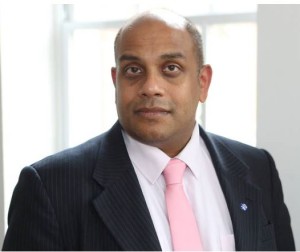
Johann Malawana, BMA junior doctors committee chair
The BMA today decided to suspend a second period of industrial action by junior doctors planned for next week...Tens of thousands of trainees in England were due to provide emergency care-only cover for 48 hours, beginning next Tuesday...the association decided to halt the action while conciliation talks between the BMA, NHS Employers and the Department of Health continue...BMA junior doctors committee chair Johann Malawana said while differences still existed between the two sides in the contracts dispute, the association’s focus was on building on the initial progress made...He added: ‘It is important to be clear, however, that differences still exist between the BMA and the Government on key areas, including the protection of patient safety and doctor’s working lives and the recognition of unsocial hours. Significant, concrete progress will need to be made if future action, currently planned for 10 February, is to be averted.’
- U.K. competition watchdog targets pharma for ‘substantial fines’ (fiercepharma.com)
Look out, pharma: Britain's competition watchdog is coming for you....The U.K.'s Competition and Markets Authority is planning to levy "substantial fines" this year, marking a "big step up in the scale and impact" of its enforcement activity, Alex Chisholm, head of the agency, told the Financial Times. And one of those fines will likely be directed at a pharma company...The CMA has been probing drugmakers including GlaxoSmithKline and Pfizer for alleged wrongdoing. "In high-value markets with big players, they should face big fines,"...For Pfizer, though, a resolution could still be a ways off. In August, the CMA accused the drugmaker and partner Flynn Pharma of running afoul of U.K. and European laws by jacking up costs for their epilepsy drug...The pair charged "excessive and unfair prices"...the CMA said at the time, raising costs by as much as 2,600%. Regulators plan to hand down a decision in the case in about three months..."While businesses are generally free to set prices as they see fit, those that hold a dominant position have a special responsibility to ensure that their conduct does not impair genuine competition and that their prices are not excessive and unfair,"...
- Express Scripts sued by compounding pharmacies for alleged antitrust practices (statnews.com)

For the second time since Express Scripts began blocking coverage of hundreds of ingredients used to make compounded medicines, several compounding pharmacies have filed a lawsuit accusing the pharmacy benefits manager of using illegal tactics...In the latest instance, a half-dozen compounding pharmacies have charged Express Scripts with violating antitrust laws and is attempting to force them out of business...Express Scripts has taken “a series of unreasonable restrictions and rules that would make it impossible for [the compounding pharmacies] to fill prescriptions” for patients “and obtain reimbursements that would cover their costs,”...The company and the other benefits managers “employed tactics designed to ensure that the compounding pharmacy industry …cannot survive.”...The move to cut back on covered ingredients has riled compounding pharmacies...the Food and Drug Administration has cracked down on compounding pharmacies by increasing the number of inspections, and, in rare cases, taking legal action to halt allegedly unsafe practices. The justifiable emphasis on safety has forced many compounding pharmacies to enhance operations...The compounding pharmacies are striking back. In November 2014, three others filed a lawsuit claiming Express Scripts illegally blocked legitimate prescriptions and unfairly forced patients to seek more expensive medicines or simply not seek treatment. The pharmacies maintained the benefits manager violated federal law because it lacks authority to essentially alter terms of health plans.
- Samsung and Biogen win first EU approval for an Enbrel copycat (fiercebiotech.com)Samsung Bioepis Enters the European Biopharmaceutical Market with Benepali®, the First Fusion Protein Biosimilar Approved by the European Commission (finance.yahoo.com)

A joint venture between Biogen and South Korean giant Samsung won Europe's first approval for a lower-cost version of Amgen and Pfizer's blockbuster Enbrel, planning to launch its injection in the coming weeks...The two companies, doing business as Samsung Bioepis, convinced European regulators to clear their Benepali for all of Enbrel's approved indications, including rheumatoid arthritis, psoriatic arthritis, spondyloarthritis and plaque psoriasis…As for Amgen...believes its hold on Enbrel's U.S. rights will keep it safe from a biosimilar challenge in the coming years. In 2011, Amgen secured new patents related to the antibody that the company says will protect the treatment from competition through 2029. Novartis, leading the charge among Enbrel biosimilars developers in the U.S., is hoping to win approval for its version of the treatment this year while mounting a legal challenge on those patents.