
- Merck to pay $830M in Vioxx securities lawsuit (cnbc.com)

Merck...said it would pay $830 million to settle a federal class action lawsuit involving allegations the company failed to adequately inform investors about heart risks from its now-recalled Vioxx (rofecoxib) pain medication....The drug...became a blockbuster product...But the company in 2004 recalled Vioxx from the market after a colon-polyp prevention study showed it more than doubled the risk of heart attacks or stroke after 18 months of use...After thousands of former users of Vioxx sued Merck, claiming they had been harmed by the drug, Merck in 2008 settled most remaining product-liability lawsuits for $4.85 billion...other litigation continued, including a multi-district class action lawsuit...Merck kept investors in the dark about negative data from earlier company-sponsored trials of the medicine...The company's cash payment for the settlement and fees will be about $680 million...company said it still faces other individual securities lawsuits related to Vioxx.
- Drug Diversion in the 340B Program (pharmacytimes.com)
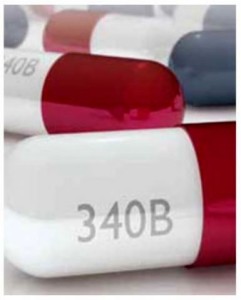
Section 340B of the Public Health Service Act requires drug manufacturers participating in the Medicaid Drug Rebate Program to sign an agreement...This...limits the price that manufacturers may charge certain covered entities for covered outpatient drugs...Drug diversion in the program is defined as a 340B drug being provided to an individual who is not an eligible outpatient of that entity and/or dispensed in an area of a larger facility that is not eligible (eg, an inpatient service or a non-covered clinic)...in 2013 that 94 audits were underway, which included 700 outpatient facilities and 1930 contract pharmacies. During these audits, drug diversion, duplicate discounts, and ineligible sites/providers were the common areas of noncompliance... Noncompliance to 340B program impacts patients’ bottom line because the more diversion that occurs, the more drug manufacturers increase prices for both public and private insurers, leading to an increase in rates and charges to patients. If HRSA were able to enforce 340B regulations and audit all hospitals on a continual basis, there would be fewer cases surrounding duplicate discounting, drug diversion, and ineligible site/providers...The 340B Program is in desperate need of stronger controls and more audits. Through proactive monitoring of drug inventory and dispensing, 340B drug diversion would decrease, leading to a decrease in drug spending.
- Nevada State Board of Pharmacy, Newsletter – January (bop.nv.gov)

- Flash News! -Governor Brian Sandoval appointed Darla Zarley to the Board...reappointed Kirk Wentworth and Leo Basch
- Senate Bill 459 - Effective October 1, 2015, this bill addresses three primary topics: (1) the mandatory use of the Nevada PMP ( Prescription Monitoring Program) by prescribers, (2) the Good Samaritan
Drug Overdose Act (GSDOA), and (3) next-day reporting to the PMP database. - Discontinue Use of Chen Shwezin Sterile Drug Products, FDA Warns
- Seven Persistent Safety Gaffes in Community/Ambulatory Settings That Need to Be Resolved! (final article of a three-part series): 6. Compounded Pain Creams: High Profit Margin and Danger; 7. Clear Care: Still Causing Severe Eye Injuries Five Years Later
- Risk of Dose Confusion and Medication Errors With Avycaz, FDA Cautions
- US Compounding, Inc, Recalls All Lots of Sterile Compounded Products
- FDA Investigates the Risks of Using PainMedicine Tramadol in Young Patients
- Decreased Potency Reported in Drugs Stored in Becton-Dickinson Syringes
- MediStat Pharmacy Issues Recall of Sterile Drug Products
- DEA Number for Residents Working at a Hospital
- 2015 Pharmacist Renewal Update! - Nevada had another successful year with pharmacist renewals.
- Providers slam CMS proposal meant to curb drug abuse (modernhealthcare.com)

Providers are urging the CMS to drop a proposal aimed at combating prescription drug abuse. They say mandating a review of state-run drug prescription databases could lead to inaccurate information and would be an administrative burden for them. They also say frequent prescription changes might reveal a lack of coordination among providers, not drug abuse...As part of a proposed rule on changes to discharge plans, the CMS suggested mandating that providers consult a patient's history on their respective state's prescription-drug monitoring program. The goal is to identify a patient's risk of nonmedical use of controlled substances by tracking substance-use disorders...“Requiring their use for all patients would overwhelm current systems and make it impossible for them to focus on the true at-risk groups they are intended to serve”...the required use of the PDMP for all patients will slow down the discharge process unnecessarily without adding value for patient care...Under the proposed rule, first announced in a November overhaul of the discharge process for hospitals, rehabilitation facilities and home health agencies, providers would be required to develop a discharge plan within 24 hours of a patient's admission or registration. They would have to complete that plan before the patient is discharged.
- FDA faulted for failure to track safety issues with drugs already on market (statnews.com)
Most Americans assume that drugs approved by the Food and Drug Administration are safe to take as directed. But safety concerns often arise only after the drugs go on the market, when companies or doctors tell the FDA about cases of patients who have fallen ill or died from their medications...a federal watchdog agency said the FDA is failing to sufficiently track and publicly disclose instances in such cases...Government Accountability Office investigation...raises...concerns about the FDA’s oversight. It expresses particular concern about the lack of tracking of drugs cleared under two expedited approval programs, which account for about one-quarter of all medicines permitted to go on the market...investigators also criticized the FDA for failing to post quarterly reports listing certain potential safety issues that it has identified. Despite a statutory requirement that it do so, last year FDA posted no reports at all in its tracking system...FDA lacks fundamental resources and leadership in ensuring that drugs brought quickly to market are truly safe and effective,”...“If FDA is shifting more of the safety risk to consumers by allowing fewer and shorter clinical trials on expedited drugs, adequate tracking of drug safety issues and review of post market studies are absolutely vital.”...The backlog of postmarket data has been a recurring problem at the FDA...
- Nevada Health Link records 77,411 enrollees, topping previous enrollment period (reviewjournal.com)

Two days ahead of a key signup deadline, the federal government released new enrollment numbers for Nevada's health insurance exchange...Nevada Health Link had 77,411 enrollees on Wednesday, the Department of Health and Human Services reported...That means the exchange has already bested the 72,000 enrollees that bought coverage through the marketplace in all of 2015's open-enrollment period...The department said the latest numbers include existing customers who were automatically re-enrolled, though officials didn't break down how many enrollees were new versus returning...Consumers who haven't bought coverage by Jan. 31 face a federal tax of 2.5 percent of household income, or $695 per adult and $347.50 per child up to a household maximum of $2,085 — whichever is higher.
- CIOs celebrate end to meaningful use, want more details on future programs (healthcareitnews.com)Andy Slavitt puts meaningful use on ice; Read his J.P. Morgan speech transcript (healthcareitnews.com)
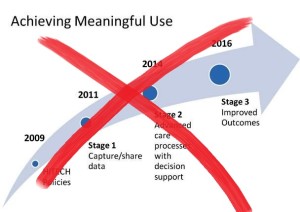
Some execs say easing off of the requirements will allow providers to focus more on innovation...Healthcare chief information officers breathed a sigh of relief on Tuesday when Andy Slavitt said the end of the meaningful use program was near. But many are waiting on the details before celebrating too much...The acting administrator of the Centers for Medicare and Medicaid Services Andy Slavitt said in a speech at the J.P. Morgan Healthcare Conference that meaningful use would be replaced with a more streamlined regulatory approach in line with the merit-based alternative payment models of the Medicare Access and CHIP Reauthorization Act of 2015...“The early stages of meaningful use took the country from ‘zero to 60' in five years, a remarkable achievement that would not have been possible without HITECH,”...“Now, it's time for the new payment model that rewards providers for achieving better health outcomes to be the driver of innovation, using the new electronic infrastructure that is now in place. That was the vision for ‘Phase 3’ from the very beginning.”..."It's truly unfortunate, but I'm not surprised,”...“The lack of alignment in Washington, varied interpretations by our industry and its vendors, and the resulting and inefficient ‘MU clicks,’ as termed and borne by our physicians have led down this path."...“The sad part of it all is that MU was designed with best intentions yet fated by regulation and political interests,”...
- Compounding Pharmacy Forced to Stop Production Due to Insanitary Conditions (specialtypharmacytimes.com)Federal judge enters consent decree against Downing Labs (fda.gov)FDA sues to stop a wayward drug compounder (statnews.com)
Compounding pharmacy Downing Labs LLC (formerly known as NuVision Pharmacy), its co-owners, and its pharmacist-in-charge have been issued a consent decree of permanent injunction...The Texas-based company is allegedly in violation of current good manufacturing practice requirements under the Federal Food, Drug, and Cosmetic Act...Downing Labs is accused of manufacturing and distributing adulterated drugs that were made in insanitary conditions, meaning they were bad enough to endanger public health...“Despite multiple warnings to the company, Downing Labs continued to manufacture injectable drugs under insanitary conditions, putting the health and safety of patients at risk,”...“The FDA pursued appropriate and aggressive action to protect the public health.”...Downing Labs said it has worked "collaboratively and cooperatively” with the FDA to reach an agreement that will enable it to resume the production of compounded sterile medication...also noted that, as part of the consent decree, it voluntarily agreed to participate in a regular program of testing, audit, and inspection “to ensure it is achieving and exceeding its quality goals.”
- State measures to slash drug prices face big hurdles (statnews.com)

When shopping for a good deal, people usually want the same bargain as the next guy. And a group of AIDS activists is taking this approach in hopes of containing the rising cost of prescription drugs...In California and Ohio, they’re pushing ballot measures that would require state programs — such as Medicaid or prison systems — to pay no more for medicines than the Department of Veteran Affairs... “The goal [ballot initiatives] is to obtain lower prices, as well as gain more transparency on industry pricing, which is opaque,” said Ged Kenslea of the AIDS Healthcare Foundation...“And we’re hoping these will serve as a catalyst to other organizations or state legislators to enact similar measures in other states.”...well-intentioned, the effort may be somewhat quixotic...“These state initiatives might save a fistful of money in the short term and the first states where they are passed will get most of the benefit,”...“But the companies will find a way to compensate. So it isn’t likely to solve the problem in the long run.”...Still, the state initiatives may yet lead to change, if only because a groundswell of citizen-driven ballot measures might just force lawmakers to pay attention. In the end, getting a better deal might only be a vote away.
- FDA castigates China’s Zhejiang Hisun for ‘systemic data manipulation’ (fiercepharmamanufacturing.com)

A Chinese drugmaker that has a joint venture with Pfizer to produce generic drugs and plans to separately make biosimilars, has been savaged by the FDA in a warning letter for serious data manipulation and shipping to the U.S. products that repeatedly failed follow-up testing by customers...A warning letter posted by the FDA today shows why the agency last September decided to ban products coming out of the Zhejiang Hisun Pharmaceutical plant in Taizhou City. "We observed systemic data manipulation across your facility, including actions taken by multiple analysts, on multiple pieces of testing equipment, and for multiple drugs,"...its concerns over data manipulation were "heightened by the significant number of customer complaints for subpotency and out-of-specification impurity levels the company received from 2012-2014." There were more than 60 complaints for impurity problems...The FDA said the explanations that Zhejiang Hisun Pharmaceutical gave for why data was deleted and raw data was no longer available were completely inadequate, as were the responses to other issues. It said it will continue to prevent the company's products from coming into the U.S. until the agency is satisfied with the steps the drugmaker has taken to bring up its manufacturing standards and can convince the FDA that its test data is authentic.