
- 2015: Another Strong Year for Patients in Need of New Drug Therapies (blogs.fda.gov)Novel New Drugs Summary 2015 (fda.gov)
 I’m (John Jenkins,Director of the Office of New Drugs) pleased to report another strong year for FDA approvals of novel new drugs, which offer many patients new treatment options for serious and life-threatening conditions. In 2015, FDA’s Center for Drug Evaluation and Research approved 45 novel new therapies – significantly more than the average of 28 we have approved during the previous nine years of this decade...During this past year, we approved many new drugs to treat various forms of cancer, including four to treat multiple myeloma, and others to treat lung, skin, breast, brain, colorectal, and other cancers. We also approved new drugs to treat heart failure, high cholesterol, cystic fibrosis, and irritable bowel syndrome, as well as the first approved reversal agent for a commonly-used blood thinner...Here are a few highlights of these approvals:
- More than one-third of the novel new drugs CDER approved in 2015 were identified by FDA as “first-in-class,” for example, drugs that use a new and unique mechanism of action for treating a medical condition;
- More than 40% of these new therapies were approved to treat rare or “orphan” diseases that affect 200,000 or fewer Americans–Americans who often have few or no drug treatment options;
- 60% of CDER’s novel new approvals for 2015 were designated in one or more categories of Fast Track, Breakthrough, Priority Review, or Accelerated Approval. Each of these designations helps speed the development and/or approval process and is designed to help bring important medications to the market as quickly as possible; and
- 64% of CDER’s novel new approvals were approved first in the United States before any other country.
- Drug approvals at 19-year high belie industry challenges (reuters.com)
2015 was a good year for innovation in medicine with the Food and Drug Administration approving 45 novel drugs, four more than in 2014 and the most since the all-time record of 53 set in 1996...the European Medicines Agency recommended 93 new products, including generics, up from 82 in 2014...the prospect for further progress in 2016, the pharmaceuticals industry faces challenges, with increased political focus on drug pricing having punctured both biotech and specialty pharma valuations in recent months...The rapid pace of new approvals reflects accelerated review times by regulators, who want to get life-saving treatments to patients, especially in cancer, as well as an improved scientific understanding of diseases...Full drug pipelines at many companies suggest the strong rate of new drug launches is likely to continue for a while yet, with IMS Health forecasting a total of 225 new drug approvals between 2016 and 2020.
- Critics continue pounding 21st Century Cures Act for threatening patient safety (fiercehealthcare.com)The last word: Will 21st Century Cures Act harm patient safety? (medicaleconomics.modernmedicine.com)21st Century Cures: What You Need to Know (energycommerce.house.gov)
Opponents argue that drugs, devices will be less safe if legislation eases FDA approval rules...Opponents of the 21st Century Cures Act, which is intended to accelerate the transfer of scientific advances in genetics into treatment for patients, say the legislation will threaten patient safety by easing FDA rules intended to protect patients from unproven therapies...Critics argue looser FDA rules will result in drug approvals without the level of rigorous testing currently required...new drugs and medical devices will be less safe and effective and cost more, and that the bill sacrifices long-term value to public health.
- KaloBios, formerly led by Shkreli, files for bankruptcy (finance.yahoo.com)

After Shkreli arrest, 2 drugmakers are upended, 1 seeking bankruptcy protection...KaloBios, the troubled drugmaker taken over by Martin Shkreli last month, is seeking bankruptcy protection less than two weeks after his arrest for securities fraud...It is the second pharmaceutical company with ties to the former hedge fund manager now in turmoil following his indictment on charges unrelated to his involvement with them, though the drugmakers are not lacking for problems of their own...Turing Pharmaceuticals Inc., is cutting jobs and seeking a new CEO after Shkreli resigned the position because of his arrest...Trading in KaloBios shares has been suspended for two weeks and it was notified one week ago that it would be delisted from Nasdaq because of Shkreli's arrest, as well as the arrest of the company's outside counsel...In a Chapter 11 filing...with the U.S. bankruptcy court...the company listed assets and liabilities in the range of $1 million to $10 million...KaloBios' largest creditors include the University of Miami, Ernst & Young and Lonza Sales Ltd.
- Oregon greenlights pharmacist-prescribed birth control (upi.com)How Oregon Pharmacists Are Prescribing Birth Control (pharmacytimes.com)

Pharmacists in Oregon are now permitted to prescribe birth control pills to qualifying women as part of a wave of new state laws for 2016...Oregon is the first U.S. state to put such a law into effect, with California reportedly looking to follow suit...A doctor's approval is no longer needed for a supply of pills, although experts urge women not to overlook preventative health care in the form of doctor visits...having birth control accessible through a pharmacist doesn't mean preventative health care isn't important...women over age 18 will still be required to fill out a health questionnaire trained pharmacists will use to determine whether to write a prescription. Pharmacists are reportedly still free to refuse prescriptions for religious reasons, but must refer a customer somewhere else.
- Data Breaches In Healthcare Totaled Over 112 Million Records In 2015 (forbes.com)Top Pharmacy Chains Revealed as Repeat HIPAA Violators (pharmacytimes.com)
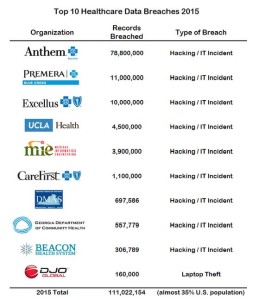
Healthcare’s “wall-of-shame” for 2015 officially ends tonight at midnight. It’s not really a “wall,” it’s just a website, but it’s the online mechanism for the Office of Civil Rights under Health and Human Services to publish data breaches as reported to them and required by HIPAA. The numbers this year are just staggering...According to OCR, there were 253 healthcare breaches that affected 500 individuals or more with a combined loss of over 112 million records...The Top 10 data breaches alone accounted for just over 111 million records that were lost, stolen or inappropriately disclosed...A recent data breach study estimates that breaches cost the healthcare industry about $5.6 billion annually. As healthcare moves toward connected care, the amount of data exchanged between organizations will only grow. So what does this mean? It means that in 2016, we’re going to see a huge movement towards encryption in hospitals and other healthcare facilities in order to protect EHRs and other vulnerable PHI...Healthcare IT security will continue to fall further and further behind the rest of the industry verticals despite the increase in spending on technology and human resources. The industry is focusing on functionality for patient care and security is an afterthought. Many organizations are also overly dependent on antiquated hardware and software...I wish we could look back on 2015 as the year that healthcare took data security and patient privacy more seriously...In a data-driven world, medical information is just too lucrative and too easy to steal at scale. As long as that’s the case...we should reasonably expect more of the same for 2016.
- Commonwealth Fund releases its 2015 state-by-state health system scorecard (healthcareitnews.com)Aiming Higher - Results from a Scorecard on State Health System Performance (commonwealthfund.org)
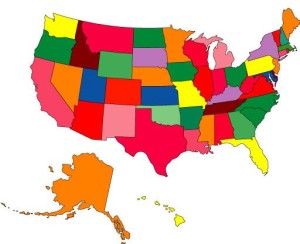 The good news? More states improved than worsened...The Commonwealth Fund has released "Aiming Higher," its 2015 scorecard measuring the performance of health systems state by state...Forty-two indicators are examined to arrive at the scores, measuring rates of children or adults who are uninsured, hospital patients who get information about how to handle their recovery at home, hospital admissions for children with asthma and breast and colorectal cancer deaths, among many others...The top states? Minnesota, Vermont, Hawaii, Massachusetts, Connecticut, New Hampshire and Rhode Island...Louisiana, Tennessee, Kentucky and Oklahoma ranked in the bottom quartiles, but they were among those that improved on the greatest number of indicators... key findings:
- There are wide variations in performance, with up to an eightfold difference between top- and bottom-ranked states.
- National attention may be encouraging better quality of care in hospitals and home health care settings and to more appropriate medication use in nursing homes and doctor's offices. However, declining rates of preventive care in several states signal the need for greater attention to prevention.
- Reductions in hospital readmissions accelerated in 2012, when the federal government began financially penalizing hospitals with high rates of readmissions. Rates of potentially preventable admissions to the hospital continued to fall in several states.
- California Set To Allow Birth-Control Pills Without Prescription (losangeles.cbslocal.com)California Law To Allow Pharmacists To Prescribe Birth Control (npr.org)

California is set to become one of the first states where women can get birth control from a pharmacist without a prescription with the goal of reducing unwanted pregnancies...Proponents of the new law say it will give younger women easier access...But doctors like gynecologist Kathleen Valenton have concerns...“I think that’s very dangerous,” she said, since pharmacists cannot perform health screenings, including STD checks...Many of the details of the law are still being worked out in Sacramento. It is set to take effect in March.
- Your health records are supposed to be private. They aren’t. (washingtonpost.com)
The federal law that protects health information is violated often and easily, and it's hardly ever enforced...After spending the past year reporting on loopholes and lax enforcement of the Health Insurance Portability and Accountability Act, the federal patient-privacy law known as HIPAA, I’ve come to realize that it’s not just celebrity patients who are at risk. We all are...I’ve talked to hundreds of people who say their medical records were hacked, snooped in, shared or stolen...In each story, a common theme emerged: HIPAA wasn’t working the way we expect. And the agency charged with enforcing it, the HHS office for civil rights, wasn’t taking aggressive action against those who violated the law...We all know HIPAA... It’s what requires us to stand behind a line, away from other customers, at the pharmacy counter or when checking in at the doctor’s office...It is used to scare health-care workers, telling them that if they improperly disclose others’ information, they could pay a steep fine or even go to jail...But in reality, it is a toothless tiger...And even though the civil rights office can impose large fines, it rarely does: It received nearly 18,000 complaints in 2014 but took only six formal actions that year. A recent report from the HHS inspector general said the office wasn’t keeping track of repeat offenders, much less doing anything about them...Making matters worse, HIPAA does not allow patients to sue health providers for damages if they violate the law. So if the federal government doesn’t enforce the law, there are often no consequences for breaking it...Moreover, the government needs to write regulations to implement provisions of a 2009 law that would give patients whose privacy has been violated a share of the money HHS recovers. Finally, the government has yet to submit to Congress a report due in 2010 with recommendations for how to deal with the privacy of health information not covered by HIPAA.
- Cadila Healthcare shares plunge after FDA warns of violations (reuters.com)

Cadila Healthcare Ltd (Zydus Cadila)has received a U.S. Food and Drug Administration warning letter for violating manufacturing standards at two of its production facilities, the latest in a series of Indian companies to face such action....The warning letter cites issues with Cadila's plants in Gujarat, including at the Moraiya facility, which makes up about 60 percent of the company's total sales in the United States, its largest market...Dozens of Indian drug plants have faced warnings and bans in recent years, as the FDA improved inspections of foreign facilities. More than 40 percent of the generic and over the counter medicines available in the United States comes from Indian facilities such as Cadila's Moraiya plant...Cadila Managing Director Pankaj Patel told analysts...the FDA, during an inspection of the Moraiya plant...found deficiencies with the way the company investigated market complaints about a medicine made there...The company is working on a response to the warning letter and will then ask the FDA to reinspect both facilities...It has 15 days to respond to the FDA, as per standard procedures, after which the FDA will decide its response including whether to impose an import ban.