
- Headaches for Reckitt over charges of misleading claims for OTC painkillers (fiercepharmamarketing.com)
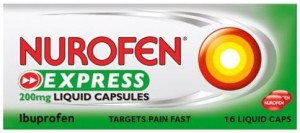
Reckitt Benckiser executives may need some of the company's own pain meds this week. First in Australia and now in the U.K., the drugmaker is being taken to task over misleading claims for its painkiller Nurofen...Australia, a judge ordered four "different" kinds of Nurofen pulled from store shelves. While each product has a different name targeting a different pain--Nurofen Back Pain, Nurofen Period Pain, Nurofen Migraine Pain and Nurofen Tension Headache--each had the exact same active ingredient and at the same strength, 342 mg of ibuprofen lysine...Meanwhile, in the U.K., Reckitt is under investigation for TV advertising for its Nurofen Express, charged with making inaccurate claims that "the product directly targets muscles in the head," and that it works more quickly than standard ibuprofen...This is not the first time Reckitt has been charged with making misleading Nurofen claims; in 2012, the Australian government ordered one of its TV ads withdrawn. The ad included the "misleading" claim that Nurofen "goes straight to the pain" together with "imagery of the medicine ascending from the neck to the head," according to the filed complaint.
- DEA eases requirements for natural cannabis-derived drug research (reuters.com)
Drug Enforcement Administration...relaxed some restrictions on research evaluating cannabidiol, an extract of the marijuana plant, for medicinal use...The modifications will ease some requirements imposed by the Controlled Substances Act on possession of cannabidiol (CBD) for a specific Food and Drug Administration approved research protocol...researchers who expanded the scope of their studies and required more CBD than initially approved had to request, in writing... the changes...a previously registered CBD clinical researcher who is granted a waiver can readily modify the protocol and continue research seamlessly. (waiver effectively removes a step from the approval process)...A handful of companies are developing cannabis-derived drugs. Pioneering the effort is Britain's GW Pharmaceuticals, which is slated next year to deliver the results of four late-stage U.S. studies of its botanical pot-based epilepsy treatment...INSYS Therapeutics Inc and Zynerba Pharmaceuticals Inc are working on much earlier stages of development with synthetic cannabis for a number of disorders.
- Drug costs soar as China tops world ranking in cancer (fiercepharmaasia.com)The Children of China's Cancer Slum: Drug Costs Putting Young Lives at Risk (bloomberg.com)

Jingjing at her home in Hefei /Bloomberg
As World Health Organization figures show China rising to the top of the list of countries with the most cancer cases, its people are facing increasing problems in trying to find ways to pay for their treatments. Healthcare costs are soaring in the nation despite the government's efforts to force drug prices lower...China spends $115 billion on pharmaceuticals annually, but stubbornly high prices mean some are having to make life-and-death decisions...China's cancer crisis takes an estimated 2.2 million lives each year...and the trials and tribulations of its people are exacerbated by the lack of insurance...cancer patients pay anywhere from 80% to 120% of U.S. prices for foreign medicines and also pay up to 77% of all private healthcare costs...China claims that it covers 95% of the healthcare coverage for its citizens, but costly foreign drugs for cancer treatments are often not covered. The country is undergoing a massive reorganization of its healthcare system that is expected to cost upward of $460 billion and is trying to cut drug costs and improve insurance coverage...China's efforts to slash spending on drugs is having a perverse effect on its public hospitals which rely on drug sales to add to their operating revenues.
- Lawmakers ask GAO to review FDA oversight of Asian drug plants (statnews.com)Bipartisan Committee Leaders Enlist Government Watchdog On FDA’s Foreign Inspection Program (energycommerce.house.gov)
Concerned about the quality of the pharmaceutical supply chain, several congressional lawmakers want the US Government Accountability Office to review Food and Drug Administration oversight of foreign manufacturing plants...In a letter...members of the House Energy and Commerce Committee asked the GAO to assess the progress the FDA has made inspecting foreign facilities since the agency undertook a new "risk-based" approach in 2010. They noted the United States imports more than $52 billion in medicines each year, but that "many of these products come from countries with less sophisticated regulatory systems."...The lawmakers went on to note that there’s a "history" of counterfeiting, adulteration, substandard manufacturing, and data falsification over the past 20 years in China and India, specifically. As a result, they suggest there may be "inadequate oversight" and an "unequal playing field" compared with US drug makers that are subject to "more frequent and rigorous inspections."...The FDA has begun working with the Indian government to bolster domestic oversight...India’s drug makers have bristled at the attention paid by the FDA to ongoing shortcomings, which have prompted the agency to issue a steady stream of import alerts that ban products from being shipped to the United States.
- Big Pharma’s steady double-digit price hikes cost Medicare billions (fiercepharma.com)Medicare drug costs rose sharply in 2014 (statnews.com)Medicare Drug Spending Dashboard 2014 (cms.gov)The CMS Blog: Medicare Drug Spending Dashboard (blog.cms.gov)
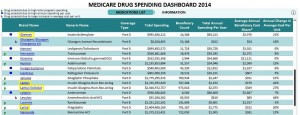
Sanofi, Pfizer, Novartis and peers ratchet up prices on blockbuster meds to reap big sales gains…a new report from the Center for Medicare and Medicaid Services puts some numbers to that claim. They won't resolve the debate over which price increases are "justified," but they do highlight some commonly used meds whose sales growth (grew)--and Medicare spending--depends more on rising prices than on rising demand.
- Vimovo...price hike at 543% for 2014... boost helped send spending on the drug up past $38 million from just over $7 million in 2013…patients using the drug only grew by 8%.
- Targretin...unit cost rose by 123% last year, to $145.65...CMS shelled out $73.5 million, more than double its 2013 spending…increase in patients of just 12%.
- CMS laid out $1.725 billion for Lantus last year, a $400 million increase year-over-year despite a 6% decline in patient count.
- CMS spent another $2.02 billion for Lantus Solostar, an increase of almost $700 million, or about 50% year-over-year...patient growth amounted to 13%.
- Gleevec sent CMS' unit costs up by 21% last year, to $179.93...that pushed spending per user to $69,212. The number of patients using the drug ticked upward by 5%...spending on the drug grew by 28%, to almost $1 billion.
- Lyrica...up in price...about 20%...to $4.28 per pill. Medicare spent $1.4 billion on the drug in 2014, up from just over $1 billion in 2013...patients grew by 7%.
When Sanofi, Pfizer and Novartis were raising their prices...they were fighting to fill patent-cliff sales gaps and scrambling to refill their pipelines of prospective new drugs. They were also spending billions on R&D--and on stock buybacks, dividends and other shareholder-friendly moves. Horizon and Valeant, by contrast, aren't big R&D spenders; Valeant, at least, has defended its price hikes as necessary to deliver returns to shareholders.
- Health insurance exchange enrollment strong ahead of deadline (reviewjournal.com)

More than 72,600 Nevadans signed up for a Nevada Health Link plan between Nov. 1 and Saturday, according to the U.S. Department of Health and Human Services....That's more than double the 35,000 enrollees who had selected a plan by this time in 2014...Consumers had to have a plan in place by Dec. 17 to qualify for coverage that would begin on Jan. 1, but they have until Jan. 31 to buy insurance and avoid a federal tax for lacking coverage. The tax in 2016 will equal 2.5 percent of household income, or $695 per adult and $347.50 per child up to a household maximum of $2,085 — whichever is higher...Nearly 70 percent of Nevada's exchange enrollees can find plans for $75 a month or less after tax credits...
- New FDA policy gives its staff wide latitude on social media. Could pharma freedom follow? (fiercepharmamarketing.com)

Tweet at will, FDA employees. One of the most liberal social media policies in the federal government now belongs to the FDA. Just last month, the FDA finally set out its own departmental policy that encourages its scientists and other employees to use "social media technologies to enhance communication, collaboration, and information exchange in support of FDA's mission to protect and promote public health."...While many would argue that the guidelines for pharma and other medical regulated products on social media outlined so far by the FDA have had a chilling effect on the industry's social media use, especially Twitter, its own FDA employee guidelines should have quite the opposite effect...
- Study: Florida’s Crackdown On ‘Pill Mills’ Is Working (forbes.com)

State officials have been cracking down on Florida’s "pill mills" over the past five year to prevent pain clinics from dispensing large quantities of prescription opioids to residents without following proper protocol–and their efforts seem to be paying off...a new study revealed that approximately 1,029 fewer people in Florida lost their lives to prescription opioid-related overdoses over a 34-month period than would have had the Sunshine State not targeted pill mills beginning in 2010...State officials passed new laws in 2010 and 2011 to curb opioid abuse, misuse and overdose in the state by establishing greater oversight over pain clinics. "These laws prohibited on-site dispensing of most prescription narcotics, prohibited advertising and increased criminal penalties for doctors and clinic owners involved drug diversion,"..."In addition, state and local law enforcement collaborated with the DEA to enforce these new laws, arresting pill mill owners, physicians and other staff, and seizing assets."...The study’s authors believe Floridians are less likely to become addicted to heroin because people are less likely to abuse prescription opioids, mainly due to the fact that they aren’t readily available in the state.
- Nevada ranks 38th in nation for overall health (rgj.com)
According to an annual report from the United Health Foundation, Nevada is ranked 38th in the U.S. when it comes to health...Nevada’s rank in 2014 was 39, so the state has improved over the past year. Here are some snapshots of how Nevada compares to national numbers for health-related topics:
- In Nevada, 17 percent of people smoke compared to the 18 percent national average.
- Drug deaths are significantly higher in Nevada, with 22.4 overdose deaths per 100,000 people compared to a 13.5 death average nationally.
- Nevada is average when it comes to the inactivity of adults. 22.5 percent of adults in Nevada are physically inactive compared with 22.6 nationally.
- Infant mortality is lower in Nevada, with 5.1 deaths per 1,000 live births compared to the 6 national average.
- In Nevada, 27.7 percent of adults are obese compared to the national average of 29.6. For diabetes, 9.6 percent of Nevadan adults have diabetes compared to 10 percent nationwide.
- For children’s vaccinations, 67.7 percent of children in Nevada are immunized compared to 71.6 nationally.
The top five healthiest states in the nation, according to the report, include Hawaii, Vermont, Massachusetts, Minnesota and New Hampshire
- The continuing adventures of the “Wolf of Pharma Street”; Analysis: Shkreli Isn’t to Blame For High Drug Prices in U.S (nbcnews.com)
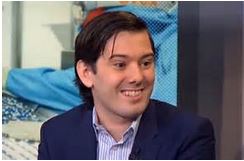
Martin Shkreli Says Drug-Price Hikes Led to Arrest
KaloBios Says Martin Shkreli Terminated as CEO
Fired by KaloBios, a chastened Martin Shkreli claims bad boy persona was just an 'experiment'
Martin Shkreli’s social media accounts hacked, posting vulgar messages days after his arrest
Martin Shkreli's co-defendant gets to go to Cancun on vacation