
- Pacira sues for free speech; FDA pulls off-label warning letter. What gives? (fiercepharmamarketing.com)

On second thought, Pacira Pharmaceuticals, the FDA might just take it back...the agency has unpublished a warning letter to the company, issued last September, that took issue with the company's marketing practices…the FDA warning letter--now taken down from the agency website--Pacira had claimed that Exparel (bupivacaine), its pain drug and lead product, could work for up to three days at a time, though it's only approved for 24-hour pain relief… It would seem like a good old-fashioned pharma-government tussle over what companies can and cannot say about their products. But the argument has changed significantly, thanks to a series of court rulings that could open the door for drugmakers to market their products in previously unacceptable--even previously illegal--ways...
- The US FDA has issued an alert warning the public not to take drugs marked as sterile by compounding firm Qualgen. (outsourcing-pharma.com)FDA alerts health care professionals not to use sterile drug products from Qualgen (fda.gov)

During an inspection of Qualgen’s facility in Edmond, Oklahoma, FDA investigators observed "insanitary conditions, including poor sterile production practices, which raise concerns about Qualgen’s ability to assure the sterility of drug products that it produced," said the agency…The FDA recommended the company cease sterile operations until it fixed the problems, but Qualgen agreed only to voluntarily recall 67 lots of drugs. The recalled products were compounded before September 1, 2015 and have not yet expired…The Food and Drug Administration said it is not aware of any adverse events associated with Qualgen’s products…
- J&J chalks up a win in first Tylenol liver-damage case to go to trial (fiercepharma.com)
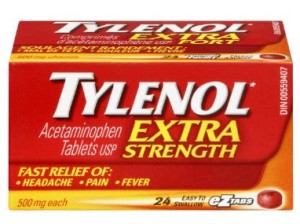
Johnson & Johnson scored a victory in the first case to go to trial over claims that its blockbuster painkiller Tylenol (acetaminophen) causes liver damage and its dosing doesn't adequately account for the risk. A New Jersey jury ruled that the plaintiff did not prove that she took the painkiller… plaintiff …claims that she spent a week in the hospital for liver damage after accidentally overdosing on Extra Strength Tylenol…The news provides J&J/McNeil with an early win as it stares down about 220 lawsuits in state and federal court in New Jersey and Pennsylvania. The first federal trial is set for next year in Philadelphia, where about 200 of the cases are consolidated…
- Medicaid Costs Rise, but Some States Are Spared (nytimes.com)Medicaid Enrollment & Spending Growth: FY 2015 & 2016 (kff.org)
Spending on Medicaid rose nearly 14 percent on average in the last fiscal year, a report has found, largely because of a tide of newly eligible enrollees in the 29 states that had expanded the program by then to cover millions more low-income adults….But for most of those states, the per-member, per-month cost of the new enrollees was not higher — in a few cases, in fact, it was lower — than expected…almost all of the additional spending was covered by federal funds, which are paying the entire cost of expanding Medicaid through 2016 and at least 90 percent thereafter… states should be worried less about their eventual 10 percent share of the cost of expanding Medicaid than whether the federal government can pay 90 percent of it indefinitely…"We are talking tens of billions of dollars a year here,"…"If I was a state official, I would not count on that money hanging around."
- Pharmacy-physician partnership hikes efficiencies (drugtopics.modernmedicine.com)
Sharing electronic health records access between physicians and pharmacists can improve workflow efficiencies for both… that pharmacist involvement in patient’s medication therapy improves adherence and reduces costs. However, since it is not financially feasible for many physicians to employ full-time pharmacists, collaboration is often the best alternative…Sharing EHR access is one way that collaboration can benefit patients while simultaneously improving workflow efficiencies…Pharmacists were able to more readily collect data related to patients’ medical conditions, prescribed medications, lab data, and treatment plans. Communication between the pharmacists and providers was significantly enhanced...
- Indian drug manufacturers face higher costs with bar-code requirement (fiercepharmaasia.com)

Small and medium-sized Indian drugmakers are decrying a move by the government to impose new bar-code requirements and say the action shows the government is taking sides with big multinational players to elbow out smaller competition. The larger companies are saying the move is necessary to protect the country's reputation…Pharmaceutical companies in India are now required to establish a "parent-child" relationship with all drugs from Oct. 1, which means a bar code will be used on every drug strip that goes into a unique package…The regulation is an attempt to track the origins of a shipment and to stamp out fake drugs. Indian officials representing the smaller drug companies believe they will be forced out of business because of the requirement.
- Richard Branson: Treat Drugs as a Health Care Issue (bloomberg.com)Finally – a change in course on drug policy (virgin.com)

Sir Richard Branson…talks with Betty Liu about the criminalization of drugs and his release of a report from the United Nations suggesting treating drugs a health care issue and whether or not the United States is trying to suppress the report.
- Review Of Proposed 340B Omnibus Guidance: How We Got Here And What It Says (healthaffairs.org)340B Drug Pricing Program Omnibus Guidance (federalregister.gov)
In a previous post—now almost one and a half years ago—I described "the coming storm" I anticipated would develop around the 340B drug discount program. After a brief tornado hit the House Energy and Commerce Committee when they considered including 340B reforms in their 21st Century Cures initiative, a slower, hurricane-style churn over the Administration’s proposed guidance on the topic has settled in…With the October 27 comment window steadily approaching, let’s take a look at what the rule says and what it could mean for interested stakeholders.
- A Brief History Of 340B
- What Happened At The Energy And Commerce Committee?
- What’s In The HRSA Guidance?
- U.S. oncology group rates blood cancer regimens, including cost (reuters.com)
…most influential source for U.S. oncology treatment guidelines…unveiled ratings aimed at helping doctors and patients assess the costs versus benefits of current therapies for two types of blood cancer…National Comprehensive Cancer Network…its new "Evidence Blocks" for multiple myeloma and chronic myelogenous leukemia are the first in a series that by the end of next year will encompass all oncology therapies, other than surgery or radiation… These are crafted to provide a little bit more information about cost, effectiveness, safety - all those things that the NCCN guidelines in the past haven't provided...The blocks give each therapy a score of between one and five in five categories: efficacy, safety, quality and consistency of evidence and affordability.
- DEA Requirements for Handling Controlled Substances (pharmacytimes.com)
James Schiffer, RPh, associate at Allegaert Berger & Vogel LLC, discusses some of the DEA's requirements for handling controlled substances.