
- CMS drops final EHR meaningful use rule (healthcareitnews.com)
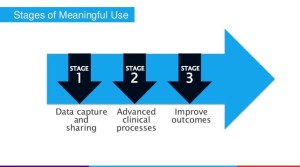
Centers for Medicare and Medicaid Services and ONC have released final rules for the EHR Incentive Programs, which they say will ease reporting requirements for providers and allow for 90-day reporting periods…also announced major news on Stage 3 of the program…CMS made some…big changes to the regulations:
- Give providers and state Medicaid agencies 27 months, until Jan. 1, 2018, to comply with the new requirements and prepare for the next set of system improvements.
- Give developers more time to create the next advancements in technology that CMS says will be easier to use and more appropriate to new models of care and access to data by consumers.
- Support provider exchange of health information and interoperable infrastructure for data exchange between providers and with patients.
- Address health information blocking and interoperability between providers.
- India considers drug testing labs in each state (fiercepharmaasia.com)
India may house drug testing laboratories in each state under an INR17.5 billion ($270 million) plan to shore up quality… the aim is to have at least one dedicated drug testing laboratory in every state, with 10 states currently not equipped with any testing services for drugs… India approved the spending to upgrade its federal and state drug regulation system with approval from the Cabinet Committee on Economic Affairs…funds, to be spent…on items such as new laboratories and a training academy for regulatory and drug testing officials, are seen as crucial to fixing quality issues that have bedeviled manufacturers and testing firms.
- California governor signs bill legalizing physician-assisted suicide (reuters.com)
Physician-assisted suicide will become legal in California under a bill signed into law…by…Governor Jerry Brown, despite intense opposition from some religious and disability rights groups…allows doctors to prescribe medication to end a patient's life if two doctors agree the person has only six months to live and is mentally competent…Advocates for physician-assisted suicide have tried for decades to persuade California to legalize the practice as a way to help end-stage cancer and other patients to die with less pain and suffering…Opponents…said the bill would invite insurance companies to take advantage of poor patients by offering to pay for the cost of life-ending drugs but not for the expensive treatments that could save lives.
- Nevada Board of Pharmacy – Notice of Intent to Act Upon a Regulation – Addition of Schedule I Substances (bop.nv.gov)

Nevada State Board of Pharmacy will hold a public hearing at 9:00 a.m., on Thursday, October 15, 2015, at the Hilton Garden Inn, 7830 S. Las Vegas Blvd., Las Vegas, Nevada. The purpose of the hearing is to receive comments from all interested persons regarding the adoption and amendment of regulations that pertain to chapters 453 and 639 of the Nevada Administrative Code.
The following information is provided pursuant to the requirements of NRS 233B.060
Amendment of Nevada Administrative Code 453.510 - Schedule I
1. The need for and the purposed regulation or amendment
The proposed amendment to NAC 453.510 will add newly identified synthetic drugs to the list of controlled substances listed on Schedule I, and provides for other matters properly related thereto.
- NV patient dumping suit to be settled (rgj.com)

Nevada has tentatively agreed to pay $400,000 to the City and County of San Francisco to settle allegations that the state wrongfully and intentionally bused psychiatric patients to the city and declined to pay the costs connected with their care…The deal, if approved by the Nevada Board of Examiners and a similar board in San Francisco, is expected to end an expensive legal battle that has lasted more than two years…The settlement will bring an amicable resolution to this matter,"…
- Alkermes’ schizophrenia drug Aristada gets FDA nod (reuters.com)
Food and Drug Administration…approved Alkermes Plc's longer-acting injectable version of … schizophrenia pill Abilify (Aristada,aripiprazole lauroxil), making the treatment available in two doses…Abilify, developed by Japanese drugmaker Otsuka Pharmaceuticals and sold…by Bristol-Myers Squibb Co, is already facing generic competition.
- EPA presents Pfizer with $194M bill to clean up former American Cyanamid site (fiercepharmamanufacturing.com)

...cleanup of the former American Cyanamid drug manufacturing site in Bridgewater, NJ, has been ongoing for decades. But the EPA this week presented Pfizer with a bill for its share of the cost of cleaning up the superfund site…Justice Department said that the drugmaker has agreed to pay $194 million for the cleanup of 6 disposal areas at the 575-acre site. It will chip in an additional $1 million to reimburse the EPA for costs the agency has already paid out for overseeing cleanup work at the 100-year-old site.
- Rise in online pharmacies sees counterfeit drugs go global (thelancet.com)

Increasing public use of online pharmacies, along with a new mass producer of fake medicines, have widened the global market for falsified drugs…. John Clark.. heads up Pfizer's Global Security team…has a question for doctors: do you know where your patients get their drugs from?...The official term for these types of medicines is spurious/falsely-labelled/falsified/counterfeit drugs….developing countries are more than aware of with estimates of the prevalence of counterfeit drugs in some parts of Africa and Asia reaching as high as 70%...it's hard to find a drug that's not being copied or falsified...Counterfeit drugs have been found in 124 countries across all continents and between 2011–14 more than 55 million doses were seized by authorities.
- Experts critical of America’s right-to-try drug laws (thelancet.com)
Laws that allow terminally ill patients access to experimental drugs are gaining momentum across the USA, but experts say they could do more harm than good…the right-to-try laws...are designed to circumvent the FDA…proponents of the laws view the agency's bureaucracy as a roadblock, not a pathway, for desperate patients seeking experimental drugs. "When patients are almost willing to try anything to live…we shouldn't see government stand in the way"…Critics...say the laws are misguided, that drug companies, not the FDA, restrict the availability of experimental drugs because of cost, limited supplies, or concerns about the effect on clinical trials…skeptics believe the laws could do more harm than good, possibly raising false hopes about drugs whose safety and effectiveness have not yet been proven…
- Trans-Pacific Partnership Could Reduce Market Exclusivity Period (pharmacytimes.com)TPP negotiators said to reach compromise on biologics (fiercepharmaasia.com)
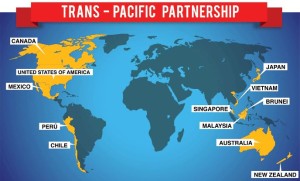
…Trans-Pacific Partnership negotiations finalized today could affect the cost of health care in significant ways…the United States and its 11 Pacific Rim trade partner countries finalized what will be the largest regional trade accord in history…Negotiations were stalled and then extended due in large part to differences over the appropriate amount of time that pharmaceutical companies should enjoy market exclusivity for a new drug…US negotiators eventually conceded and agreed that brand-name drug manufacturers would have a market exclusivity period of 5 to 8 years…current GPhA president…said the agreement brings the generics industry closer to "improv[ing] worldwide patient access to affordable medicines [by] embracing competition from safe, effective biosimilar therapies."...