
- FiercePharmaPolitics—Trump unveils favored-nation drug pricing executive order, and pharma hits back (fiercepharma.com)Trump’s Drug Price Controls are a Lousy Deal for Patients (cei.org)

After touting a series of executive orders on drug pricing in late July, President Donald Trump has now unveiled the most significant among them—an order tying Medicare's drug prices to much lower costs in other developed countries. The biopharma industry pushed back hard, and it’s unclear exactly when or how the changes would be implemented...The executive order...says Medicare should not buy certain Part B or Part D drugs unless at prices paid by “at a minimum, the lowest price at which the manufacturer sells that drug to any other developed nation.” In Part D, the plan would apply “where insufficient competition exists” and where “seniors are faced with prices" higher than those in other developed nations...READ MORE
- Audit: Group health plan for state workers ignored bidding rules, engaged in ‘wasteful spending’ (thenevadaindependent.com)
Nevada’s group health insurance program for state employees consistently failed to seek competitive bids on nearly $96 million worth of contracts over the past four fiscal years, according to a recent state audit that also found examples of “wasteful spending” and state policies not being followed...An audit report released last week by the Legislative Counsel Bureau’s Audit Division into the contract management practices of the Public Employees Benefits Program...found that leadership of the health insurance program consistently failed to follow state laws and policies requiring contracts be put out to bid every four years, choosing instead to extend contracts in violation of normal practices for state agencies...The audit also found PEBP management often privately negotiated contract extensions without putting them out to a competitive bid, including one instance where one under-performing vendor had a contract extended and scope expanded after PEBP staff took paid trips to their headquarters at an estimated cost of more than $7,000...READ MORE
- House committee to subpoena AbbVie over drug pricing (biopharmadive.com)

A congressional oversight committee plans to subpoena AbbVie for documents as part of an investigation into drug pricing... The House Oversight and Reform Committee has been seeking documents related to the pricing of AbbVie's top two drugs, which generated more than $23 billion combined last year...Chairwoman Carolyn Maloney, D-N.Y., said the company's responses have been "particularly poor"...AbbVie is the only one to receive a subpoena thus far, with Maloney saying its "noncompliance stands out as particularly egregious." The drugmaker said it was "surprised and disappointed" by the committee's action...READ MORE
- Costa Rica researchers to trial coronavirus treatment from horse antibodies (reuters.com)Costa Rica researchers to trial coronavirus treatment from horse antibodies (scientificamerican.com)

Researchers in Costa Rica are due to begin trials of an inexpensive coronavirus treatment based on antibodies taken from horses injected with the SARS-Cov-2, the virus that causes COVID-19...Developed by University of Costa Rica’s Clodomiro Picado Institute, the equine antibodies medication is to be tested on 26 patients from mid-September...Costa Rican authorities hope to be able to begin applying the treatment more widely in hospitals if the results from the phase 2 study are encouraging. There are 471 hospitalized coronavirus patients in Costa Rica...Similar efforts are also underway in Argentina and Brazil, while scientists in Belgium are using llamas...READ MORE
- AHA analysis touts community benefits made by 340B hospitals as spat with drugmakers continues (fiercehealthcare.com)In 2017 alone, 340B Tax-exempt Hospitals Provided More Than $64 Billion in Total Benefits to Their Communities (aha.org)
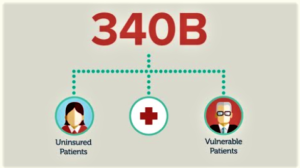
Safety net hospitals that participate in the 340B drug discount program generated $64.3 billion in total benefits to community programs and services tailored to help low-income patient populations, a new analysis finds...The analysis, published...from the American Hospital Association, comes as hospitals wage a war with drug companies that have begun restricting sales of discounted products to 340B contract pharmacies. AHA charges the 340B program enables safety net hospitals to help patients in vulnerable communities, but drug companies argue the program has gotten too large and hospitals are not helping patients with the savings...READ MORE
- Access to Rx Drugs is Priority (realclearhealth.com)

Access to medicines and cures should be the priority – the focus – for America right now, not unnecessary complications over trade with the Chinese...If one nation shuts down the production of a good, it impacts the supply for the whole world. With drugs, the U.S. gets many ingredients from China and if the Chinese shut off access to these materials, American patients will suffer...The Chinese are using the threat of withholding necessary drug ingredients if trade obstacles with the U.S. supervene...The Chinese are trying to link the Huawei telecom controversy to the drug issue...if the U.S hurts China by continuing current restrictions on Huawei’s access to American technology, they would answer with the withholding of Rx drugs...READ MORE
- NIH panel says data doesn’t support plasma use for COVID-19 (biopharmadive.com)
A panel of advisers for the National Institutes of Health was not convinced convalescent plasma should be used to treat COVID-19, a recommendation that appears to conflict with a controversial decision by the Food and Drug Administration last week to issue an emergency authorization for the blood-derived treatment...The panel...reviewed the same data cited by the FDA, but concluded it to be "insufficient" to recommend "either for or against the use of convalescent plasma for the treatment of COVID-19."...the same panel cautioned against using hydroxychloroquine in treating coronavirus disease three weeks after the FDA cleared emergency use of the malaria pill...READ MORE
- FDA ticks off list of grievances over California drug repackager’s quality issues in warning letter (fiercepharma.com)

Unlike drugmakers that make their meds in-house, a cottage industry of repackagers exists to resell premade drugs with shiny new labels. But what happens when one of those companies fails at its primary job: safely repackaging drugs?...California-based Calvin Scott & Co., a wholesaler specializing in drug repackaging, failed to adequately address quality issues at its New Mexico plant that may have compromised the listed expiration date on one of its drugs, according to a warning letter posted online this week...FDA investigators found that Calvin Scott used suspect heat-sealed pouches to package its version of hydrochlorothiazide...Investigators also found Calvin Scott had inadequate cleaning procedures in place, which led to its drug products sharing multiple surfaces and potentially being cross-contaminated...READ MORE
- Amgen wriggles out of state bill on rat poisons, says it prefers its rodent-killing methods (fiercepharma.com)

Changing methods can be tough—that's why Amgen is sticking with its rat poison of choice...With a bill passed this week, California legislators and environmentalists cast a spotlight on the use of industrial rodent poisons that are killing off native wildlife. But local drugmaker Amgen wanted fewer restrictions on its rat-killing methods, leaving critics to suggest: Maybe try traps, instead?...Amgen finagled its way out of the bill—AB 1788, which passed the California Assembly earlier this week—which would have required the company to rethink its rat policy at a facility in Newbury Park. The complex backs up to a wildlife preserve frequented by cougars and other wildlife, according to the Acorn...In an emailed statement, Amgen said it worked to secure the exemption because it simply couldn't identify another method for sending rats to meet their maker—or one would meet the FDA's standard, at least...READ MORE
- FDA scolds Mylan for ‘repeated’ manufacturing problems (biopharmadive.com)
The Food and Drug Administration is concerned that generics giant Mylan has deep-rooted problems in its global manufacturing network, with the latest evidence coming from a site in India...The agency posted this week a warning letter about Mylan's Unit 7 facility, which makes dozens of active pharmaceutical ingredients, or APIs, used in blood pressure drugs, antifungals and central nervous system treatments. During a February inspection, regulators found the site did not have adequate procedures in place to prevent contamination. They noted that similar issues were seen last year at Unit 8..."These repeated failures at multiple sites manufacturing API demonstrate that your company's oversight and control over the manufacture of drugs is inadequate. You should immediately and comprehensively assess your company’s global manufacturing operations,"...READ MORE