
- New CDC report shows 94% of COVID-19 deaths in US had contributing conditions (fox8.com)Excess Deaths Associated with COVID-19 (cdc.gov)
The Centers for Disease Control and Prevention released new data last week that depicts how many Americans who have died from COVID-19 also had other contributing conditions...According to the report, only 6% of deaths have COVID-19 as the only cause mentioned, revealing that 94% of patients who died from coronavirus also had other “health conditions and contributing causes.”...The CDC explains that their data uses provisional death counts to “deliver the most complete and accurate picture of lives lost to COVID-19.”...These numbers are based on death certificates, which the organization says are the most reliable source of data. Death certificates reportedly contain information that is not available anywhere else and includes comorbid conditions, race and ethnicity, and place of death...The CDC says provisional death counts may not match counts from other sources, such as numbers from county health departments, because death certificates take time to be completed, states report at different rates, it takes officials extra time to code COVID-19 deaths, and because other reporting systems use different definitions or methods for counting deaths...The organization adds that provisional data is not yet complete, provisional counts are not final and are subject to change, and that death counts should not be compared across states...READ MORE
- California Rx: State may dive into generic drug market (fiercepharma.com)

California is poised to become the first state to develop its own line of generic drugs, targeting soaring drug prices and stepping into a fiercely competitive drug market dominated by deep-pocketed pharmaceutical companies...The Democratic-controlled legislature overwhelmingly approved a measure...that would direct the state’s top health agency to partner with one or more drug companies by January to make or distribute a broad range of generic or biosimilar drugs — including the diabetes medicine insulin — that are cheaper than brand-name products...The bill, SB-852, also opens the door for California to make its own generic drugs in the future...READ MORE
- Eli Lilly to halt sales of 340B drugs to contract pharmacies with exception of insulin (fiercehealthcare.com)STATEMENT ON ELI LILLY CUTTING OFF ALL ACCESS TO 340B PRICING THROUGH COMMUNITY-BASED PHARMACIES (340bhealth.org)

Eli Lilly will no longer offer discounted products to 340B contract pharmacies, with the exception of insulin. The drug maker is the second to halt sales to contract pharmacies, following a move by AstraZeneca last month...Roughly one-third of the more than 12,000 340B hospitals use a contract pharmacy to dispense the discounted drugs, according to a 2018 report from the Government Accountability Office...The GAO report found that the Health Resources and Services Administration, which oversees the 340B program, does not fully assess compliance with the program’s prohibition on duplicate discounts for drugs prescribed to both Medicaid and 340B...Pharmaceutical manufacturers have also charged that the discount program has gotten too large and unwieldy...READ MORE
- NCPA Urges Investigation of Mail Order Prescription Plans After USPS Delays (drugtopics.com)
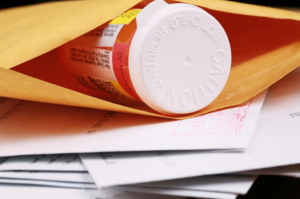
Soon after the House Energy and Commerce Committee launched an investigation into potential US Postal Service delivery delays for mail order medications, NCPA said in a letter that the committee should broaden its investigation to probe long-term problems with mail order prescription plans...“Policymakers should investigate the cost and safety of mail order prescriptions as well as the impacts of any delivery delays on drug safety and efficacy,” said Karry La Violette, NCPA senior vice president of government affairs, in a news release. “We’re confident they will find that in many cases there are better, more reliable options—namely, patients’ neighborhood pharmacies—to help improve outcomes, protect patient choice, and control costs.”...“NCPA questions the integrity of a drug distribution system that relies exclusively on the mail and in which drugs are dispensed in excessive volume, over long distances, often exposed to extreme temperatures or humidity, delayed, and otherwise compromised.,” La Violette said in the letter...READ MORE
- COVID-19 vaccine developers prepare joint safety pledge: WSJ (reuters.com)Covid-19 Vaccine Developers Prepare Joint Pledge on Safety, Standards (wsj.com)
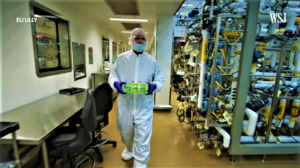
Several COVID-19 vaccine developers, including Pfizer Inc, Johnson & Johnson and Moderna Inc, plan to issue a public pledge not to seek government approval until their vaccine candidates are proven to be safe and effective...The companies would pledge to adhere to high scientific and ethical standards in the conduct of clinical studies and in their manufacturing processes, the Journal report here said, citing the draft of a joint statement that is still being finalized...The news comes amid rising concerns that political pressure ahead of the Nov. 3 election could weigh on the safety and effectiveness of a potential vaccine for the respiratory illness...READ MORE
- In China’s Xinjiang, forced medication accompanies lockdown (apnews.com)

The government in China’s far northwest Xinjiang region is resorting to draconian measures to combat the coronavirus, including physically locking residents in homes, imposing quarantines of more than 40 days and arresting those who do not comply. Furthermore, in what experts call a breach of medical ethics, some residents are being coerced into swallowing traditional Chinese medicine, according to government notices, social media posts and interviews with three people in quarantine in Xinjiang. There is a lack of rigorous clinical data showing traditional Chinese medicine works against the virus, and one of the herbal remedies used in Xinjiang, Qingfei Paidu, includes ingredients banned in Germany, Switzerland, the U.S. and other countries for high levels of toxins and carcinogens...READ MORE
- Patient Protection Commission to forward telehealth, all-payer claims database proposals to 2021 Legislature (thenevadaindependent.com)

The Patient Protection Commission plans to submit two bill draft requests to the 2021 Legislature that would expand access to telehealth services in Nevada and establish a state medical claims database...The two measures, however, are relatively narrow in scope compared to the broad mandate Gov. Steve Sisolak gave the body last year to conduct a top-to-bottom review of the state’s health care system and propose changes to it...The more controversial of the two proposals from the commission, centered around health care cost transparency, was significantly scaled back during the Monday meeting to establish an all-payer claims database, a state database that includes aggregated medical, pharmacy and dental claims from all insurance companies in an effort to better understand what’s driving the costs of health care in the state, in addition to some other transparency provisions...READ MORE
- Dozens of U.S. hospitals poised to defy FDA’s directive on COVID-19 plasma (fiercepharma.com)
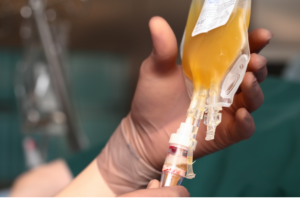
Dozens of major hospitals across the U.S. are grappling with whether to ignore a federal decision allowing broader emergency use of blood plasma from recovered COVID-19 patients to treat the disease in favor of dedicating their resources to a gold-standard clinical trial that could help settle the science for good...As many as 45 hospitals from coast to coast have expressed interest in collaborating on a randomized, controlled clinical trial...Officials at some hospitals said they are considering committing only to the clinical trial—and either avoiding or minimizing use of convalescent plasma through an emergency use authorization issued...by the federal Food and Drug Administration...The response comes amid concerns that the Trump administration pressured the FDA into approving broader use of convalescent plasma...A National Institutes of Health panel this week countered the FDA’s decision, saying that the therapy “should not be considered the standard of care for the treatment of patients with COVID-19” and that well-designed trials are needed to determine whether the therapy is helpful. Data so far suggests the treatment could be beneficial, but it’s not definitive...READ MORE
- The FDA Is Stifling Pharmaceutical Innovation (nationalreview.com)
By radically and continually expanding the paperwork, testing, and other legal and regulatory obstacles to bring a new drug to market or treatment to practice, since 1962 the FDA has caused the development time for new drugs to triple (from an average of four years before the amendments to twelve today), the cost to multiply 40-fold, and the number of new drugs introduced per year to be cut fivefold. Within five years of the amendments’ passage, 98 percent of U.S. drug companies (including all the small innovative ones) were eliminated from the drug-development business. Before the amendments, 50 percent of all new drugs invented worldwide were developed in the U.S. Today, it is 15 percent. Not only that, many new life-saving drugs have been kept out of the United States for as many as 20 years after they were put into use in the U.K. or Europe...READ MORE
- HHS bids out massive $250M ad campaign to put hopeful spin on coronavirus pandemic: report (fiercepharma.com)
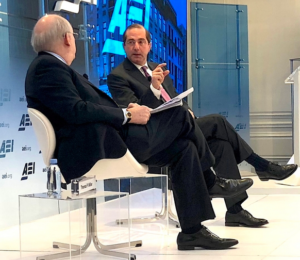
HHS Secretary Alex Azar
The Department of Health and Human Services plans to spend $250 million in media communications to “defeat despair and inspire hope” around the coronavirus pandemic...an HHS document detailing the project...was sent to communications agencies to solicit bids for what would be an extremely large advertising campaign in the heart of the presidential campaign season...the campaign would tap traditional, digital and social media and partner with the sports and entertainment industries and public health groups “to deliver important public health and economic information the administration can defeat despair, inspire hope and achieve national recovery.”...While it’s not unusual for government agencies to use advertising to promote public health or raise awareness around a consumer issue, the size of the spend and its timing just ahead of the presidential election raised eyebrows....READ MORE