
- Safer use of medicines by preventing medication errors (ema.europa.eu)Medication errors (ema.europa.eu)Recommendations on medication errors (ema.europa.eu)

European Medicines Agency has published a good practice guide on medication errors to improve the reporting, evaluation and prevention of medication errors by regulatory authorities and pharmaceutical industry throughout the EU…The…guide on medication errors published today complements the guideline on good pharmacovigilance practices…It consists of two parts:
- details how suspected adverse reactions that are caused by medication errors should be recorded, coded, reported and assessed. The goal is to improve reporting and to learn from medication errors for the benefit of public health.
- clarifies key principles of risk management planning in relation to medication errors. It describes the main sources and types of medication errors and proposes options to minimise the risk of medication errors throughout the lifespan of a medicine.
- New Jersey Legislation Permits Substitution With Interchangeable Biological Products (nabp.net)New Jersey Governor Christie Signs Bill Ensuring Patient Access to Interchangeable Biologic Medicines (businesswire.com)A2477 Eatablishes requirements for pharmacists to dispense biological products (njleg.state.nj.us)
In New Jersey, a bill (A2477) authorizing pharmacists filling a prescription for a biological medication to select an interchangeable biological product, was signed into law…A substitution cannot be made if the prescriber indicates that there shall be no substitution. The law requires the New Jersey State Board of Pharmacy to maintain a link on its website to FDA’s current list of interchangeable biological products. Further, the law requires a pharmacist or designee to notify the prescriber of the biological product dispensed, including the name of the product and the manufacturer, within five days…The pharmacist is also required to record on the prescription label, and record of dispensing, the product name of the interchangeable biological product, followed by the words “Substituted for” and the name of the biological medication for which the prescription was written, and the manufacturer of the interchangeable biological product.
- Experts foresee big premium increases for Medicare drug plan (hosted.ap.org)
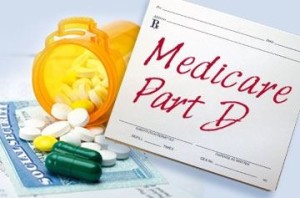
…many seniors are facing sharply higher premiums for Medicare's popular prescription drug program (Part D). The reason: rising drug costs have overtaken a long stretch of stable premiums…"Premiums are going up. Deductibles are going up,"…Government spending on the program also has risen significantly, driven by pricey new drugs, notably for hepatitis C infection. The cost for the hepatitis drugs in the Medicare program is expected to be $9.2 billion this year, a near doubling from 2014. Because of the prescription program's financial structure, taxpayers cover most of the cost for expensive medications. Three out of four adults infected with hepatitis C are baby boomers…Indicators signal rising costs across the program. Among them:
- independent estimates…show increasing premiums for stand-alone drug plans. The average premium will rise from $36.68 to $41.46 per month next year, or 13 percent…biggest increase since 2009.
- maximum deductible for prescription coverage will rise by $40, to $360…biggest increase in the deductible since the inception of Part D in 2006.
- taxpayer expenditures for the "catastrophic" portion of the benefit - in which beneficiaries with high drug bills pay only 5 percent of the cost - will rise by $4.5 billion in 2016, an increase of more than 14 percent. Spending for catastrophic coverage has doubled in just a short time, from $15.5 billion in 2012 to an estimated $31.2 billion this year.
The analyses...seemingly at odds with the message coming from the Obama administration, which estimates that drug premiums will remain stable in 2016, averaging $32.50 a month.
- Nevada issues health guidelines for cryotherapy (hosted.ap.org)Cryotherapy spa reopens; new guidelines revealed (reviewjournal.com)Division of Public and Behavioral Health Cryogenic Chamber Therapy Recommendations (dpbh.nv.gov)

Nevada has created health guidelines for cryotherapy after a Las Vegas spa worker was found dead in a tank that subjects users to subzero temperatures, a treatment that experts say has been growing in popularity but is largely unregulated and whose benefits are not proven…Dr. Tracey Green, the state's chief medical officer, said Friday that the guidelines from the state health department recommend that the machines not be used by minors under 18, those under 5 feet tall and anyone with certain health conditions, such as a history of stroke, high blood pressure, seizures and infections, as well as people who are pregnant or have pacemakers or claustrophobia…The state said it will work with businesses to implement its "expected standards" but there won't be penalties and this doesn't amount to law. Still to be determined is how oversight measures will be carried out to ensure the guidelines will be implemented. The health department has said it will work with other agencies that regulate and license such businesses, including the Nevada Occupational Safety and Health Administration…"We will go back and assist them," Green said of the businesses. "There's not a penalty. It's really about public safety."…The new guidelines ask cryotherapy centers to have nitrogen monitors in the rooms and emergency kits and defibrillators on site. Signs and user waivers that clearly state that the treatment cannot treat illnesses or be used for medical purposes and outline the service's procedures and risks should also be provided…
- U.K. to Give `Tampon Tax’ to Women’s Cancer and Abuse Charities (bloomberg.com)

U.K. will give taxes raised from the sale of tampons and sanitary towels to women’s charities, Chancellor of the Exchequer George Osborne announced…Money raised from the 5 percent value-added tax on sanitary products will go to cancer charities The Eve Appeal and The Haven and to SafeLives and Women’s Aid, which are dedicated to ending domestic abuse,...Britain will negotiate with the European Union to scrap the tax…“We already charge the lowest 5 percent rate allowable under European law and we’re committed to getting the EU rules changed,” Osborne said in his Autumn Statement to Parliament in London Wednesday. “Until that happens, I’m going to use the 15 million pounds a year raised from the tampon tax to fund women’s health and support charities.”…More than 270,000 people have signed a petition calling for the tax to be removed. It is imposed because the products are defined as “non-essential luxury items” and, while it was reduced to 5 percent...EU law currently prohibits a zero rating.
- Reimbursement Policy for Biosimilars Will Have Negative Consequences for Patients (americanactionforum.org)

Centers for Medicare and Medicaid Services have finalized a rule regarding the Medicare reimbursement methodology for biosimilar products. Biosimilars…approved …as being “highly similar” to a specific biologic medication…patients may respond differently to the reference product and the biosimilars...there is now a debate as to whether or not biosimilars should be paid with a single billing code based on the ASP (Average Sales Price) of all biosimilars for a single reference product, as has been finalized by CMS, or the ASP for each individual biosimilar, separately from any other biosimilar of the same reference product…Economic arguments and patient safety concerns may support the latter, though the statutory text regarding this matter is somewhat ambiguous…the decision over how biosimilars…should be reimbursed…should be determined by economic principles based on the value of the medication to patients and without putting patient safety and access to such products at risk. If the statutory text does not clearly provide for the favorable regulatory outcome of these factors, it should be amended.
- A Head Fake From the Taxman (bloomberg.com)
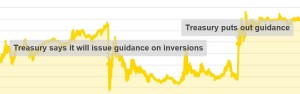
Allergan shareholders got all riled up for nothing…Shares of the Botox maker sank 2.8 percent on Thursday as fears that the U.S. Treasury Department was about to get tougher on inversions outweighed the news that Pfizer was preparing a nearly $200 billion bid for the company. The department's new guidelines -- announced after the market close -- turned out not to be such a body blow after all…the proposed changes just fine tune the steps already taken by the Treasury last year to make it harder and less appealing for companies to use acquisitions that move their legal address abroad for tax benefits. There was nothing groundbreaking -- and most importantly, nothing that should significantly derail a Pfizer inversion…Cue Allergan shares making up their losses and then some on Friday…The latest guidelines do make it incrementally harder to structure inversions and remove some economic benefits, but the handicaps only apply to transactions in which the U.S. company's investors wind up with between 60 percent and 80 percent of the combined entity. Pfizer already knew that was dangerous territory; those were the types of inversions targeted by the Treasury last year. By structuring its Allergan purchase as an all-stock deal with a high premium, Pfizer could be able to skirt the tougher rules.
- Are providers in for a rude awakening about ICD-10? (revenuecycleinsights.com)ICD-10 problems persist for some healthcare providers (revenuecycleinsights.com)

It’s far too early to declare with certainty the impact of the ICD-10 transition on healthcare revenue cycles and productivity…Initial data shows the apocalyptic warnings about ICD-10 immediately leading to claims rejection chaos were misplaced. The Centers for Medicare and Medicaid Services late last month said invalid ICD-10 codes comprised only 0.09% of error-based denials from October 1 through October 27…While CMS said it was “pleased to report that claims are processing normally,” it’s worth keeping in mind that the government agency has taken several temporary steps to smooth the transition to ICD-10 which may be masking problems that could manifest themselves down the road, including a claims denial amnesty for 12 months and advance payments to physicians in the event of processing problems related to ICD-10… Providers that considered themselves unprepared for ICD-10 as October 1 approached shouldn’t assume their currently low claims rejection rates mean their self-assessment was overly pessimistic. If they felt they were unprepared, they probably were. And if they were unprepared for ICD-10 on October 1, they probably still are…To avoid an unpleasant reality check down the road, providers with any doubts about their ICD-10 readiness should continue training and testing.
- FDA says Novartis plant in India backdated data and withheld info (statnews.com)Regulating India's Generic Drug Industry (podcast 13:46) (soundcloud.com)

Last month, Novartis disclosed that it received a warning letter from the Food and Drug Administration about manufacturing issues at two facilities in India that are operated by its Sandoz generic drug unit…At the time, the company noted it was working closely with the FDA to resolve the problems. But Novartis never actually specified what bothered the agency. Now, the warning letter has been posted on the FDA website, and the infractions are concerning, especially given that the plants are run by one of the world’s largest suppliers of generic medicines…The disclosure comes amid ongoing FDA scrutiny of overseas manufacturing plants, particularly in India, where a string of drug makers has failed inspections and had products banned from the US. The Indian pharmaceutical industry is furious that the agency appears to be singling out its ranks for infractions; however the Sandoz letter indicates the FDA is not confining its reviews to India’s domestic drug makers…A key issue that alarmed the agency during its August 2014 inspections was the integrity of the data Sandoz was collecting…“Backdating … records is unacceptable,” the FDA wrote in its Oct. 22 warning letter. The agency also expressed concern that Sandoz failed to demonstrate the extent to which such practices may be widespread and — this is significant — whether previous data is even reliable.
- Treasury steps up attack on corporate tax inversions (usatoday.com)
Obama administration stepped up its attack on corporate tax inversions…announcing new rules designed to block U.S. firms from trying to cut their tax bills by reincorporating overseas…Treasury Secretary Jacob Lew, whose agency imposed initial rules restricting inversions last year, said tougher restrictions were needed because U.S. firms "are taking advantage of an environment that allows them to move their tax residence overseas in order to avoid paying taxes in the United States without making significant changes in the nature of their overall business operations."..The new restrictions will:
- Limit the ability of U.S. companies to combine with foreign firms when the new overseas parent is a tax resident of a third country.
- Restrict U.S. firms from inflating the size of the new foreign corporate parent, and thereby avoid the current rule that requires the former owners of the U.S. firm to own less than 80% of the newly combined entity.
- Strengthen the current law that enables U.S. companies to complete inversions if, after the transaction, at least 25% of the combined new entity's business activity occurs in the country where that company has tax residency. The change would block inversions unless the new foreign parent is a tax resident of the overseas country where it was created or organized.
The three changes apply to inversion deals closed Thursday and in the future.