
- Court case puts patient privacy in peril (ama-assn.org)

California Supreme Court, San Francisco
What happens to physician-patient confidentiality when any government agency can obtain a patient’s prescription records without a warrant? A case before a state supreme court threatens to keep these indiscriminant lines of investigation wide open…Lewis v. Superior Court of Los Angeles County, a case before the Supreme Court of the State of California, calls into question whether or not the California Medical Board infringed upon patients’ constitutional right to privacy when it obtained prescription data without a showing of good cause. The board did so through the California Department of Justice database, which allows broad and indiscriminate disclosures to state, local and federal agencies—including law enforcement—and fails to adequately protect patient privacy.
- China State Council briefing outlines multilevel system for medical treatment (fiercepharmaasia.com)
Chinese health officials shed some additional light on the country's plans to reform its healthcare system by saying they plan to implement a "multilevel" system for medical treatment, according to a press briefing…The plan for the new system is designed to relieve some of the stress that larger hospitals face from "too many patients seeking treatment in big hospitals,"…the new system would provide a tiered level where patients first go to "nearby community-level hospitals" which can then transfer patients to a higher-level hospital "depending on the severity of the situation."...The multilevel system is at odds with the "superhospitals" trend in China in which facilities feel the need to expand their services in the face of reforms that could cut their revenues, especially the recently enacted cut of the 15% markup in drug prices that hospitals were once allowed to charge.
- Important Health Care Quality Metrics for Pharmacists (pharmacytimes.com)
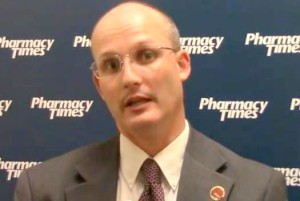
Bryan Ziegler, PharmD, executive director of Kennedy Pharmacy Innovation Center, talks about important health care quality metrics for pharmacists and comments on how pharmacists can be active in driving value-based reimbursement.
- Can Hospitals Waive The Costs of Certain Drugs? (bna.com)OIG Policy Statement Regarding Hospitals That Discount or Waive Amounts Owed by Medicare Beneficiaries for Self-Administered Drugs Dispensed in Outpatient Settings (oig.hhs.gov)
Federal laws and regulations generally frown on hospitals providing Medicare patients with free or discounted medications, but a recent policy statement from the OIG appears to buck that trend. From now on, hospitals won’t face any administrative sanctions for waiving or discounting self-administered drugs (SADs) that are either administered or ingested in an outpatient setting and aren’t covered under Medicare Part B…policy statement was prompted by reports that some hospitals were charging Medicare patients for SADs, resulting in financial hardships for the patients. The hospitals believed that the anti-kickback statute required them to bill for the SADs, and at higher rates than patients would receive at retail pharmacies...Many hospitals are already waiving or discounting patient costs for SADs, as Medicare patients can end up paying more for the SADs than they would have if the drugs were dispensed at a retail pharmacy...
- After big spending and hard lobbying, Pfizer eyes new tax home (finance.yahoo.com)Pfizer-Allergan deal would set up U.S. company for a split (finance.yahoo.com)

Pfizer Chief Executive Ian Read, who has been lobbying Congress regularly for a corporate tax cut, is trying for the second time in as many years to do a deal with a foreign company that could produce the savings he has been unable to extract from Washington…Pfizer Inc, which is pursuing a deal for Dublin-based Allergan Plc, was one of the top spenders among pharmaceutical companies lobbying the…government…Pfizer spent $9.49 million on lobbying in 2014 and $10.1 million on lobbying in 2013…Pfizer appears to have stopped waiting for Congress to act."I don't think they are giving up, I think they are just dealing with the world as it is...Investment in cures and patients don't follow a political calendar, they follow a scientific calendar,"…
- Challenges of Pain: Part 2 – Pharmacies in the crosshairs: Prescription drug crime and law enforcement (pharmacist.com) Pharmacy Crime: A Look at Pharmacy Burglary and Robbery in the United States and the Strategies and Tactics Needed to Manage the Problem (apps.phmic.com)Challenges of Pain: Part 1: Impact of government responses on frontline pharmacists and patients (pharmacist.com)
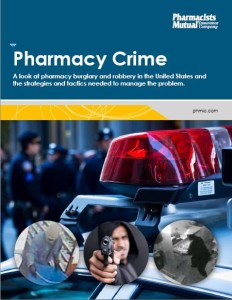
…law enforcement side of prescription drug abuse—including the rise in pharmacy crime, such as robberies, and second in Pharmacy Today’s “Challenges of Pain” series. The series shows how pharmacists and their patients with legitimate pain needs are affected by issues and efforts around prescription drug abuse.
- Concern for pharmacists’ safety
- Preventing robberies: Start with the basics
- DEA adds to its focus
- GAO report: Questions raised about DEA’s approach
- GAO surveys of DEA registrants
- DEA: Patient access not affected
- Be aware and prepared
- California proposes new single-drug method for executions (latimes.com)
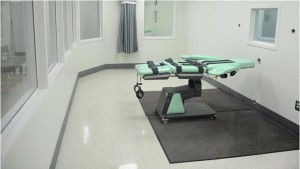
San Quentin State Prison’s lethal injection chamber.
California unveiled a new method for executing condemned prisoners Friday, proposing a single-drug lethal injection protocol that could restart capital punishment…The proposal came as a result of a lawsuit filed against the state by crime victims…Executions are not likely to resume immediately…The new protocol would require the injection drug to be selected on a "case-by-case basis, taking into account changing factors such as the availability of a supply of chemical." The state would have the option of using one of four barbiturates: amobarbital, pentobarbital, secobarbital and thiopental…Executions around the country have declined in recent years as prisons have been unable to obtain lethal injection drugs…Manufacturers, pressed by death penalty opponents, have refused to sell the anesthetics to prisons. Compounding pharmacies are an alternative, but even they would be vulnerable to boycotts if their identities were disclosed…
- Drug approval pilot plan formally launched in China (fiercepharmaasia.com)

Following on from a presentation to the State Council earlier this week, China announced…it will launch a three-year pilot plan to speed up approvals for new drugs…China's Food and Drug Administration said...that the pilot plan will take place in 10 regions and will allow research organizations and researchers themselves to seek approval for new drugs rather than forcing them to transfer their findings to drug manufacturers who then would be allowed to produce the drugs and reap most of the benefits…Officials hope the change will spur innovation in pharmaceutical development...The move is also part of China's plans to reform its entire health care sector to ease crowded hospitals, souring relations between doctors and patients, corruption and high patient costs...
- Direct-to-consumer company tests FDA’s resolve on gene testing (reuters.com)

Just as 23andMe has made peace with the...Food and Drug Administration, another direct-to-consumer genetics company is testing the regulatory waters with the launch of a $249 DNA test designed to predict drug response…The test, from tiny startup DNA4Life...comes in the wake of 23andMe's two-year tussle with the FDA over its direct-to-consumer personal DNA testing service, which the FDA ordered off the market in 2013…But the agency has yet to approve direct-to-consumer tests for pharmacogenetics, a field experts believe could be much riskier in the hands of consumers, who might use the information to make decisions about the drugs they are taking…"We would be delighted to have a conversation with the FDA," but added that it is not under the agency's purview. "Of course, the government can do what it likes."…The problem…is that patients, and even doctors, struggle to understand what to do with the results.
- No more prescriptions for common drugs (theaustralian.com.au)Over-the-counter items recommended for de-listing or amendment from 1 January 2016 (pbs.gov.au)

PATIENTS and taxpayers are set to save some cash as the federal government announces it'll no longer subsidise basic over-the-counter medicines like paracetamol and aspirin...17 common drugs that treat issues like headaches, heartburn and constipation will be removed from the Pharmaceutical Benefits Scheme from January 1, 2016…The move is expected to save taxpayers half a billion dollars over the next five years, which…says will instead be spent on listing new life-saving drugs…The Consumers Health Forum is concerned consumers will now be buying and taking medicines without a treatment plan and regular monitoring from their doctor... the move will have no impact on a patient's ability to speak to their doctor or pharmacist about over-the-counter medicines… Australian Medical Association…said doctors welcomed the announcement, which was based on advice from the independent Pharmaceutical Benefits Advisory Committee.