
- 5 things to know now about coming OCR HIPAA audits (healthcareitnews.com)

Nothing sends a shock of fear through a hospital C-suite quite like the word audit. And the second phase of HIPAA audits is slated to being in early 2016…Those CIOs, CISOs, CEOs, General Counsel and privacy officers unfortunate enough to receive notification of an impending HIPAA audit from the Health and Human Services Department's Office for Civil Rights will invariably feel that pressure…While security is a crucial aspect to any health organization, it's another thing entirely to plan accordingly for an OCR audit.
…tips for healthcare organizations potentially facing an audit:
- OCR is moving forward with HIPAA compliance audit program
- Compliance audits expected to be in hundreds; not thousands
- OCR has been transparent on topics it will target
- Prepare now in case your organization is selected
- Educate staff and leadership on how your organization is preparing for an OCR audit
OCR will look into security, privacy and breach notification rules to analyze risk, safeguards and implementations, especially those associated with electronic health information and device encryption.
- Transitional Chaos or Enduring Harm? The EHR and the Disruption of Medicine (nejm.org)

…complaints might be dismissed as growing pains, born of resistance to change. But transitional chaos must be distinguished from enduring harm…the EHR's limitations and why they've been largely ignored, one key barrier is that physicians who voice reservations are labeled "technophobic, resistant, and uncooperative." But in fact…most physicians recognize the potential of EHRs and appreciate such features as the ability to view data remotely. Nevertheless, the researchers found remarkable EHR-induced distress. They conclude, "No other industry, to our knowledge, has been under a universal mandate to adopt a new technology before its effects are fully understood, and before the technology has reached a level of usability that is acceptable to its core users."...What this surgeon and the rest of us need are patient records that communicate meaning and foster understanding of the particular patient in question. The blanks on our screens can be filled with words, but the process of understanding cannot be auto-populated. Perhaps life without the EHR will soon be unimaginable. But the technology will support and improve medical care only if it evolves in ways that help, rather than hinder, us in synthesizing, analyzing, thinking critically, and telling the stories of our patients.
- Pacira sues for free speech; FDA pulls off-label warning letter. What gives? (fiercepharmamarketing.com)

On second thought, Pacira Pharmaceuticals, the FDA might just take it back...the agency has unpublished a warning letter to the company, issued last September, that took issue with the company's marketing practices…the FDA warning letter--now taken down from the agency website--Pacira had claimed that Exparel (bupivacaine), its pain drug and lead product, could work for up to three days at a time, though it's only approved for 24-hour pain relief… It would seem like a good old-fashioned pharma-government tussle over what companies can and cannot say about their products. But the argument has changed significantly, thanks to a series of court rulings that could open the door for drugmakers to market their products in previously unacceptable--even previously illegal--ways...
- Indian drug manufacturers face higher costs with bar-code requirement (fiercepharmaasia.com)

Small and medium-sized Indian drugmakers are decrying a move by the government to impose new bar-code requirements and say the action shows the government is taking sides with big multinational players to elbow out smaller competition. The larger companies are saying the move is necessary to protect the country's reputation…Pharmaceutical companies in India are now required to establish a "parent-child" relationship with all drugs from Oct. 1, which means a bar code will be used on every drug strip that goes into a unique package…The regulation is an attempt to track the origins of a shipment and to stamp out fake drugs. Indian officials representing the smaller drug companies believe they will be forced out of business because of the requirement.
- Controlled Substance Red Flags (pharmacytimes.com)
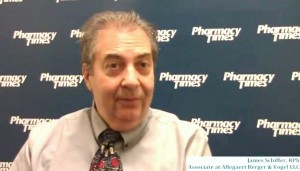
James Schiffer, RPh, associate at Allegaert Berger & Vogel LLC, discusses some red flags related to prescriptions that can lead to administrative action from the DEA. (video)
- Drug shortages hit Tricare (militarytimes.com)

Tricare officials say the problem stems from drug shortages…shortages are exacerbated within the military system because by law, DoD is allowed to buy pharmaceuticals only from certain manufacturers… shortages peaked at about the time DoD began requiring Medicare-eligible retirees and military family members to fill their long-term prescriptions by mail or at a military pharmacy…GAO Health Care Director Debra Draper pointed out that, since Tricare did not specifically track the satisfaction of beneficiaries now required to use the mail-order system and did not monitor the availability of covered medications for these beneficiaries, DoD is "unable to assess availability."…"DoD does not know what, if any problems, beneficiaries may have experienced filling their prescriptions,"…
- Review Of Proposed 340B Omnibus Guidance: How We Got Here And What It Says (healthaffairs.org)340B Drug Pricing Program Omnibus Guidance (federalregister.gov)
In a previous post—now almost one and a half years ago—I described "the coming storm" I anticipated would develop around the 340B drug discount program. After a brief tornado hit the House Energy and Commerce Committee when they considered including 340B reforms in their 21st Century Cures initiative, a slower, hurricane-style churn over the Administration’s proposed guidance on the topic has settled in…With the October 27 comment window steadily approaching, let’s take a look at what the rule says and what it could mean for interested stakeholders.
- A Brief History Of 340B
- What Happened At The Energy And Commerce Committee?
- What’s In The HRSA Guidance?
- FDA Makes Recommendation to PCAC on Additions to Bulk Drugs (iacprx.org)

Next week, on October 27 and 28, the FDA Pharmacy Compounding Advisory Committee is reviewing ten (nine) active pharmaceutical ingredients to be included on the list of approved bulk drugs that traditional compounders can use in preparing prescriptions. As required within 503A, a bulk ingredient must have an applicable USP monograph, be a component of an FDA approved drug, or be added to an official list authorized by the Secretary of Health and Human Services. The ten (nine) drugs to be reviewed were nominated by stakeholders…in response to formal requests issued by the agency…FDA has released documents for the PCAC that show their recommendations on each of the nominated drugs. (each item, FDA does not recommend addition to the approved bulk ingredient list)
- Methylsulfonylmethane
- Curcumin
- Germanium Sesquioxide
- Rubidium Chloride
- Deoxy-D-Glucose
- Alanyl–L-Glutamine
- Glycyrrhizin
- Glutaraldehyde
- Domperidone
- Drug Firms Buy Pricey Vouchers to Speed Products to Market (wsj.com)

There is a new price surge in the pharmaceutical industry—for a limited number of government-issued vouchers that drug makers… are buying to speed products to market…vouchers require the FDA to shorten its decision deadline to six months… Because companies can also sell the vouchers, a lucrative secondary market has emerged. AbbVie agreed in August to pay $350 million for a voucher from United Therapeutics Corp. ,which received it for developing a pediatric cancer treatment…the voucher program is attracting…criticism…These programs allow sponsors to ‘purchase’ a priority review at the expense of other important public health work in FDA’s portfolio… such as reviewing applications for drugs that treat more serious conditions...Adding to the escalating prices: the vouchers have a scarcity value because only seven have been issued…
- The US FDA has issued an alert warning the public not to take drugs marked as sterile by compounding firm Qualgen. (outsourcing-pharma.com)FDA alerts health care professionals not to use sterile drug products from Qualgen (fda.gov)

During an inspection of Qualgen’s facility in Edmond, Oklahoma, FDA investigators observed "insanitary conditions, including poor sterile production practices, which raise concerns about Qualgen’s ability to assure the sterility of drug products that it produced," said the agency…The FDA recommended the company cease sterile operations until it fixed the problems, but Qualgen agreed only to voluntarily recall 67 lots of drugs. The recalled products were compounded before September 1, 2015 and have not yet expired…The Food and Drug Administration said it is not aware of any adverse events associated with Qualgen’s products…