
- Exclusive: Abbott tangles with regulators over Indian cough syrup complaint (reuters.com)

Abbott Healthcare is challenging an Indian state's accusation that a sample of the company's cough syrup contained excessive levels of codeine,...the laboratory found that a sample of Phensedyl contained more than twice the labeled amount of codeine,..Abbott denied the allegations and urged regulators to not take any action. Abbott said it had found nothing unusual in its own and third party testing of a retained sample from the same batch of Phensedyl....also asked regulators to give it more information about the source of the suspect sample and the manner in which it was collected, so that it could establish whether it was genuine and proper process was followed.
- Inpatient Payment Rule for 2016 Continues Volume-to-Value Shift (ashp.org)
Medicare program's shift from volume to value continues with the finalization of the regulation setting inpatient payment rates for fiscal year 2016, the Centers for Medicare and Medicaid Services announced on July 31…annual update to Medicare's inpatient prospective payment system affects discharges occurring on or after October 1, 2015,..
- Hospital-acquired conditions reduction program…will continue its policy of reducing by 1% the reimbursement rate of hospitals in the bottom performance quartile...
- Value-based purchasing program…incentivizes rather than penalizes hospitals, will include new measures during 2016 that will be used for 2018 payment calculations, including one measure directly related to medication use.
- Add-on payments…authorizes a "new technology add-on payment" for blinatumomab,…for the treatment of a form of B-cell acute lymphoblastic leukemia…maximum add-on payment for the drug during 2016 is $27,017.85 per case,..authorize add-on payments for new technologies or medical services—including drugs—that produce greater clinical benefits than existing technologies..
- Update on "two-midnight rule."…rule was intended to clarify when patients should be treated as outpatients—generally under observation status—or admitted as inpatients…patients who are expected to require care spanning two midnights (i.e., 12:00 a.m. on two consecutive days) should be admitted as inpatients,… although inpatients and patients on observation status receive the same care, observation patients face higher out-of-pocket costs for medications because Medicare pays differently for drugs in inpatient and outpatient settings.
- State Efforts to Reform Secretive Pharmacy Benefit Manager Pricing Policies Gain National Momentum | Commentary (blogs.rollcall.com)
Americans today rightly demand more transparency...It is the foundation upon which to assess accountability, performance and trust… the Senior Care Pharmacy Coalition — a coalition dedicated to representing the exclusive legislative and regulatory interests of independent Long Term Care pharmacies and the vulnerable patients they serve — hopes to work with Congress on reforms that both increase transparency in drug pricing practices and ensure protection against Medicare Part D pricing policies that hinder LTC pharmacies’ ability to delivery quality pharmaceutical care and services...
- Uncertainty reigns over possible end of 9/11 health programs (hosted.ap.org)Jon Stewart joins Sept. 11 medical care push: first responders (reuters.com)
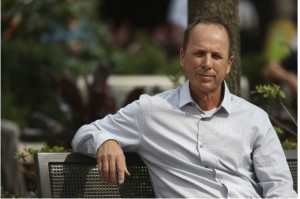
Fourteen years after the 9/11 attacks, a new round of uncertainty looms for people exposed to the million tons of toxic dust that fell on New York when hijacked jets toppled the World Trade Center….Two federal programs that promised billions of dollars in compensation and medical care to sick 9/11 responders and survivors are set to expire next year, five years after they were created by Congress.,, As Friday's anniversary of the terror attacks approached, advocates for responders renewed their push for an extension…Almost 21,600 people received treatment through the World Trade Center Health Program over the past year,… officials haven't been able to say how many patients might lose access to doctors or medication if the program shuts down as planned next September.
- FT counts 39 plants banned in India as regulatory woes mount for drugmakers (fiercepharmaasia.com)
A hard drumbeat of FDA complaints against more than two dozen companies in India for quality violations has affected 39 drugmaking facilities, creating an avalanche of remedial work that could take years and is steadily driving up medicine costs in the United States…FT (Financial Times) said it counted 6 Indian drugmakers that had manufacturing sites hauled up by the FDA…encompassing 27 companies…spate of massive product recalls.
- Low Level Mercury In Drugs Safe but EU needs to set limits say Polish Reaserchers (in-pharmatechnologist.com)

EU needs to better define mercury limits for drugs and dietary supplements say Polish researchers who want pharmaceuticals in Europe to be tested more regularly….because patients are also exposed to environmental sources of the metal those taking pills regularly could build up harmful accumulations of the metal…. Low-quality raw materials, inadequate control during the production and drug counterfeiting can lead to high concentrations of mercury in the final product, which can pose a health threat to consumers, poisoning and even death.
- The case for creating an ICD-10 command center (healthcareitnews.com)

When the clock ticks in a new month and the entire healthcare industry is thereby mandated to begin using the new ICD-10 code set, there will most likely be glitches here and there…given the limited testing…that has taken place to date, it's impossible to predict with certainty whether those will be small and easily ironed out -- or significant enough to severely disrupt cash flow and launch more downstream problems…some organizations are establishing ICD-10 command centers…a help line to triage savvy billing, IT or coding representatives...
- China tells patients to go local to cut costs, improve access (reuters.com)
China will push patients to seek medical treatment locally in a bid to overhaul a over-burdened healthcare system where wide gaps between urban and rural care often mean people travel hundreds of miles to seek help in cities…. by 2017 all patients with serious illnesses will receive treatment within their own county,… drive could reduce steep costs for its citizens… also a lure for investors and firms betting billions of dollars on China opening up a market set to be worth around $1.3 trillion by 2020.
- 2016 Open Enrollment & Third Party Network (pharmacypodcast.com)
Interview with H. D. Smith’s – Third Party Network manager Katie Geisler to talk about the importance of Medicare Part D enrollment and reimbursement changes in 2016. (podcast)
- An Age-Old Battle: The FDA Versus the Shill (theatlantic.com)
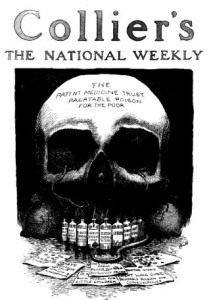
The kerfuffle over Kim Kardashian's drug-promoting Instagram selfie is nothing new: As long as the agency has existed, it's had to figure out how to regulate drug advertisements in new forms of communication technology…The rise of social media has raised a parade of new questions for the agency: How is it supposed to monitor person-to-person pharmaceutical recommendations? Can something be considered an advertisement if it’s only 140 characters long? Who is responsible for the accuracy of tweets about a drug? But this isn’t the first time evolving technology has forced the FDA to rethink its role.