
- 5 things to know now about coming OCR HIPAA audits (healthcareitnews.com)

Nothing sends a shock of fear through a hospital C-suite quite like the word audit. And the second phase of HIPAA audits is slated to being in early 2016…Those CIOs, CISOs, CEOs, General Counsel and privacy officers unfortunate enough to receive notification of an impending HIPAA audit from the Health and Human Services Department's Office for Civil Rights will invariably feel that pressure…While security is a crucial aspect to any health organization, it's another thing entirely to plan accordingly for an OCR audit.
…tips for healthcare organizations potentially facing an audit:
- OCR is moving forward with HIPAA compliance audit program
- Compliance audits expected to be in hundreds; not thousands
- OCR has been transparent on topics it will target
- Prepare now in case your organization is selected
- Educate staff and leadership on how your organization is preparing for an OCR audit
OCR will look into security, privacy and breach notification rules to analyze risk, safeguards and implementations, especially those associated with electronic health information and device encryption.
- Study: Outdated technology holding back retailers (drugstorenews.com)

Yesterday’s POS won’t cut it when it comes to providing a consistent experience across channels… retailers are struggling to unify their online and in-store experiences, with existing technology/infrastructure preventing them from moving forward with new omnichannel solutions… 77% of the surveyed retailers believe their legacy point-of-sale is preventing them from providing a consistent customer experience across channels…retailers…face significant challenges getting new technologies rolled out to stores and in helping employees respond to informed, smartphone-enabled shoppers. Key findings include:
- store and the digital experience must be brought together for a continuous, seamless experience
- getting new technologies rolled out to stores is a top challenge
- inventory insight across all channels is important
- real-time visibility into customer activity across all channels is important
- Infographic: Greatest areas of improvement in cybersecurity (healthcareitnews.com)
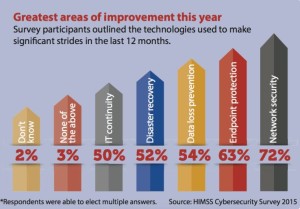
This infographic from the 2015 HIMSS Cybersecurity Survey shows the greatest areas of improvement in cybersecurity that healthcare organizations were able to achieve this year.
- QS/1 releases SharpRx pharmacy management software (chaindrugreview.com)
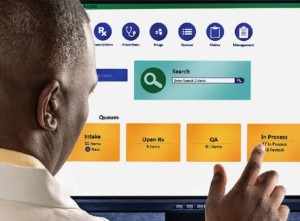
QS/1 this week launched SharpRx...pharmacy management software…brings touchscreen capability and an intuitive design and layout…SharpRx gives small chain and independent pharmacies a more efficient way to fill prescriptions and bill third-party insurance, in turn enabling faster customer service…allowing pharmacists to quickly navigate through the system…to do everyday tasks as quickly as possible…
- Chinese hackers said to target U.S. tech and pharma companies (fiercepharmaasia.com)

Chinese hackers linked to the mainland government attempted to gain entry into computer systems at 7 companies including two unnamed pharmaceutical companies, according to a U.S. cybersecurity researcher…the attacks began on Sept. 26, but were ultimately unsuccessful. News of the attacks came a day after President Barack Obama and Chinese President Xi Jinping had agreed to stop any government attempts to penetrate corporate networks to support their respective domestic industries… Pharmaceutical companies are a natural target for hackers looking to help their clients or employers shave years and billions of dollars off the time and expense of creating modern drugs.
- RelayHealth counts $25 billion in ICD-10 claims already (healthcareitnews.com)6 glaring and disruptive ICD-10 glitches (healthcareitnews.com)

ICD-10 claims "are flowing successfully," to the tune of approximately $25 billion thus far…"Now the industry must be ready to tackle the next set of challenges: timely and correct reimbursement,"…tracking…days until final bill, an important metric that will signal just how disruptive the code change is to the industry… days until final bill has averages 14.8 days since the Oct. 1, but most of those claims were coded in ICD-9. There are still a few weeks until the wave of ICD-10 claims begin to be paid…troubles with ICD-10 could be felt soon… we continue to anticipate a groundswell of issues in getting claims out the door and an increase in denials and rejections...
- Indian drug retailers protest against e-pharmacies (reuters.com)Chemists all over India on strike today (timesofindia.indiatimes.com)

Indian drug retailers shut up shop for the day on Wednesday to protest against the country's growing online pharmacy industry, and threatened to close indefinitely if the federal government did not shut down e-pharmacies…nationwide protest was widely supported, with as many as 850,000 chemists closing their doors, leaving patients waiting in long queues at any pharmacies that were open…Drug retailers are worried…"It is a matter of our livelihoods, we must be prepared for a fight," said pharmacist Satish Vij, who traveled from northern Haryana state to take part in a protest in New Delhi, where about 1,000 people, mostly pharmacists, wore black arm bands, held placards and shouted slogans against e-pharmacies.
- Transitional Chaos or Enduring Harm? The EHR and the Disruption of Medicine (nejm.org)

…complaints might be dismissed as growing pains, born of resistance to change. But transitional chaos must be distinguished from enduring harm…the EHR's limitations and why they've been largely ignored, one key barrier is that physicians who voice reservations are labeled "technophobic, resistant, and uncooperative." But in fact…most physicians recognize the potential of EHRs and appreciate such features as the ability to view data remotely. Nevertheless, the researchers found remarkable EHR-induced distress. They conclude, "No other industry, to our knowledge, has been under a universal mandate to adopt a new technology before its effects are fully understood, and before the technology has reached a level of usability that is acceptable to its core users."...What this surgeon and the rest of us need are patient records that communicate meaning and foster understanding of the particular patient in question. The blanks on our screens can be filled with words, but the process of understanding cannot be auto-populated. Perhaps life without the EHR will soon be unimaginable. But the technology will support and improve medical care only if it evolves in ways that help, rather than hinder, us in synthesizing, analyzing, thinking critically, and telling the stories of our patients.
- 18k chemists down shutters in nat’l strike (timesofindia.indiatimes.com)Chemists’ strike hits patients (indianexpress.com)

Ranchi: Around 18,000 licensed chemists of Jharkhand participated in the nationwide strike of drug sellers on Wednesday to protest against the growing online sale of medicines in the country, posing problems for customers…Private drug stores in Ranchi and across 24 districts kept their shutters down while the Jharkhand Chemists and Druggists Association, the umbrella organization of drug sellers in the state, kept a handful of medicine shops operational to sell emergency medicines to consumers. They demanded the Union government check e-commerce in medicine.
- Patients’ social media posts may be the next big thing for big data (healthcareitnews.com)
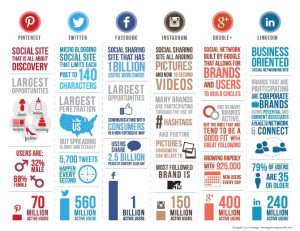
There is a rich potential to identify health trends…Mining patients' social media data could provide enormous insight into overall health outcomes…By handling social media posts much like big data, it just may be possible to link social media posts to health outcomes…If patients consent to sharing this data, a research database could be created, comparable to that of genomic databases. This database could be used by researchers to better understand the relationship between certain patients and their health.