
- Drugmakers Split on Whether to Include Interchangeability Statement in Biosimilar Labels (raps.org)

Drug, biologic and biosimilar companies’ comments on Food and Drug Administration draft guidance on biosimilar labeling reveals a major split between those who do and do not want a statement on a biosimilar’s interchangeability status on each new product's label...FDA has still yet to release its guidance on what interchangeability means, and as FDA has not found any biosimilar to be interchangeable with its reference product…
- Amgen says it...believes a biosimilar label should include a summary of the clinical data, including immunogenicity data, used to demonstrate biosimilarity or interchangeability…
- Pfizer said...biosimilars should not be labeled "as though they were small molecule generic drugs" and that it "recommends that biosimilar labeling include a statement reflecting whether interchangeability has been assessed."
- Merck & Co...says "that a single blanket approach applicable to all biosimilar products is not appropriate, and may cause unnecessary confusion among stakeholders."...recommends that rather than using such blanket statements, FDA take a risk-based approach for each biosimilar…
- Boehringer Ingelheim says that it "does not agree that a biosimilar label needs to include a ‘biosimilarity statement,’...Such information is not ‘essential scientific information needed by health care practitioners for the safe and effective use of a drug.’
- Sandoz...says... "It is self-evident that the very act of highlighting the indications that are extrapolated is being proposed by some groups in order to raise doubts as to the safety and efficacy of the biosimilar for those indications, and perhaps to also imply inferiority of biosimilars across the board.
- EU regulators say China’s Jinan Jinda still missing manufacturing mark (fiercepharma.com)

When EU regulators last year came down on China’s Jinan Jinda Pharmaceutical for slipshod manufacturing work, the company brought in a U.S. consultant to get its Zhangqiu, Shandong, plant in order. But a recent follow-up found that Jinan Jinda continues to ship its antibiotic to some European customers even though its improvement efforts fall short of what they need to be...the European Directorate for the Quality of Medicines said it has been recommended that Jinan Jinda's nitrofurantoin antibiotic be banned from the EU and that the plant's certificate of compliance be suspended, or even "voided."...The investigators reported that there were critical deficiencies in the way the plant handled raw data safety, control and out-of-specification reviews. There were major deficiencies in training, change control, quality assessment, process and cleaning validations.
- GSK and Google launch bioelectronics venture (pmlive.com)Q&A: Glaxo exec says bioelectronics is ‘not science fiction’ (statnews.com)
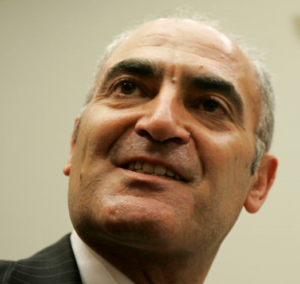
Moncef Slaoui, GlaxoSmithKline
GlaxoSmithKline has joined forces with Google's Verily Life Sciences to establish a new company dedicated to the development of bioelectronic medicines...Galvani Bioelectronics - named for the 18th century Italian bioelectricity pioneer - will combine GSK's drug discovery and development expertise in disease biology with Verily's expertise in highly miniaturised technologies, including data analytics and software development for clinical application...Together, we can rapidly accelerate the pace of progress in this exciting field, to develop medicines that truly speak the electrical language of the body...Bioelectronic medicine is concerned with the electrical signals firing between the body's nervous system and organs, working to regulate the faulty nerve impulses that occur in many illnesses.
- Medicare Delays Mandate on Claims for Unused Part of Drug Doses (ashp.org)

Hospital clinics and outpatient departments that bill Medicare for unused portions of certain medications recently gained six additional months to meet newly mandated documentation and billing requirements...the Centers for Medicare and Medicaid Services announced that Medicare administrative carriers must delay until January 1, 2017, implementation of a policy requiring the use of the "JW" modifier on Part B claims for appropriately discarded leftovers from single-use vials or packages...CMS introduced the JW modifier—a code that essentially enables itemized billing for the unused portion of certain medication vials—in 2007. But the agency allowed each MAC to decide whether to require the use of this billing mechanism or, instead, reimburse for wasted medication without separately itemizing it...Hospitals aren't required to bill for wasted medications, but those that don't are missing out on full reimbursement for eligible products...The...communication from CMS did not specify the reason for the implementation delay.
- Drug lobby plans counterattack on prices (politico.com)
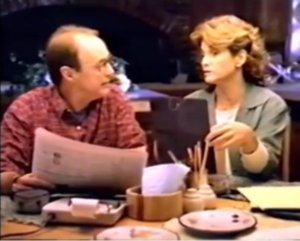
Harry and Louise - romancing public opinion
It is just one part of a larger effort by the K Street powerhouse to seize control of the public narrative over drug prices...Washington’s powerful drug lobby is gearing up to spend hundreds of millions of dollars on a post-election ad war pushing back against politicians from both parties who have savaged its members over drug prices...The massive campaign by the Pharmaceutical Research and Manufacturers of America — expected to start positive by highlighting drugs that save or prolong lives — will dwarf the $20 million that health insurers spent on the iconic "Harry and Louise" campaign credited with sinking Hillary Clinton's health reform plan in the early 1990s.
- Pharmacy benefit managers are restricting access to lots of drugs next year (statnews.com)The ‘gouge factor’: Big companies want transparency in drug price negotiations (statnews.com)
In the latest bid to control prescription drug spending, the nation’s largest pharmacy benefits managers are again excluding dozens of medicines from their lists of products that are covered by health insurance…Express Scripts notified its customers that next year, 85 medicines will be excluded from its national formulary, and, as a result, the PBM hopes to recognize about $1.8 billion in savings, up from $1.3 billion this year. The number of excluded medicines, by the way, is down slightly from the 88 prescription drugs that were excluded from its 2016 formulary...CVS Health released its own 2017 formulary that will exclude another 35 medicines, including 10 that were called "hyperinflationary." As a result, CVS is now excluding a total of 131 medicines and boasts such moves have saved more than $9 billion over the last five years…Recently, a group of two dozen of the largest names in Corporate America — including Macy’s, Coca-Cola and American Express — formed an alliance (Health Transformation Alliance) to find ways to lower health care costs. One notion they are exploring is to change the way PBMs are paid due to concerns that the rebates the PBMs collect from drug makers on behalf of clients are not always passed along. The PBMs have disputed this argument.
- Pfizer agrees to settle shareholder class action on Celebrex and Bextra (fiercepharma.com)
Pfizer’s Bextra (valdecoxib) has not been on the market in more than a decade, but the litigation tied to it and pain drug Celebrex (celecoxib) continues to play out. The New York drugmaker has now put to rest a long-running class action by Pfizer shareholders who said a controversy over the drugs’ safety whacked the stock price and cost them a lot of money...Pfizer last week reached an agreement-in-principle to resolve the securities class action case for all defendants...the resolution is pending court approval and the terms are confidential until a formal agreement has been approved...The pain drugs made Pfizer a lot of money, at one time being among the company’s best-selling meds. But the controversy over their risks has also cost it tremendously. In 2009, Pfizer agreed to hand over $2.3 billion to settle a Department of Justice probe into its marketing of Bextra...And last year, the drugmaker settled another related investor suit for $400 million.
- Express Scripts bars new launches from Lilly, Merck and shuts out Novo for 2017 (fiercepharma.com)

For the third year in a row, Express Scripts unveiled a new national formulary excluding dozens of drugs. And for the third year in a row, a short list of winners and losers comprises some of Big Pharma’s biggest launches...The list of excluded meds--85 for 2017--covers many of the same brand names as before. For instance, Novo Nordisk’s blockbuster GLP-1 diabetes drug Victoza and two of its top-selling insulins remain barred, as Express Scripts favors Eli Lilly’s diabetes range--and most likely, Lilly’s discounts. AbbVie’s hepatitis C cocktails Viekira Pak and Technivie remain the chosen therapies in that field, with Gilead Sciences' first-to-market meds Harvoni and Sovaldi out in the cold...Express Scripts and its biggest pharmacy benefits rival, CVS Health, started the exclusionary formulary trend a few years ago by kicking off a handful of meds that they saw as too costly and easily replaced...Express Scripts continued its tradition of punishing drugmakers that have pushed through big price hikes, used co-pay discount cards to hawk me-too meds, and employed other strategies the PBM considers no-nos.
- Veeva Streamlines Drug Giants’ Ability To Get Medicine Approvals (investors.com)

When health care behemoth Johnson & Johnson decided last year to use Veeva Systems' software for gathering data from clinical trials needed to get a new drug approved, Veeva's rivals took notice..."They (J&J) said we're going to standardize this globally, and within 12 months we had 6 customers (among the 20 biggest drugmakers) do the exact same thing,"...one... goal in mind -- replace biopharma companies' legacy systems with cloud-based software designed to make their painstaking regulatory requirements a lot less painful...The cost of developing a new drug has soared to $2.6 billion, up from about $1 billion in 2000 in inflation-adjusted dollars, according to the Pharmaceutical Research and Manufacturers of America. Because the stakes are so high, more large drug developers have decided in rapid succession to junk their prior technology investments...The key to Veeva's success is that it has brought together enterprise software expertise with industry-specific expertise...
- Precision medicine market to skyrocket past $87 billion (healthcareitnews.com)

Cancer treatments, drug discovery, genome sequencing...are all driving big spending for personalized and precision medicine...Driven by demand for personalized medicine in cancer treatments and advancements in new healthcare technologies, the precision medicine market is expected to reach $87.79 billion by 2023, according to a report by Global Market Insights...Revenue growth will be sustained by favorable government regulations and standards...The trend toward an individualized diagnosis approach is growing thanks to large-scale biologic database development, efficient methods for patient characterization, and computational tools to analyze large data sets...Recent research advances have helped expand benefits to various aspects of healthcare by enabling better understanding of disease mechanisms, assessment of disease risks and prediction of optimal therapy...A large number of investments in diagnostic research will further accelerate the shift from treatment to preventive medicine in healthcare...