
- Major global partnership to speed antibiotic development launched (washingtonpost.com)Antibiotics funding splurge gets mixed reception (nature.com)

U.S. and British officials announced an ambitious collaboration...designed to accelerate the discovery and development of new antibiotics in the fight against one of the modern era’s greatest health threats: antibiotic resistance...CARB-X, for Combating Antibiotic Resistant Bacteria Biopharmaceutical Accelerator, will create one of the world’s largest public-private partnerships focused on preclinical discovery and development of new antimicrobial products...The undertaking includes two agencies within the U.S. Health and Human Services Department that focus on biomedical research and Britain’s Wellcome Trust, a London-based global biomedical research charity. It also includes academic, industry and other nongovernmental organizations...The partnership is committed to providing $44 million in funding in the first year and up to $350 million in new funds over five years to increase the number of antibiotics in the drug-development pipeline. The ultimate goal...is to move promising antibiotic candidates through the critical early stages so they can attract enough private or public investment for advanced development and win approval by U.S. and British regulatory agencies...
- The best drug to fight Zika may already be approved and out there, study suggests (statnews.com)

Several teams of scientists are racing to develop a vaccine for the Zika virus. But what if a drug that already exists could stop an infection in its tracks?...According to new research, it’s not a totally crazy idea...A group of researchers has identified two dozen Food and Drug Administration-approved drugs that have shown some ability to block Zika from infecting human cells in the lab, according to a paper published...in the journal Cell Host & Microbe. Some of these drugs — which treat infections, cancers, and even depression— also showed potential to prevent infection in certain cells tied to fetal defects in pregnant women...the next steps in testing the drugs against Zika, and added that scientists should consider using some of the drugs together because they work in different ways...The candidate drugs don’t all share certain characteristics...While some have shown past hints that they can fight flaviviruses — the virus family that includes Zika — others had never before shown any antiviral ability, according to the study...
- This startup is using tech to make animal testing in clinical trials more ethical (medcitynews.com)

Dog as man’s best friend...Now a small startup in Philadelphia is making the saying applicable to the pharmaceutical and drug development world...Drugs that are developed by pharmaceutical companies are...tested first in animals to evaluate their safety and how they interact with living tissue. But the typical testing method is to take a healthy animal, give them a certain disease, test the drug, therapy, or medical device, and then kill them...The One Health Company is trying something new by finding dogs (and cats) with naturally occurring diseases that are also present in humans, like bone cancer, and testing new drugs or therapies on them. The goal is two-fold: Provide pro-bono care for pet owners to heal their own pets, while facilitating bringing new drugs to market by collecting data for pharmaceutical companies...The...approach...is notably different. Pets remain with their families, diseases are never induced, and putting a pet down is never considered an option in any of their clinical trials. Families caring for their sick pets as they undergo these trials collect data, via smartphone, on their pets’ behavior and habits using proprietary clinical trial management software...
- How Buprenorphine Implants Help People Fight Opioid Addiction (forbes.com)Implant for Opioid Dependence (req subscription) (jama.jamanetwork.com)
Poor medication adherence can lead to reduced treatment benefits, even death in some cases. Implants are being used by some medical professionals to increase the likelihood of patients “following the doctor’s orders.” Specifically, some clinicians are using these devices in individuals with an addiction to opioids...Even though buprenorphine can be used to treat opioid addiction, its efficacy is limited by the potential lack of adherence to daily, sublingual doses. To...increase...compliance among patients undergoing buprenorphine treatment...the FDA approved the first buprenorphine implant for the treatment of opioid dependence...Called Probuphine, the treatment provides a low-level dose of buprenorphine for six months...This treatment option may also be considered an effective relapse prevention tool. Icahn School of Medicine at Mount Sinai researchers found...
- GlaxoSmithKline gives U.K. some post-Brexit love with $360M in plant investments (fiercepharma.com)

GlaxoSmithKline is not planning to exit the U.K. just because the U.K. is exiting the European Union. As if to emphasize its commitment, the drugmaker today said it intends to put a big chunk of money into expanding its manufacturing there...GSK will invest £275 million ($360.3 million)...(Specifically...£92 million at Barnard Castle to build an aseptic sterile manufacturing plant for biologics, £110 million to expand API production for HIV drugs and vaccines at the Scotland plant and £74 million at the Ware site for expansion of production of inhalers for its Ellipta respiratory drug)...The company said it expected the expansion to lead to some unknown number of new jobs and provide further work for the 2,750 people already working at the three sites...The company said there were plenty of reasons to feel good about new U.K. investments. It lauded the...benefits of the so-called patent box tax legislation from several years ago which taxes at a lower rate profits on new intellectual property created in the U.K.
- The Radical Experiment That’s Changing the Way Big Pharma Innovates (fortune.com)

J&J has thrown open its R&D doors — to all comers. Will this uber-open-access strategy work? ...Just five years ago, one of the last places one would have looked for innovation at Johnson & Johnson was in its Merryfield Road lab in La Jolla, Calif...The R&D facility for the healthcare giant, No. 103 on Fortune’s Global 500 list, had become something of a scientific wasteland...These days, the gleaming, state-of-the-art space is teeming with entrepreneurial spirit and cutting-edge science. What’s odd, though, is that these researchers toiling away within J&J’s walls—and making use of J&J’s abundant resources—do not work for the company. Nor do the findings or the discoveries they produce there belong to J&J. Some of these drug scientists even receive funding from J&J’s competitors. As for the venerable, 130-year-old company that’s paying for all this largesse, it claims it wants nothing more out of the arrangement than for its tenants—all life science start-ups—to succeed.
- Medicare safeguard overwhelmed by pricey drugs (toledoblade.com)

A safeguard for Medicare beneficiaries has become a way for drugmakers to get paid billions of dollars for pricey medications at taxpayer expense, government numbers show...The cost of Medicare’s “catastrophic” prescription coverage jumped by 85 percent in three years, from $27.7 billion in 2013 to $51.3 billion in 2015...Out of some 2,750 drugs covered by Medicare’s Part D benefit, two pills for hepatitis C infection — Harvoni (ledipasvir/sofosbuvir) and Sovaldi (sofosbuvir)— accounted for nearly $7.5 billion in catastrophic drug costs in 2015...The pharmaceutical industry questions the numbers, saying they overstate costs because they don’t factor in manufacturer rebates. However, rebates are not publicly disclosed...Medicare’s catastrophic coverage was originally designed to protect seniors with multiple chronic conditions from the cumulatively high costs of taking many different pills. Beneficiaries pay 5 percent after they have spent $4,850 of their own money. With some drugs now costing more than $1,000 per pill, that threshold can be crossed quickly...
- Gilead hep C drug prices blamed for England’s health service rationing treatment (statnews.com)
Faced with budgetary constraints, England’s National Health Service took several controversial steps to delay coverage of Gilead Sciences’s pricey hepatitis C treatments, but did so at the expense of patients, according to an investigation by the BMJ (British Medical Journal)...Specifically, the agency’s moves caused delays in providing treatment to many of the estimated 160,000 hepatitis C patients, while others were unable to obtain the medications due to rationing. As a result, some people are now traveling out of the country to receive treatment. Meanwhile, Gilead has been blamed for igniting the problem due to its pricing practices...Gilead has regularly maintained that the high cure rates will eventually lead to lower health care costs by reducing the need for hospitalizations and other treatments for liver cancer and liver transplants. The NICE recommendations acknowledged such calculations. But such savings are only recognized later and, meanwhile, a growing number of payers in various countries complained the drugs were budget busters..."It is truly ironic that NHS England should choose to start rationing drugs that are so effective they cure almost everyone who is treated," The Hepatitis C Trust, a patient group in the UK, told the BMJ. The group is seeking a judicial review of the decision to ration the drugs, which...could have "repercussions for other patients as more new drugs increasingly become available at higher prices."
- More than half of adults misuse medications, study finds (washingtonpost.com)

More than half of adults and 44 percent of children who were drug-tested by a national clinical laboratory last year misused their prescription medications, according to a study...by Quest Diagnostics...Misuse of medications can mean that patients were either taking too much, too little or none of their medications. It also can mean test results showed they were using other drugs that had not been prescribed, including illicit drugs -- as 45 percent of adults were doing...The rate of misuse identified by the study might skew higher than what would be found in the general U.S. population. Some patients were tested because their health providers determined there was a "high probability" of them mismanaging medications...The study also identified the drugs most often misused by patients depending on their age: amphetamines for youth 17 and under, but benzodiazepines and anti-anxiety medications for adults 25 and older, followed by opioid painkillers.
- Medical groups push to water down requirements for disclosing industry ties (statnews.com)S. 2978: Protect Continuing Physician Education and Patient Care Act (govtrack.us)OpenPayments (cms.gov)
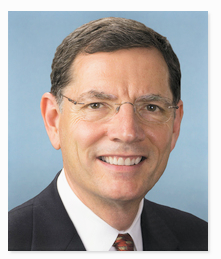
Senator John-Barrasso
Nearly 100 national and state medical societies from around the United States are backing a Senate bill (Protect Continuing Physician Education and Patient Care Act, (SB 2978) that would exempt drug and device makers from reporting payments made to doctors for receiving continuing medical education...sessions, medical journals, or textbooks. Among them are the American Medical Association and the American College of Cardiology...The move is the latest push in a long-running effort to roll back requirements for reporting such payments to a federal database, which tracks financial relationships between companies and physicians. Known as OpenPayments, the database was launched...in response to concerns that financial ties between drug firms and device makers and doctors may unduly influence medical practice and research. It was included in the Sunshine Act provision in the Affordable Care Act. A recent analysis found that payments can affect prescription rates...