
- Teva, one of the biggest generic makers, joins the the brand-name club (statnews.com)
In a move that underscores the changing landscape of the pharmaceutical industry, the chief trade group has officially accepted one of the world’s largest generic drug makers into its ranks...Teva Pharmaceuticals became a member of the Pharmaceutical Research and Manufacturers of America, which has burnished its reputation on Capitol Hill and elsewhere as a staunch defender of brand-name companies...The decision to accept Teva...came as a surprise to some industry watchers, given the historical rivalry between brand-name and generic manufacturers...The move, however, isn’t all that unexpected, if only because the lines are beginning to blur.
- Pfizer strikes second deal this year for drug production in Russia (fiercepharma.com)
Pfizer was a little behind some of its peers in establishing local manufacturing in Russia but it's on a roll now, having just announced its third deal in several years. It is hammering out an agreement with Russia’s NovaMedica for a new manufacturing plant...Construction will begin this year on a plant in Russia’s Kaluga region with the expectation that the plant will be producing drugs by 2020...Pfizer...not yet disclosing how big of an investment the New York company will make in the manufacturing facility...The Pfizer deal calls for NovaMedica to license technology for production of more than 30 products including treatments for cancer, inflammatory disease and fungal infections, it said. Most of the drugs are on Russia’s essential medicines list...
- Gilead avoided nearly $10 billion in taxes last year thanks to tax dodges (statnews.com)
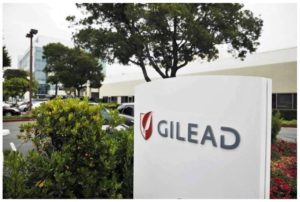
Thanks to a pair of pricey hepatitis C treatments, Gilead Sciences has become one of the world’s largest drug makers. Since 2013, revenues have tripled to more than $32 billion and profits grew sixfold, exceeding $18 billion. But beyond successful marketing of lifesaving medicines, the company has excelled in another way — using loopholes to avoid paying billions of dollars in taxes...By transferring certain key assets to Ireland, Gilead was able to take advantage of tax laws that allowed some US sales to be shifted overseas and yield a significantly lower tax rate. Those overseas profits, meanwhile, mushroomed to $28.5 billion, and Gilead was able to escape paying $9.7 billion in US taxes last year, according to a new report...
- Obama Declares ACA Success in JAMA, Calls for Taking Steps to Reduce Drug Costs (ajmc.com)United States Health Care ReformProgress to Date and Next Steps (jama.jamanetwork.com)
President Barack Obama today declared in a special issue of JAMA that the Affordable Care Act has worked, both by driving down the share of Americans without health coverage and by "transforming healthcare payment systems," that are improving quality and reining in spending...The president’s article, "United States Health Care Reform: Progress to Date and Next Steps," highlights what he sees as the achievements of the signature law often called "Obamacare," while calling for more work to cut prescription drug prices and fill gaps where market competition is lacking, perhaps with a "public option."..."Americans can now count on access to health coverage throughout their lives, and the federal government has an array of tools to bring the rise of healthcare costs under control," Obama writes. "However, the work toward a high-quality, affordable healthcare system is not over."
- Lawyers for Roche, Biocon trade contempt charges in Herceptin biosim case (fiercepharma.com)

A long-running court case filed in India by Roche seeking to prevent the use of label language by...Biocon and Mylan from claiming similarity to its aging breast cancer med Herceptin (trastuzumab) has turned tense--with both sides now seeking contempt-of-court charges...In the case of Roche...Biocon "violated a previous court order" temporarily barring any claims to similarity by using such language in a presentation at an international scientific conference on clinical trials with trastuzumab...At the same time, Biocon accused Roche of "disparaging statements" about the company as part of a campaign to block approval efforts for a trastuzumab biosimilar by Biocon in other countries...noting that Phase III trials are underway in the U.S. for a version of the breast cancer therapy...At the heart of the case is...that Biocon and...Mylan could not use the label biosimilar for versions of Roche's med.
- Pharma relying more on non-GAAP accounting and the SEC is noticing (fiercepharma.com)

Valeant Pharmaceuticals got chastised by the SEC this year for its use of non-GAAP (Generally Accepted Accounting Principles) accounting to make its performance look better than it might have actually been, one in a long list of issues that are dogging the company. But Valeant is far from the only pharma company playing a little loose with the rules and the trend is getting worse, even as investors and the SEC are watching more closely...GAAP accounting was developed so investors can get an apples-to-apples comparison of how companies are doing quarter to quarter and year after year. But some companies are not all that crazy that the rules make it harder to make themselves look good to investors. Companies have been using non-GAAP measurements, sometimes on individual line items, and the SEC has been taking note...the SEC updated guidance on the use of non-GAAP reporting, detailing how it should and--more importantly--shouldn’t be used...
- Diabetes sales rocket toward $60B, with Novo and Lilly’s GLP-1s first in line for growth (fiercepharma.com)

Two sides of one coin will keep diabetes drug sales growing--big time--through 2025. The disease is growing fast around the world, and treatment arbiters advise a more aggressive approach to blood-sugar control...Combine those two drivers, and diabetes will account for almost $60 billion in 2025 sales across 9 major global markets, GlobalData analysts say in a recent report...But this rising tide of sales won’t lift all treatments equally...Best positioned for growth? GLP-1 drugs, they say, which are poised to grow by 12.4% annually through the next decade...Right now, only a small number of patients are actually hitting blood glucose targets of 7% to 7.5% A1C levels...Doctors are pushing harder to hit those goals, so the number of people needing a second or third add-on drug will mushroom over the next 10 years. "[W]e’ll treat these people fairly aggressively" to get to those A1C levels..."[W]e are not going to tolerate people after 8.5% and 9% like we used to."...despite public health campaigns and awareness campaigns, people will "continue to overeat and under-exercise and they are going to see their weight continue to go up, and therefore their need for more medications will go up with it,"...
- Takeda says Ka-Pow! to IBD in new Marvel comics campaign (fiercepharma.com)Selling Side Effects: Pharma's Marketing Machine (drugwatch.com)

The latest Marvel-created superhero, Samarium, has the power to suit up instantly in magnetic and impenetrable full-body armor. But like most superheroes, he also has a secret. And in this Takeda Pharmaceuticals-sponsored comic, it’s inflammatory bowel disease...Takeda worked with the Crohn’s and Colitis Foundation of America and Marvel Custom Solutions to create its first-ever pharma company-sponsored superhero to shine a light on the many sufferers of IBD who hide their disease. The disease awareness campaign includes the graphic illustration series with IBD-suffering hero Samarium, as well as digital paid ads and social media shares...
- Drugmakers’ Pricing Power Remains Strong (wsj.com)
Pharmaceutical companies’ power to raise prices is firmly intact despite pushback from health insurers, scrutiny by U.S. lawmakers and anxiety about rising prescription drug spending...More than two-thirds of the 20 largestpharmaceutical companies said price increases boosted sales of some or most of their biggest products in the first quarter...Shares of many drugmakers have slumped this year, partly because of investors’ concerns that Congress could implement new price controls, or that public scrutiny would cause companies to voluntarily ease price increases...The upshot is that in a period of low inflation and sluggish economic growth, drugmakers’ power to raise prices still exceeds most other industries. And though it’s long been common for companies to gradually raise prices on drugs after launching them, the magnitude and frequency of the increases have grown in recent years...
- Merck to cut 360 R&D jobs, close one facility, and expand elsewhere (statnews.com)
As the center of gravity shifts in the life sciences, Merck is reorganizing its R&D teams by closing one facility, eliminating about 360 jobs from three sites, and transferring other employees to a pair of new facilities that are slated to open on opposite sides of the country...planned changes affect drug discovery, preclinical, and early development work. As a result, the company is closing a facility in North Wales, Pa...Merck is cutting jobs in Kenilworth and Rahway, N.J... less than 10 percent of roughly 3,600 people in early-stage R&D work at these three locations will lose their jobs...Merck later this year expects to open new labs at its Cambridge, Mass., location, which will focus on emerging sciences, including the role of the microbiome in disease. The company also plans to open a new research site in the San Francisco Bay area to focus on cardiometabolic disease and oncology...