
- UK cancer charities call for NICE reform (pharmatimes.com)
Leading UK charities have written to Prime Minister David Cameron urging a review of the system for commissioning drugs in England and Wales which, they argue, has put thousands of cancer patients at risk of missing out on the most innovative therapies...In an open letter to the Prime Minister...the heads of leading cancer charities warn that plans to leave the appraisal methodology employed by the National Institute for Health and Care Excellence unchanged will soon lead to effective new cancer medicines struggling to gain approval...Under current government proposals the Cancer Drugs Fund’s assessment of medicines will be handed back to NICE..."We must not forget the CDF was established as an emergency measure to bypass the very NICE appraisal process to which it is now returning because it was not working for cancer patients," the charities said, and called for "a sustainable system, flexible enough to ensure that the best cancer drugs can routinely benefit NHS patients"...With an anachronistic NICE system still unable to engage in price negotiation, it’s inevitable that patients will not be able to access the clinically-proven medicines that could mean so much to them...it is "high time" for a review of the system.
- Would A Wider Variety Of Vial Sizes Reduce The Cost Of Chemotherapy? Not Likely (healthaffairs.org)

The high prices of many patented pharmaceuticals, especially chemotherapy drugs, pose substantial challenges to the budgets of public programs, private insurers, and patients and their families. Addressing this problem in the US context, through changes in drug negotiating rules, reimportation, price controls, or patent reform is pragmatically daunting and politically fraught. It’s natural, then, to seek ways around the problem — options that might reduce the price of drugs while sidestepping that charged territory.
- Vial Size
- Pricing
- Unintended Consequences
Pharmaceutical pricing is a tangled issue, requiring tough tradeoffs that are politically challenging. Unfortunately, we’re not likely to avoid those challenges with a clever shortcut.
- Will Rx Ballot Initiative Save Money? Report Offers an Educated Shrug (realclearhealth.com)

It is "highly uncertain" how much money the state of California would save if a ballot measure to cap drug prices passes in November — and it might not save money at all. That’s the key finding in a preliminary report by the Legislative Analyst’s Office...The ballot initiative, known as the Drug Price Relief Act, would prohibit the state from paying more for a prescription drug than the lowest price paid by the U.S. Department of Veterans Affairs...But the financial impact on the state is unclear, the analyst’s office said, for two reasons.
- One, the lowest prices paid by the VA are not known and there’s no guarantee they will be revealed to the public — or to state officials.
- Two, it’s unclear how drug companies would react if the measure became law: The companies might, for example, raise prices on the VA, nullifying the intended effect.
"This measure is misleading and unworkable," Hollaine Hopkins, executive director of the Lupus Foundation of Southern California, said in a prepared statement. "It will lead to increased red tape and bureaucracy, and could actually increase costs for the state’s taxpayers."...Opponents of the measure had raised more than $58 million as of May 4, according to the California Fair Political Practices Commission. The AIDS Healthcare Foundation has raised a little more than $4 million in support of the initiative.
- FDA wants drug makers to pay fees to review OTC medicines (statnews.com)
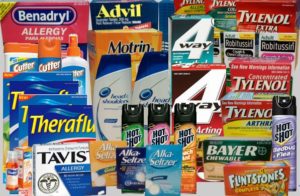
The US Food and Drug Administration is paid fees by the pharmaceutical industry to review brand-name and generic drugs. Now, the agency wants to collect money to review over-the-counter medicines...Specifically, the agency wants companies to pay for reviewing OTC monographs. Unlike brand-name and generic drugs, which involve individual companies seeking approval to market individual drugs, the OTC monographs refer to multiple medicines that share the same ingredient for the same use. Moreover, numerous companies can make these drugs, but do not require FDA approval prior to marketing...the pharmaceutical industry has largely supported so-called user fees...the fees helped transform the relationship between companies and regulators, who are under increasing pressure to meet benchmarks for speeding applications through the review process...Given the workload, the FDA argued that user fees will only bolster its ability to review OTC medicines…the large OTC companies interested in a modernized system who will support it in exchange for some concessions from FDA...The smaller, more fragmented (companies) will probably oppose it as (fees represent) more regulatory burden on them in an area that has worked for decades without fees
- Valeant to increase hospital discounts for two heart drugs (reuters.com)

Valeant Pharmaceuticals International Inc said on Monday it would raise the discounts to hospitals on its heart drugs Nitropress and Isuprel to as much as 40 percent off list prices after shareholder William Ackman pledged to revisit controversial price increases on the treatments...Valeant has been criticized by doctors and is being investigated by the U.S. Senate after having raised the price of Isuprel by about 720 percent and Nitropress by 310 percent...The company said on Monday all hospitals were eligible for a rebate of at least 10 percent, with rebates totaling 20 percent, 30 percent or 40 percent based on the volume purchased during a quarter...Valeant did not cut the list prices of the drugs.
- 70 Groups Call on FDA to Revert Back to Meaningful Suffixes for Biosimilar Names (raps.org)
The fight over how biosimilars should be named in the US isn’t over yet despite the Food and Drug Administration’s use of a non-proprietary name with a random suffix for the second approved biosimilar and plans to do the same for all future biosimilars...The group of nonprofits and other stakeholders, spearheaded by the Alliance for Safe Biologics, requested in a letter that FDA use meaningful suffixes for biosimilar non-proprietary names, such as the one used with the first biosimilar approval for Zarxio (filgrastim-sndz). The group said meaningful suffixes are preferable to the random suffixes described in the FDA’s draft guidance on biosimilar naming...In that draft guidance, FDA said the meaningless suffixes will help prevent inadvertent substitution (which could lead to medication errors) of biologics that are not determined to be interchangeable by the FDA..."Meaningful suffixes are easier for patients, providers and pharmacists to both recognize and remember, thus facilitating accurate association between adverse events and specific products."
- The Impact of Precision Medicine and the 21st Century Cures Act on Modern Pharma (specialtypharmacytimes.com)
The 21st Century Cures Act will have a huge impact on the pharmaceutical industry nationally and globally...All of the major pharmaceutical companies target the United States...they will have to comply with the...Act (when passed)…Precision medicine, meanwhile, is a programme announced...last January...it is an emerging approach for disease treatment and prevention, which includes a patient’s variability in their genes, environment, and a person’s lifestyle...What has the precision medicine initiative got to do with the 21st Century Cures Act?.. Precision medicine would allow the inclusion of much more technology driven healthcare innovation and would permit the introduction of additional personal data and information into health science...The requirement to get drugs to market faster is evident. However, a lack of interoperability poses a huge challenge when it comes to getting patient data consolidated in time for clinical trials...A large part of the new legislation is aimed at trying to connect the research and development arms of life science companies to health IT or digital health specialists...all pharmaceutical companies will benefit from the Act as they will be able to get their drugs out faster. On the technology side, the major beneficiaries of the Act will be the big data analytics players, since this lies at the heart of speeding up approvals...The good news is most (if not all) of the major players are fully aware of the challenges and opportunities of the Act.
- Secret rebates, coupons and exclusions: how the battle over high drug prices is really being fought (washingtonpost.com)Expected Growth in PBM Exclusion Lists Poses a Challenge to Drug Developers (csdd.tufts.edu)

A battle for profits between two arms of the health-care industry has made privately insured patients into pawns, offering them a growing number of discounts on their drug co-pays while ultimately leaving them with fewer drug options overall...The research...Pfizer, found that the number of coupons that drug companies offer to help defray the portion that insured patients pay for their drugs has exploded. At the same time, the companies that provide prescription coverage have increased the number of drugs they refuse to cover, in an effort to gain leverage with drug companies in price negotiations...researchers at the Tufts Center for the Study of Drug Development illustrate how two profitable, behemoth industries — with drug companies that sell and develop treatments on the one side and with companies that negotiate prices and pay for drugs on the other — make shifting alliances with patients to protect their own interests...Each industry has its own seemingly pro-patient move: Drug manufacturers offer coupons to reduce co-pays that people are faced with at the pharmacy counter. Pharmacy benefit-management companies, hired by health-insurance companies to manage drug benefits, negotiate aggressively to secure rebates that lower the cost of drugs...The study shows how these tactics are actually parries and counterattacks in both industries' attempts to make money...
- The deceptive generosity of coupons
- Fighting coupons by playing hardball
- Pfizer blocks its drugs from use in lethal injections (reuters.com)

Pfizer Inc has taken steps to ensure that none of its products are used in lethal injections..."We are enforcing a distribution restriction for specific products that have been part of, or considered by some states for, their lethal injection protocols," the...drugmaker said on its website. "Pfizer strongly objects to the use of its products as lethal injections for capital punishment."...The move shuts off the last remaining open market source of drugs used in executions, following similar actions by more than 20 U.S. and European drugmakers, according to a report in the New York Times...Pfizer’s distribution restriction limits the sale of the seven products to a select group of wholesalers, distributors, and direct purchasers under the condition that they will not resell these products to correctional institutions for use in lethal injections, the company said.
- Judge unseals records from Kentucky’s OxyContin lawsuit (cnbc.com)
A judge has unsealed records from a Kentucky lawsuit against the maker of the prescription painkiller OxyContin, including the secret testimony of a former company president...Pike Circuit Court Judge Steven Combs ordered the records be released in 32 days. But Combs said he would delay his order if Purdue Pharma appealed the decision...OxyContin is a powerfully addictive prescription painkiller that was marketed for its ability to slowly release its effects over a 12-hour period. The company suggested this long-acting formula made it less addictive and safer for patients. But users quickly found the pill lost its time-release qualities if it was crushed, resulting in an instant high...In 2006, the company agreed to plead guilty and pay more than $630 million to settle federal charges that it misled doctors and patients about the risks of its top-selling drug...The judge in the case agreed to seal any records Purdue Pharma marked as confidential. Statnews.com...sued to have the records released once the case was resolved. They are particularly interested in Sackler's testimony, as it could reveal how much the company knew about how addictive OxyContin truly is...Lawyers for Purdue Pharma said the company agreed to hand over documents and give Kentucky's attorneys access to high level company officials because it believed the documents would never be made public. They argued that releasing the documents now would betray that trust and bog down the state's civil court docket.