
- Valeant, Philidor RX, and the Uninformed Attack on Specialty Pharmacy (drugchannels.net)
...Valeant Pharmaceuticals finally explained its complex interactions with Philidor RX Services, a so-called “specialty pharmacy” that has a previously-undisclosed financial relationship with Valeant...Valeant has been labeled the “Enron of the pharmaceutical industry,” although I don’t know if any of the alleged shenanigans are true…the controversy has tarred the entire specialty pharmacy industry along with manufacturers’ legitimate specialty pharmacy relationships…Philidor RX is not a specialty pharmacy. I also suggest what the Valeant-Philidor relationship could mean for payer surveillance of manufacturers’ copay offset programs…I believe (hope?) that over time, everyone will recognize the differences between a true specialty pharmacy and a company such as Philidor...expect greater scrutiny of manufacturers’ specialty channel strategies. Smaller independent specialty pharmacies should also expect greater oversight, as manufacturers and payers work to validate the business operations of their trading partners.
- Valeant Forms Committee to Investigate Ties With Pharmacy (nytimes.com)Drug Giant Valeant Tries To Rebut Allegations Of Fraud (npr.org)

Embattled Valeant Pharmaceuticals International…that its accounting related to its relationship with a specialty pharmacy was legal and appropriate, but added that its board was nonetheless forming a special committee to investigate the relationship…disclosed for the first time last week that it had acquired an option to buy the specialty pharmacy, Philidor Rx Services, which dispenses some of Valeant’s dermatology drugs… If doctors send prescriptions to Philidor, rather than having their patients go to a retail pharmacy, it makes it harder for the pharmacies or insurers to switch the patient to a cheaper generic alternative…Philidor negotiates for reimbursement with insurers, relieving doctors of the hurdles that might otherwise discourage them from prescribing a high-priced drug. Patient co-payments are also reduced or eliminated, removing another barrier to use of Valeant’s drugs.
- AbbVie, hepatitis C and patient deaths: What the wags say (pharmalot.com)
In a setback to AbbVie, the Food and Drug Administration yesterday warned of liver damage from its two hepatitis C treatments, setting off a chain reaction that is reverberating across the pharmaceutical industry. With as many as seven patient deaths and several liver transplants attributed to the drugs, AbbVie stock plummeted and Wall Street fortune tellers went to work betting on winners and losers…FDA review found five cases that were probably related to the drugs, called Viekira Pak and Technivie…Another five were possibly related. Of the 10 patients, seven died and each seemed to have advanced liver disease or cirrhosis before using the drug. So the FDA is not willing to rule out the possibility that “some events might have occurred even if the patient hadn’t received treatment.”
- After the M&A bubble bursts: the four types of pharma firm to survive (in-pharmatechnologist.com)

An advisor to the pharma industry on M&A says the current boom in pharma valuations will not last, and R&D cost pressures will reshape firms of the future… transaction sizes of mergers and acquisitions in pharma have hit an all-time high: "You don’t see these revenue multiples in any other industry."…After the bubble bursts: what’s next for pharma?... in response to pressure from governments to lower their healthcare spending…R&D will become prohibitively expensive for medium-sized players, leading companies to reshape themselves according to four strategic archetypes:
- Originators
- Generics and biosimilar makers
- Point-of-call specialists
- Over-the-counter companies
- 15 Medical Conditions in Need of New Medications (pharmacytimes.com)
Americans want more medications to treat obesity and depression, among other conditions…
Obesity, which affects more than one-third of Americans, ranked highest among US physicians who were asked which conditions they wished had more pharmacological remedies…More than 6000 US physicians participated in the "PatientsMap" survey, which was conducted by the Social Survey Research Information Co, M3 Inc, and M3 Global Research and took place between December 2013 and February 2014…According to the US survey results, the following are the 15 conditions that most warrant new medications, with some information on how pharmacists can help these patients:- Obesity (27.4%)
- Depression (24.7%)
- Diabetes (22.1%)
- Dementia (20.5%)
- Migraine (19.5%)
- Anxiety (18.8%)
- Hypertension (17.8%)
- Chronic pulmonary obstructive disorder (16%)
- Lower back pain (15.7%)
- Dyslipidemia (15.6%)
- Osteoarthritis (15.1%)
- Fibromyalgia (14.8%)
- Headache (14.8%)
- Gastroesophageal reflux disease/nonerosive reflux disease (14.3%)
- Diabetic neuropathy (13.9%)
- PSA welcomes key role for pharmacists in dispensing medicinal cannabis (psa.org.au)Position statement: Therapeutic use of cannabis (psa.org.au)
Victorian pharmacists will play a pivotal role under proposals announced by the Victorian Government to make medicinal cannabis available to some patients under exceptional circumstances…pharmacists will dispense medicinal cannabis after authorisation is provided by medical specialists…“Having pharmacists acknowledged as best-placed to dispense medicinal cannabis is welcomed as it ensures that medicines experts are available to advise and counsel patients using these products,”…there were specific eligibility requirements for the scheme based on conditions and corresponding symptoms. These were:
- Severe muscle spasms or severe pain resulting from multiple sclerosis
- Severe pain, nausea, vomiting or wasting arising from cancer, HIV/AIDS
- Severe seizures resulting from epileptic conditions where other treatment options have failed or have intolerable side effects
- Severe chronic pain with the approval of two specialists
- Eli Lilly Profit Beats Analysts’ Estimates on Key Drug Sales (bloomberg.com)
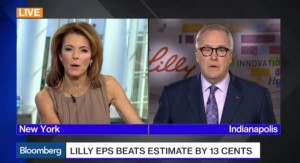
Eli Lilly & Co., seeking to rebound from declining sales, reported third-quarter profit that topped analysts’ estimates and raised its forecast for the year as revenue from key drugs exceeded expectations…Adjusted earnings of 89 cents a share beat the average analyst estimate of 76 cents. Revenue rose 2 percent to $4.96 billion, compared with the $4.98 billion average projection of analysts. Lilly shares climbed 3.5 percent to $79.71 in early trading. (video, John Lechleiter, CEO)
- The eyes may have it, but pharma still needs convincing on branded visual comms (fiercepharmamarketing.com)

Visual and video content is surging online, already making up more than half of all consumer web traffic… pharma marketers in general have lagged behind in adopting traditional consumer strategies, one digital agency is lobbying its drugmakers to consider visual content…When it comes to video use...we want them to put their budgets behind behavior…Stop putting money behind what people don't do and create strategies around what people are actually doing…pharma needs to follow its potential consumers' behavior. Today that means watching videos or looking at visual content online and in social media…that means getting attention more quickly, better engagement and (people) watching longer…
- EQUITY ALERT: Rosen Law Firm Expands Class Period in Securities Class Action Lawsuit Against Valeant Pharmaceuticals International, Inc. (marketwatch.com)

Rosen Law Firm, a global investor rights law firm, announces that it has filed a class action lawsuit on behalf of purchasers of Valeant Pharmaceuticals International, Inc…The lawsuit seeks to recover damages for Valeant investors under the federal securities laws… Defendants issued materially false and misleading statements to investors and/or failed to disclose that:
- deficient internal controls
- relationship with a network of specialty pharmacies used to boost Valeant’s sales of its high-priced drugs
- the use of specialty pharmacies left Valeant vulnerable to increased regulatory risks
- under government scrutiny for its financial assistance programs for patients, pricing decisions and the distribution of its products
- faced the risk of scrutiny over its price increases
- without using specialty pharmacies, Valeant’s financial performance would be negatively impacted
- without using specialty pharmacies, Valeant’s Class Period performance would have been negatively impacted
- true relationship with Philidor and the extent of that relationship
- controlled Philidor
- Valeant’s subsidiary KGA had a secured lien interest on Philidor’s ownership
- engaged in a scheme to manipulate Valeant’s stock price
- public statements were materially false and misleading and/or lacked a reasonable basis at all relevant times. When the true details entered the market, the lawsuit claims that investors suffered damages.
- How Wholesalers Profit from Brand-Name Drug Inflation (But Perhaps Not As Much As You Think) (drugchannels.net)

…let’s take a look at how pharmaceutical wholesalers benefit from inflation in brand-name drugs…Growing drug prices are boosting wholesalers’ top-line revenues…the twelve months ending June 30, 2015, U.S. drug distribution revenues …reached a record $353 billion… wholesalers also generate substantial gross profits as prices increase...agreements with manufacturer and negotiations with customers, however, reduce wholesalers’ ability to retain the full benefit...A wholesaler’s basic business model remains straightforward: Buy low, sell high, collect early, and pay late. These four offsets highlight how wholesalers should never promise what they can’t deliver.
- INFLATION GIVETH
- THE MARKET TAKETH