- Pharma’s newest nemesis? Nestlé works at the intersection of food and drugs to attack illnesses (fiercepharma.com)
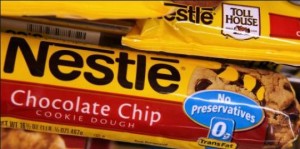
Swiss food company talks turkey with the FDA even as it researches conditions like Alzheimer's…If Big Pharma didn't already have enough to worry about, with patent cliffs, drug price investigations and reluctant payers, it now will have to face the onslaught of a large, well-funded company trying to create hybrid pharma and food products company that would treat conditions from stomach disorders to Alzheimer's disease…the four-year-old health-focused unit of Swiss food giant Nestlé is acting very much like a Big Pharma player these days. It is doing deals for pipeline projects, talking to the FDA about approvals on health-proven products and eyeing the same emerging markets that Big Pharma players have looked to improve their margins…
- Valeant subpoenaed by US prosecutors over drug pricing (reuters.com)Valeant Slumps as U.S. Prosecutors Issue Subpoenas on Prices (bloomberg.com)
Valeant Pharmaceuticals International Inc, under fire for price increases of its two heart drugs, said it was subpoenaed by U.S. prosecutors on its pricing, drug distribution and patient assistance programs…. The company, which came under attack from Democratic lawmakers in late September over "massive" price increases, said it was reviewing subpoenas from the offices of attorneys for the District of Massachusetts and the Southern District of New York…Valeant had tripled Isuprel's price and raised Nitropress price more than six times after buying them in February.
- This Drugmaker Suffered the Consequences of Price Increases (bloomberg.com)
...drugmaker Mallinckrodt Plc spent $1.3 billion to buy a company that sold an injectable form of acetaminophen… the new owner more than doubled the price of the drug, called Ofirmev. Revenue from the medication shot up… hospitals were able to fight back by seeking other options, cutting into Mallinckrodt’s projected sales growth… Mallinckrodt earnings report Aug. 4 that sent shares down 14 percent in a single day, their worst drop on record...stock has slid an additional 38 percent… Ofirmev demand is starting to turn a corner after hitting a low point earlier this year…revenue from the drug will decline year-over-year until the second half of fiscal 2016..Mallinckrodt’s experience underscores the risk for drugmakers that increase prices on medicine that doctors and health-care providers are already accustomed to using. As expenses mount, customers will look for alternatives, no matter how popular or useful the product.
- Investigating the mystery of soaring generic medication prices (theguardian.com)
Without more transparency on how such financial decisions are made…Americans may be doomed to see more generics zoom up in price… under the terms of my insurance with Blue Cross Blue Shield of Rhode Island, it will cost me $85.54. That’s a 232% price increase for…a drug that has been on the market for about 90 years… Americans spend significantly more for prescription medications than do citizens of any other developed nation. We do so directly, through higher prescription costs, and indirectly, as high drug costs drive up our insurance premiums and our taxes, via higher Medicaid and Medicare costs…negotiations between the industry and insurers feature "no transparency"…The bad news? The situation could get worse, and affect more drugs, more insurance companies and more consumers, as consolidation in the pharmaceutical industry reduces the number of potential rivals in the generic drug field.
- Kenya first country to get Novartis drugs for $1 a month (pharmatimes.com)Novartis rolls out access programme for 15 medicines (pharmatimes.com)
Kenya has become the first country to take up the Novartis Access programme, under which the Swiss drug giant is providing a batch of essential medicines at a cost of $1 per treatment per month…15 therapies on offer all target chronic diseases such as diabetes, respiratory illnesses, and breast cancer, the idea being to increase access to potentially life-saving medicines and thereby help reign in their growing spread in areas with limited access to healthcare…In Kenya, noncommunicable diseases...account for 27% of deaths, or almost 100,000 people per year...by 2030, it is estimated that they will be responsible for more than 60% of deaths, highlighting the urgent need for intervention.
- The Real Story Behind Biotech’s Plunge and How to Profit (thestreet.com)
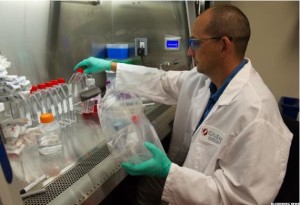
The biotechnology sector has taken a big dive in recent weeks, mostly for reasons that have more to do with political posturing than with industry fundamentals...Let's examine why biotech's plummet happened -- and explore two growth-and-income stocks that are poised to soar because of it.
- Report: AstraZeneca funnels billions into Dutch tax-avoidance scheme (fiercepharma.com)Revealed: how AstraZeneca avoids paying UK corporation tax (theguardian.com)
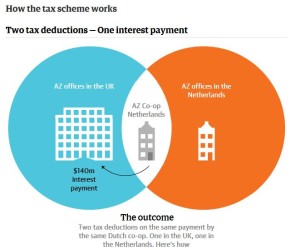
AstraZeneca is not the first company to employ questionable tax-planning strategies, and it certainly won't be the last. But the U.K.-based drugmaker is the latest poster child for tax avoidance…AstraZeneca funneled billions of dollars into the Netherlands to get out of paying corporate taxes back home…AstraZeneca set up a Dutch lending operation and channeled $2.7 billion of internal group loans through its Dutch subsidiaries, charging interest of more than $140 million a year…then registered huge tax breaks in the U.K. and the Netherlands through a process known as "double dipping," or claiming a deduction on the same payment twice…result, the company did not pay corporation tax in the U.K. even though it posted global profits of $4.5 billion in 2013 and 2014.
- Pfizer CEO: Drug-pricing snafu isn’t pharma’s fault. It’s insurers and their poor coverage (fiercepharma.com)Pfizer's CEO Faces The Drug Pricing Firestorm (forbes.com)
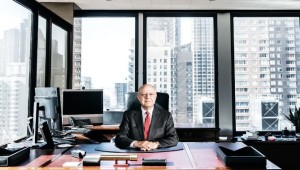
Pfizer CEO Ian Read says he's met the drug-cost enemy, and it isn't pharma. The firestorm over U.S. drug pricing isn't a problem for drugmakers to solve…The public debate about rising drug prices--be they increases for existing meds or 6-figure cancer-treatment costs--overlooks the financial benefits of drug treatment...Read cites cost-benefit analyses showing that Lipitor and other statin meds cost $305 billion between 1987 and 2008, but they generated $1.3 trillion in economic benefits, by preventing heart attacks and strokes, and their costs to the healthcare system.
- Who’s Up Next? More Pharma Companies Expected To Settle Foreign Bribery Cases (forbes.com)

Now that Bristol-Myers Squibb has settled its foreign bribery case with the US government, speculation has turned to which pharma company will be next…Department of Justice will being putting a bigger squeeze on companies…the department is adding to the resources devoted to investigating foreign bribery cases and is focusing on large-value, high-impact matters…Glaxo is a leading example. It paid the largest healthcare fraud settlement ever – $3 billion – to the US in 2012 to resolve criminal and civil allegations of improper marketing practices...Glaxo’s Chinese subsidiary paid nearly $500 million to China after a court found the local subsidiary guilty of bribing healthcare officials. Glaxo is likely to pay millions more to settle bribery charges as both US and UK regulators are investigating the drugmaker’s practices in China, Poland, Jordan and Lebanon.
- Patients’ social media posts may be the next big thing for big data (healthcareitnews.com)
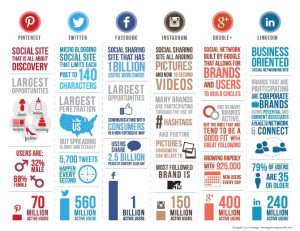
There is a rich potential to identify health trends…Mining patients' social media data could provide enormous insight into overall health outcomes…By handling social media posts much like big data, it just may be possible to link social media posts to health outcomes…If patients consent to sharing this data, a research database could be created, comparable to that of genomic databases. This database could be used by researchers to better understand the relationship between certain patients and their health.