
- Express Scripts Reveals What Really Drives Drug Spending—And Why the Government May Do No Better (drugchannels.net)
Last week, Express Scripts released its 2016 Drug Trend Report for the commercial market…For 2016, drug trend—the year-over-year change in spending—was a mere 3.8% for Express Scripts’ commercial plan sponsor customers. The Express Scripts data also highlight how drug prices were only part of the reason behind moderating drug spend. Contrary to the public rhetoric, increased utilization was a bigger influence than higher prices for both specialty and traditional drugs...The new Express Scripts report deconstructs year-over-year changes in drug spending into its two primary components:
- Unit costs—the payer’s cost per unit of therapy. Unit costs vary with: 1) the rate of inflation in brand-name drug prices, 2) shifts to different drug options within a therapeutic class, 3) a shift in mix of therapeutic classes utilized by beneficiaries, and 4) the substitution of generic drugs for brand-name drugs. Note that for the second year in a row, the Express Scripts unit cost data account for the value rebates shared with payers.
- Utilization—the total quantity of drugs obtained by a payer’s beneficiaries. Utilization varies with: 1) the number of people on drug therapy, 2) the degree to which people adhere to their drug therapy, and 3) the average number of days of treatment.
- FTC accuses Shire subsidiary of delaying generic rivals (biopharmadive.com)
The Federal Trade Commission...accused a Shire plc subsidiary of filing dozens of "sham" petitions with the Food and Drug Administration in an effort to delay generic competition to its branded prescription drug Vancocin HCI...the FTC alleged that Shire ViroPharma filed 43 citizen petitions with the FDA (along with 3 lawsuits) over a seven-year period, knowing that the FDA typically waited to approve generic drugs until it had resolved any outstanding citizen petitions...a deliberate attempt to maintain a monopoly...ViroPharma’s efforts led consumers and other purchasers to pay hundreds of millions of dollars more for the drug.
- 5 Highest Paid Biopharma CEOs of 2016 (biospace.com)
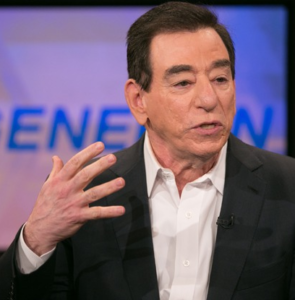
The New York Times recently published the list of the 200 highest paid CEOs in the U.S. as pulled together by Equilar, a leading provider of board intelligence solutions. Let’s take a look at the top five biopharma CEOs on that list.
- Leonard Schleifer, Regeneron Pharmaceuticals. ranked #7, with $47.5 million in total compensation.
- Jeffery Leiden, Vertex Pharmaceuticals, ranked #20 with $28.1 million in total compensation
- Robert Hugin, Celgene , ranked #36 with $22.5 million
- Brent Saunders, Allergan ,ranked #43 with a total compensation of $21.6 million.
- Alex Gorsky, Johnson & Johnson, ranked #46 with $21.1 million in total compensation
- Israel takes step toward allowing export of medical marijuana (reuters.com)

An Israeli government committee gave an initial nod...for the export of medical marijuana in what could be a windfall...Israel is widely regarded as one of the world leaders in medical marijuana research, even though the local market is small. Only 23,000 people have Health Ministry permits to purchase medical cannabis from nine licensed suppliers, creating a market of $15 million to $20 million at most...Saul Kaye, CEO of iCAN, a private cannabis research hub in Israel, said there are about 50 Israeli medical marijuana companies active in many aspects of the industry, from agriculture to delivery devices, such as inhalers...Last month, Israel moved toward decriminalizing small-scale personal use of marijuana and authorities are supportive of research...
- Aetna, Humana terminate $37 billion merger (chaindrugreview.com)

After being blocked by a federal court, Aetna Inc. and Humana Inc. have decided to terminate their $37 billion merger deal...The health insurance giants said...that, with the move, Aetna will pay Humana a $1 billion breakup fee...In January...the...District Court for the District of Columbia ruled in favor of the Department of Justice’s request to enjoin the Aetna-Humana merger. The government claimed that the combination of the two health insurers would lessen competition, harming seniors who buy private Medicare coverage and some consumers who buy health insurance on public exchanges...The consolidation wave hitting the health insurance sector has been seen as a byproduct of the Affordable Care Act. The mega-deals would provide fast access to the millions of people who have gained health coverage under the ACA and would be a vehicle for capturing Medicaid business, which has expanded dramatically under the health reform law...the climate for mergers and acquisitions in the health care sector has become uncertain. Besides the DOJ’s opposition to the mega-mergers, the Trump administration and Republican leaders in Congress have begun efforts to dismantle the ACA. That has cast a cloud on the health insurance marketplace, since it remains unclear what would replace the ACA and how consumers who have obtained coverage via the exchanges would continue to receive benefits.
- Big Pharma’s Offer to Trump: Discounts When Drugs Don’t Work (bloomberg.com)
President Donald Trump says drug prices are astronomical and something needs to be done...Pharmaceutical giants have an answer that doesn’t involve lowering list prices: refunding some of the money to insurers if a drug doesn’t work as expected...The concept of pay-for-performance isn’t new in the industry. But the number of such agreements between drugmakers and insurers has grown in the past year as Big Pharma seeks to defuse criticism over the soaring prices of some brand drugs...In a sign of how central value-based programs have become in the pushback, the lobby group Pharmaceutical Research and Manufacturers of America plans to roll out the concept later this month to the media as part of proposals on addressing drug pricing concerns...While reimbursing part of the cost for a treatment that doesn’t perform well sounds like a sensible solution, the concept is hard to execute. In conditions like diabetes or high cholesterol, results can be tracked with simple numerical measures -- but it may be harder to pull off in areas like depression or cancer. There’s also little evidence that pay-for-performance will significantly lower drug prices overall...
- California Sues Teva, Allergan for Allegedly Blocking Generic Competition to Lidoderm (thestreet.com)
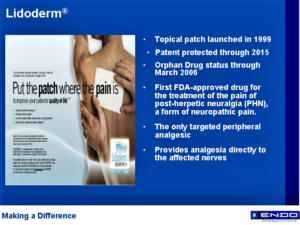
The state of California has filed a civil suit against units of drugmakers Teva and Allergan, for allegedly obstructing generic competition to Lidoderm transdermal patches...The suit...alleges a "pay-for-delay" deal between the companies and Endo Pharmaceuticals, which already had its Lidoderm product on the market and had made $825 million off of it in 2011...Allergan signed an agreement with Endo Pharmaceuticals, promising that the company would not face any generic competition for Lidoderm from units of Allergan from May 2012 through September 2013 and in turn that Allergan would not face any competition from Endo until May 2014...anticompetitive agreements...lead consumers, payors and the State to pay, directly or indirectly, monopoly prices for Lidoderm medications and deny them the lower prices that generic competition provides...
- Aurobindo Eyes U.S. Plant in New Jersey As Trump Calls for Local Drug Production (biospace.com)

Indian drugmaker Aurobindo is heeding the call of President Donald Trump and is planning on establishing additional manufacturing in the United States...Aurobindo, which is India’s fourth largest drugmaker by sales, already has a manufacturing site in New Jersey and also has a presence in North Carolina...the company is expecting to expand the New Jersey site to include manufacturing of injectables. Currently the site is used to make tablets...the president’s call has worried drug manufacturers in India. That country provides approximately 30 percent of drugs sold in the United States and relies heavily on U.S. markets for its businesses...India’s pharmaceutical businesses contribute about $15 billion annually to that nation’s economy….it would be prudent for the company to look into opening another manufacturing site in the U.S. Aurobindo generates more than half its revenue in the United States...
- U.S. House panel to take up bill to spur generic drug development (reuters.com)
...House of Representatives subcommittee will take up bipartisan legislation next week to foster generic drug development…President (Donald) Trump made it clear...he wants competition to lower drug prices, and that is precisely what this measure will help accomplish...Specifically the bill will require FDA to prioritize, expedite and review generic applications of drug products that are currently in shortage, or where there are few manufacturers on the market...the bill would also increase transparency around the backlog of generic drug applications at the FDA, saying there was an "unacceptably high" number...
- Pharma sits on sidelines for Super Bowl LI, but one DTC parody grabs the spotlight (fiercepharma.com)

Pharma companies sat out the Super Bowl this year after last year’s intense scrutiny—and criticism—of three ads that aired. But their DTC devices did make one appearance...The Twentieth Century Fox movie trailer for "A Cure for Wellness" parodied a pharma ad, mashing up formulaic imagery from happy couples on the beach to a Tai Chi class in the park. But as the 30-second ad played out, it became apparent that the familiar litany of voiceover side effects was part of a much more sinister twist. (The horror movie is about a man who goes to a "wellness spa" in the Swiss Alps in search of his boss and finds that it is anything but.)...While the past couple of years have seen at least one pharma ad in the Super Bowl, increasing pressure from politicians and consumers about pricing issues may have companies laying low. That pressure, along with last year’s backlash, was likely enough to convince pharma to stay home this year, although the $5 million per 30-second spot price tag may have also been a factor.