
- Experts fret over a new hiring freeze at the FDA. Will the fallout be toxic to drug reviews? (endpts.com)
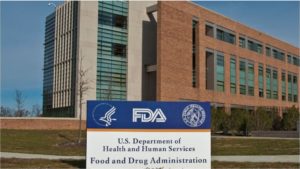
With hundreds of open positions and a slate of new initiatives to execute on at the FDA, President Donald Trump picked a particularly inconvenient time to declare a hiring freeze for the federal government...No one really knows how this is going to play out, but the speculation is rampant that the FDA will be forced to cut loose from its review timelines, which could have a big impact on a wide range of biopharma companies...the agency is expected to get a record 1600 ANDAs this year. Trump’s freeze could slow reviews on generics to a glacial pace, which in turn would interfere with the introduction of new discounted drugs that could go a long way to removing pressure on new drug prices...The only guarantee Trump can offer now is a rising level of uncertainty over the administration’s plans for the FDA. And that could take months to clarify during a particularly critical year for the biopharma industry...
- Merck, Bristol-Myers agree to settle Keytruda patent suit (reuters.com)
Merck & Co said it agreed to enter into a settlement and license agreement with Bristol-Myers Squibb Co and Ono Pharmaceutical Co Ltd to resolve all global patent-infringement litigation related to its cancer drug, Keytruda...Merck will make an initial payment of $625 million to Bristol and Japan's Ono. The company will also pay a 6.5 percent royalty rate on Keytruda sales from January 2017 to December 2023, and a 2.5 percent rate for the subsequent three years...Bristol will get 75 percent of the royalties and Ono will get the rest.
- FDA calls for switching studies in draft interchangeability guidelines (biopharma-reporter.com)

The FDA expects biosimilar developers to provide data from switching studies to demonstrate interchangeability with a reference biologic in draft guidance...The recommendation – which is set out in long awaited draft guidance today – is that sponsors should submit data from a switching study, or studies, to the Food and Drug Administration in order to deem a biosimilar interchangeable with its reference product…The main purpose of a switching study or studies is to demonstrate that the risk in terms of safety or diminished efficacy of alternating or switching between use of the proposed interchangeable product and the reference product is not greater than the risk of using the reference product without such alternation or switch…prior to today’s draft guidance the US agency had not defined how a sponsor must go about generating such proof (interchangeability)...
- Drugmakers ‘hijacked’ the FDA’s orphan system to score premium pricing on mass-market meds: report
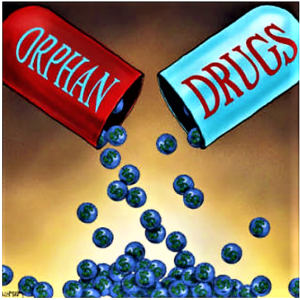
There’s no denying that financial incentives for orphan drug development spawned meds that have saved hundreds of thousands of lives. But they’ve also helped mass-market drugmakers rack up millions in incentives, tax breaks and patent-protected profits—in some cases through monopoly pricing...About one-third of the orphan drug approvals the FDA doled out since the program began more than 30 years ago have been for repurposed, large-market products or drugs with multiple orphan green lights...Best-sellers such as Crestor…,Abilify…,Herceptin…,and Humira...fall into the category of big sellers whose makers snagged millions in government incentives—not to mention seven years of exclusive rights on the market—when they resubmitted their therapies as treatments for smaller populations...What we are seeing is a system that was created with good intent being hijacked…Repurposing a drug isn’t necessarily a bad thing, of course, if it can help get a treatment to additional patients...But when the orphan incentives allow competition-free drugmakers to charge whatever prices they want for their meds?...Now...it seems like...this practice may be driving up prices...Industry lobby groups...are unsurprisingly in favor of maintaining the status quo. With rare diseases “tragically killing and brutalizing mostly children,” incentives for orphan drugmakers should be kept in place...the risk of losing incentives in the system far outweighs the benefit of trying to save a few pennies on the health care dollar...
- Critics eye repeal of ObamaCare prescription drug tax (thehill.com)
Employers and drugmakers are eager to say good riddance to an excise tax on brand-name prescription medicines that could get stripped under the latest GOP plan to repeal ObamaCare...While the law’s other major taxes, like the medical device or so-called Cadillac taxes, generated major campaigns seeking their repeal, the prescription drug fee has garnered little publicity. But it’s no negligible element among the law's funding sources. It's expected to bring in $27 billion over a 10-year period, according to the Joint Committee on Taxation's 2010 estimates...But the branded pharmaceutical fee never attracted bipartisan backing for repeal and it went into effect in 2010...consumers are "insensitive to changes in the drug prices."...if someone needs a specialty drug that is likely to be a brand-name product, his or her insurance is going to pay for it or that person will have to pay out of pocket for that amount...if the price happens to go up, you’re still going to pay for the drug...The fight over repealing other ObamaCare taxes means it's still unclear whether the prescription fee will be gone in the first round of the health law’s repeal measures...there could be other opportunities to get rid of it. ObamaCare repeal is looking to be...a series of legislative actions and regulatory actions over the course of the next year or so...
- U.K. weighs drug rationing as NHS England’s budget tightens: report (fiercepharma.com)

Patients in the U.K. face yet another barrier to access as a tough budget situation has forced the country’s healthcare system to consider rationing costly drugs...Beginning in April, cancer patients and others could have to line up for medicines that cost NHS England more than £20 million per year...That’s even after those meds have been deemed cost-effective by the National Institute for Care and Excellence...The country’s pharmaceutical association, ABPI (Association of the British Pharmaceutical Industry) pointed out some medicines that could see rationing…The agency (NHS) determined that, based on NICE appraisals between April 2015 and July 2016, 81% of medicines would fall under the £20 million a year “budget impact threshold” for a total spend of £125 million. The 19% of drugs above the threshold had a budget impact of nearly £400 million...This is about introducing cost effective, but expensive treatments onto the NHS in a way that does not compromise its ability to fund other areas of work...
- McKesson in record $150 million U.S. settlement over suspicious drug orders (reuters.com)
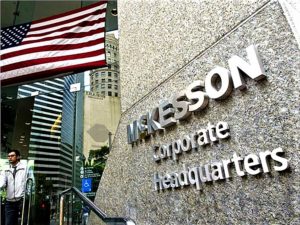
McKesson Corp, one of the largest U.S. distributors of pharmaceutical drugs, will pay a record $150 million to resolve a U.S. investigation into whether it failed to report suspicious orders of addictive painkillers...Tuesday's deal...followed an earlier settlement with the company over similar violations in 2008...Under the settlement, San Francisco-based McKesson must on a staggered basis suspend sales of controlled substances from distribution centers in Colorado, Ohio, Michigan and Florida for several years...The Justice Department said the evidence showed that McKesson did not fully implement or adhere to its own compliance program designed after the 2008 settlement.
- Top 5 Things to Know About Future Drug Spending (drugtopics.modernmedicine.com)

The United States and other countries will continue to spend more on specialty medications, and less will be spent on brand-name drugs...spending on drugs in the U.S. will grow at a much slower rate, according to the Quintiles IMS Institute report, "Outlook for Global Medicines Through 2021: Balancing Cost and Value."...
- THE GROWTH RATE for U.S. spending on medicines will decline by half, from 12% in 2015 to between 6% and 7% in 2017. Plus, prescription drug spending is forecast to grow between 6% and 9% through 2021…
- U.S. BRAND DRUG PRICES will increase at a slower rate, due both to competition from generics and Congressional backlash over soaring brand prices...Brand prices will increase at 8% to 11% — more slowly than the 12% to 15% in the past three years….
- SPECIALTY MEDICINES will lift the share of global heathcare spending from 30% in 2016 to 35% in 2021, driven by the adoption of new breakthrough medicines...
- PATIENT OUT-OF-POCKET COSTS are forecast to decline, despite rising brand prescription costs, as patients shift to newly available generics and receive co-pay assistance for brands…
- SEVERAL NEW THERAPIES are moving through the registration process around the world and are expected to come to market soon. In the anti-infectives and antivirals category, new treatments for HIV, bacterial disease, anthrax, hepatitis C, and malaria will be launched...
- The FDA targeted DTC, video, unapproved drug promotion in 2016 (mmm-online.com)
The FDA is taking a closer look at how drugmakers use channels like direct-to-consumer advertising and video, a shift that has raised questions for pharmaceutical marketers...On its face, the FDA's Office of Prescription Drug Promotion's batch of enforcement letters in 2016 seems par for the course, with the agency issuing a total of 11 letters, compared to 2014's and 2015's totals of nine each. But these letters contain important warnings for drugmakers about the FDA's evolving views on promotion, and what channels, tactics, and drugs it's examining closely…The OPDP...issued two enforcement letters for DTC TV ads developed by Sanofi for its insulin Toujeo and Celgene for its psoriasis drug Otezla. Regulators said the ads were distracting to viewers because they used frequent scene changes — and, in Otezla's case, abrupt changes in music — to distract viewers from presented risk information...These untitled letters were noteworthy because they signal a subtle shift in enforcement actions, with the FDA now examining tactics within DTC ads rather than focusing on bigger, more serious infractions, such as omitting risk information entirely…the FDA saying the viewer couldn't understand it because the imagery was too fast moving or the music was too catchy in the background...
- No new antidepressants in sight despite growing need, experts warn (finance.yahoo.com)

It is likely to be at least 10 years before any new generation of antidepressants comes to market, despite evidence that depression and anxiety rates are increasing across the world…The depression drug pipeline has run dry partly due to a "failure of science"...but also due to big pharma pulling investment out of research and development in the neuroscience field because the profit potential is uncertain...risk aversion was understandable given uncertain returns and the approximately billion dollar cost of developing and bringing a new drug to market...Treatment for depression usually involves either medication, some form of psychotherapy, or a combination of both. But up to half of all people treated fail to get better with first-line antidepressants, and around a third of patients are resistant to relevant medications...