
- U.S. Supreme Court agrees to hear dispute over biologic drug sales (reuters.com)

The U.S. Supreme Court...agreed to hear a dispute over whether companies that make copycat versions of biologic drugs must wait six months after winning federal approval to begin selling them...an appeal by Novartis AG of a 2015 federal appeals court decision that prevented the...company from selling its biosimilar version of...Amgen Inc's $1-billion-a-year Neupogen until six months after the Food and Drug Administration approved it. The case could determine how quickly patients have access to biosimilar medicines at potentially cheaper prices...The dispute arose when Amgen sued Sandoz...alleging patent infringement and violations of the law governing biosimilars. The companies disagreed on how to apply the law's requirement that a biosimilar drug maker give the brand-name manufacturer 180 days notice before launching its copycat version...The justices...also agreed to resolve Amgen's appeal in the same case over whether biosimilar makers must give brand-name manufacturers a copy of their application to make a copycat drug after it is submitted to the FDA.
- Federal judge orders state to provide Mumia Abu-Jamal with hepatitis C treatment (philly.com)

A federal judge...ruled that Mumia Abu-Jamal should be provided new medications by the state to treat his hepatitis C infection...U.S. District Judge...ordered that Abu-Jamal, who is serving life in prison for the 1981 killing of Philadelphia Police Officer Daniel Faulkner, must be seen by a doctor within 14 days to determine if there is a medical reason he should not get the expensive drugs...If...is medically cleared, the state must provide him with recently developed direct-acting antiviral medication, also known as DDA (DAA, Direct-Acting Antivirals)... Department of Corrections...has argued in court filings that Abu-Jamal has not met the criteria for treatment...The state has about 7,000 inmates with hepatitis C, and treating them - at a cost of $84,000 to $90,000 per person - would cost $600 million... DOC will no doubt appeal this ruling...
- The FDA to study whether people can recognize misleading drug ads (mmm-online.com)
The FDA has proposed two studies that would seek to determine how well consumers and healthcare providers can identify deceptive prescription drug claims in branded marketing materials...The first study would investigate the ability of consumers and HCPs to detect false or misleading promotions when showed two mock pharmaceutical websites, one site oriented toward providers and a separate one for consumers...The second study would focus on examining whether the participants can identify the difference between implicit and explicit deceptive claims...is the claim overtly wrong? Or is it misleading because it understates certain information?...and whether those claims affect their attitudes and intentions toward the promoted drug...The notice comes as the agency grapples with an industry pushing for the sharing of truthful, non-misleading information with more stakeholders outside of a drug's approved label
- 7 takeover targets to look out for in 2017 (biopharmadive.com)

A promising drug candidate, an innovative technology, a great business model or just a bunch of venture funding. Any one of those factors can prime a biopharma for success, yet is also likely to attract attention from industry peers and competitors...While 2016 wasn't a groundbreaking year for M&A, industry followers believe next year might see an uptick amid a new tax plan under president-elect Trump, continued loss of patent protections for top-tier branded drugs and strong growth projections for promising fields such as gene editing and immuno-oncology...With that in mind, here's a crop of takeover targets likely to make their way into the spotlight in 2017…
- Spark
- Tesaro
- Axovant
- Biogen
- BioMarin
- Vanda
- Actelion
- New York takes drug pricing into its own hands with new clampdown (fiercepharma.com)

New York Governor Andrew Cuomo has...unveiled a first-of-a-kind proposal to curb “exorbitant” prescription prices in the Empire State...New York will create a “review board” to determine the “fair price” for certain expensive drugs under the plan...and then the state will mandate that Medicaid won’t pay more than that amount for its purchases. When a company charges Medicaid more than the board’s set price, it’ll owe a “rebate for any amount” in excess...The proposal would also impact private markets. If a pharma company sells into the state at a price higher than the board’s set amount, that sale will be hit with a surcharge; the government will collect that money and reallocate it “back to the insurance providers to reduce the cost of insurance.”…Lastly, Cuomo's proposal includes new restrictions on pharmacy benefit managers, forcing them to register with the state and disclose “financial incentives or benefits for promoting the use of certain drugs, as well as other financial arrangements affecting customers,”...Then, under the plan, PBMs must have a license beginning in 2019 and the state could revoke those licenses for “deceptive, unfair, or abusive business practices.”...
- FDA warning letter tells Clorox to clean up Aplicare plant (fiercepharma.com)

The FDA says the unit of Clorox that manufactures povidone-iodine drug products needs to clean a big mess at a plant in Meriden, Connecticut, which failed to follow steps to insure the sterility of its wound products—products that the FDA also said are “unapproved.”...The agency...posted a warning letter for the Aplicare plant…(it) said...the plant failed to implement adequate microbial controls...some of its products are unapproved because they do not comply with the FDA’s OTC Final Monograph for Topical Antifungal Drug Products.
- C-suiters: Keep an eye on these technologies in 2017 (fiercehealthcare.com)

From Pepper, the emotional interactive robot, to the new da Vinci Xi Integrated Table Motion to pipeline vaccines, ECRI Institute highlights 10 healthcare technologies C-suiters (Chief-level executives) should keep an eye on in 2017...The organization's annual watch list outlines technologies that hospital leaders should bring into their hospitals—and which ones to keep out. But separating the facts from the hype isn't easy, they note...Here's the list of 10 technologies and research areas that ECRI says are poised to affect care delivery over the next 12 to 18 months:
- Liquid biopsies: ...these genetic tests that use blood or urine, rather than biopsied tissue, to identify genetic variants and mutations.
- Opioid addiction or relapse prediction: A couple of lab tests have emerged to find genetic variants believed to be associated with addiction, but critics are skeptical.
- Abdominal surgery improvements: Some major research universities are working on initiatives that add a web-based risk-assessment algorithm and interactive patient coaching in order to improve outcomes and cut costs of abdominal surgery.
- Long-term planning: Healthcare leaders should scan the horizon for important and disruptive new technology developments and care processes to revisit and refresh long-term planning efforts.
- LED infection control: New and highly effective technologies emit light in the “deep UV” range and can be used as a disinfectant on myriad surfaces.
- Robotic artificial intelligence: Two Belgian hospitals use the Pepper robot to support reception staff, but its programming comes at a hefty price.
- Robotic surgery tables: This table communicates with the da Vinci system’s robotic arms to reduce time required for re-positioning.
- New endoscopy technique: Using a near-infrared imaging technique, indocyanine green imaging enables physicians to visualize malignant tissue that is undetectable under conventional white light.
- Crohn’s disease treatments: Immunotherapy and stem cell treatments look promising, though approval is likely one or two years away.
- Vaccines for Type 1 diabetes: Keep an eye out for both preventative and therapeutic versions.
- Non-Proprietary Naming of Biologics and Biosimilars: FDA Finalizes Guidance (raps.org)

In a departure from the way the WHO and Europe name biologics, the US Food and Drug Administration...finalized long-awaited guidance on how biosimilars and their biologic reference products’ names should include a four-letter, FDA-designated meaningless suffix attached at the end of the nonproprietary name...The decision to finalize this guidance follows...but large opposition to the idea of using meaningless rather than meaningful suffixes that could make it easier to distinguish the manufacturers of the products...For example...Sandoz’s Zarxio, which includes a non-proprietary name with a meaningful suffix (Sndz for Sandoz): filgrastim-sndz...But FDA has said it will change Zarxio’s nonproprietary name from filgrastim-sndz to “filgrastim-bflm." And Amgen's Neupogen (filgrastim) would be changed to "filgrastim-jcwp."...But these suffix rules do not necessarily apply to all related biologics...some instances it has designated a proper name that includes an identifier attached as a prefix to distinguish the products from previously licensed biologics. For example, with ado-trastuzumab emtansine, FDA includes a unique prefix, which it says was necessary to minimize certain medication errors and to facilitate pharmacovigilance.
- Career Consensus: 2016 Employment Survey Europe-based bio/pharma employees are unified on satisfaction with employment conditions—and dissatisfaction with salaries (images2.advanstar.com)
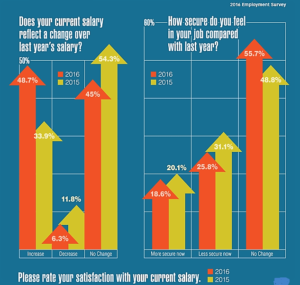
While the pending exit of the United Kingdom from the European Union has generated uncertainty for industries and employees, including the bio/pharma markets across Europe, bio/pharma employees also expressed concerns about compensation, job security, and career development in the 2016 Pharmaceutical Technology/Pharmaceutical Technology Europe annual employment survey. Overall, the 2016 survey responses were similar to opinions about the employment market as the 2015 survey, but respondents also expressed stronger desires to seek better pay and career opportunities. Nearly three-quarters agreed or strongly agreed that their job was secure despite changes at their companies. More than half of the respondents reported an organizational change in their companies; 26.7% via merger or acquisition and 24.8% by downsizing/restructuring.
- Greek prosecutors raid Novartis offices, disclose wide-ranging probe into bribery allegations (fiercepharma.com)

Greek officials announced Tuesday that they are investigating Novartis for bribery in the wake of local media reports raising questions about the company. It is the fourth set of bribery allegations…to go public in the past year…Greek authorities have interviewed scores of sources and raided Novartis offices in Greece, according to multiple local news outlets. Justice Minister Stavros Kontonis ordered the inquiry after "denunciations concerning bribes paid to functionaries by Novartis" appeared in the press… Greece’s investigation follows a similar probe launched in South Korea last February and corruption allegations leveled by a Turkish whistleblower…South Korean prosecutors indicted a half-dozen Novartis executives for issuing improper rebates to local doctors…last year, Novartis agreed to pay $25 million to settle an SEC investigation into bribery allegations in China…Novartis offered Chinese doctors lavish entertainment…and other inducements to boost prescriptions of its drugs in the country.