
- FDA Warns Wockhardt for Destroying CGMP Documents, Other Violations (raps.org)
...Indian drug manufacturer Wockhardt is in trouble again with the US Food and Drug Administration, this time for destroying current good manufacturing practice documents, among a list of other major violations...FDA sent a warning letter to the company following an eight-day inspection...of its Ankleshwar...manufacturing site that uncovered “torn and shredded equipment maintenance documents, raw material labels, and change control work orders” in the site’s scrap yard awaiting incineration...The site was banned from shipping products to the US in August...This is the latest in a series of failures by Wockhardt to meet the standards of not just FDA but other regulators...
- NICE and FDA join forces to improve medtech access (pharmaphorum.com)
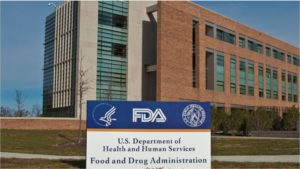
The UK’s cost effectiveness body is to work with the US regulator to speed up patient access to medtech innovations...NICE’s Scientific Advice programme team and the FDA’s Payer Communication Taskforce are now looking at how best to help developers of medical devices, diagnostics and other medtech technologies gather the best evidence to demonstrate their product’s effectiveness...In their efforts to get a product to market, companies can get caught out...To win regulatory approval in the US, companies give the FDA data on the safety and efficacy of their devices. But although they often do enough to win FDA approval, they need additional evidence to prove to the organisations who would actually pay for those devices that they are cost-effective and clinically-effective...NICE and the FDA’s collaboration is the latest effort to help clarify the pathway that new medtech innovations have to navigate to reach patients
- Cardinal settles with U.S. over painkiller shipments to pharmacies (reuters.com)
A drug distributor owned by Cardinal Health Inc has agreed to pay $10 million to resolve claims it failed to alert the U.S. Drug Enforcement Administration to suspiciously large orders of...painkillers by New York-area pharmacies...The settlement with Kinray LLC, a New York City-based pharmaceutical distributor, disclosed in papers filed...in federal court in Manhattan...Kinray shipped the drugs to more than 20 New York pharmacy locations in amounts that were many times greater than the distributor's average sales of controlled substances to all of its customers...Kinray ignored numerous "red flags" and did not report any suspicious orders to the DEA...latest agreement stemmed from a 2012 settlement with the DEA in which its facility in Lakeland, Florida, was suspended from selling painkillers and other drugs for two years...The 2012 deal only resolved administrative aspects of the case, not potential fines Cardinal Health faced in Florida or elsewhere...(Cardinal Health)...has set aside $44 million to cover those potential liabilities.
- Antibiotics sales for use in U.S. farm animals rose in 2015: FDA (reuters.com)

U.S. sales and distribution of antibiotics approved for use in food-producing animals increased 1 percent from 2014 to 2015, the U.S. Food and Drug Administration said in a report...Scientists have warned that regular use of antibiotics to promote growth and prevent illness in healthy farm animals contributes to the rise of dangerous, antibiotic-resistant "superbug" infections, which...pose a significant threat to global health...An estimated 70 percent of antibiotics used to fight human infections and to ensure the safety of surgery and other invasive procedures are sold in the United States for use in meat production...In 2015, sales and distribution of those medically important antibiotics for food production rose 2 percent...Medically important antimicrobials accounted for 62 percent of the domestic sales of all antimicrobials approved for use in farm animals...McDonald's USA and some other chains have switched to serving chicken raised without antibiotics important to human health…
- Life-extending capacity of new cancer drugs varies widely (reuters.com)
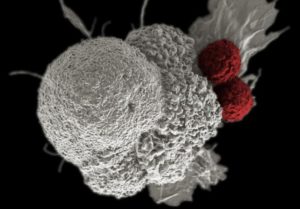
Drugs recently approved around the world to fight cancer increased patients' overall survival, but benefits vary depending on the drug, a new study shows...Researchers looked at the 62 cancer drugs approved in the U.S. and Europe between 2003 and 2013 and found they extended survival by an average of about 3.5 months...a third of the drugs lacked evidence to suggest they increased survival when compared to alternative treatments...results point to the notion that new cancer treatments may not always provide patients with greater clinical benefits, or lower risks, over existing treatments...The risk-benefit ratio of new drugs is especially important if people are concerned, for example, about whether the cost of a drug would make it difficult for a person to complete the treatment regimen...
- New precision medicine tool helps optimize cancer treatment (worldpharmanews.com)

Columbia University Medical Center researchers have created a computational tool that can rapidly predict which genes are implicated in an individual's cancer and recommend treatments. It is among the most comprehensive tools of its kind, and the first that incorporates a user-friendly web interface that requires little knowledge of bioinformatics...The researchers found that iCAGES identified personal cancer "drivers" 77 percent of the time when presented with a pair of randomly chosen driver genes and non-driver genes, compared with about 51 percent for other computational tools... Cancer "drivers" can vary from patient to patient, and there are no practical clinical tools for predicting which variants in an individual's genome are driving his or her disease and which are present but not causing disease...Dr. Wang...developed a computational tool called integrated CAncer GEnome Score…(it) analyzes the patient's entire genome, comparing it to the genomic sequence of the patient's tumor to identify possible cancer-causing variants. Next...cross-references these variants to databases of known cancer-causing genes, using statistical analyses and machine learning techniques to prioritize the most likely driver genes. Finally...matches the variants to FDA-approved and experimental drug therapies that specifically address those variants or genes. The entire process takes about 30 minutes...
- Editor’s Corner: Signs point to a surprising pharma new year (fiercepharma.com)

...trends and issues we expect to drive the industry—and related debate—in the coming year. The broad themes aren’t tough to identify. But predicting the specifics, some of them quite important, is, this year, less like reading a crystal ball and more like picking up a Magic 8 Ball...drugmakers will rely on M&A of one sort or another to fuel growth and augment pipelines. As has been pharma’s practice recently, sales and spinoffs will also play a role….just how much cash buyers have to play with depends on an as-yet-unmade decision: Whether U.S. companies can bring home their offshore cash tax-free. Outlook good, which means billions more dollars for U.S. deals and, probably, higher prices as that cash chases a limited number of solid acquisition targets.
- biosimilars, the threat to biologic drug prices and monopolies that’s been on its way for years.
- Manufacturing brought a round of surprises in 2016 as the FDA rejected a series of new drugs because of questions about—or criticisms of—the plants where they’d be produced.
- pharma’s shift to specialty drugs from mass-market blockbusters hasn’t put a dent in DTC budgets, despite the fact that their target populations are far smaller.
- Signs point to definitely when it comes to the drug pricing debate continuing into 2017, but it’s far from definite where that debate will go next.
- Collins, McCaskill Release Committee Report of Bipartisan Drug Pricing Investigation (aging.senate.gov)
 Senator Susan Collins...Chairman... of the Senate Aging Committee, released a report on drug pricing...titled, “Sudden Price Spikes in Off-Patent Prescription Drugs: The Monopoly Business Model that Harms Patients, Taxpayers, and the U.S. Health Care System.” The comprehensive report details the findings stemming from the Committee’s bipartisan investigation into abrupt and dramatic price increases for prescription drugs whose patents expired long ago. Through close examination of the monopoly business model used by four pharmaceutical companies to exploit market failures, the report examines how companies acquired decades-old, off-patent, and previously affordable drugs and then raised the prices suddenly and astronomically at the expense of patients. The report provides case studies of the four companies; explores the influence of investors; assesses the impacts of price hikes on patients, payers, providers, hospitals, and the government; and discusses potential policy responses.
- Enact the Increasing Competition in Pharmaceuticals Act...to incentivize competition to address regulatory uncertainty, small market size, and other factors that serve as limitations to generic entry;
- Encourage generic competition by ensuring the right to obtain samples and simplifying Risk Evaluation and Mitigation Strategies;
- Consider allowing highly targeted, temporary prescription drug importation to provide prompt price relief for major price increases in off-patent drugs;
- Take steps to prevent the misuse of patient assistance programs and copay coupons;
- Reinvigorate the Federal Trade Commission to take greater enforcement action on drug company mergers, operations, and drug market dynamics; and
- Improve transparency in the health care system.
- Beijing buyers club? China’s cancer patients gamble on gray market (reuters.com)

There is no official data on how many cancer patients in China turn to unregulated channels, but research indicates an increase globally in the use of gray and counterfeit markets...Medicines bought through unofficial channels are not necessarily harmful, and some of the Indian generics available online are approved for use in other markets. But they can include drugs that are ineffective or fake...The reason patients in China turn to these unregulated channels are largely financial...Low average salaries, a chasm between urban and rural wealth, and creaking state reimbursement schemes mean serious disease is among the leading causes of poverty, creating a major social burden and rising debt...Turning to unofficial channels can also carry a legal risk...It's because of problems with China's public health insurance system that so many seriously ill patients aren't able to survive…
- With billions at stake, will biosims finally make a mark in the U.S. in 2017? (fiercepharma.com)

Biosimilars have already taken hold in Europe, with Celltrion's Remicade copy, for one, wreaking havoc on the branded med's sales. Whether they'll finally make their mark in the U.S., though, remains to be seen—and 2017 could be the year we find out...Over the next several years, billions of dollars in legacy drug sales could be ceded to an oncoming and rising wave of biosimilars, with much of the action set to kick off in 2017. All told, 7 of biopharma’s top 10 best-selling drugs next year face a near-term biosim threat, meaning fortunes will be made or lost as the field continues to take shape...Fundamental legal questions also remain surrounding biosims in the U.S...whether the biosimilar pathway will survive...a potential Affordable Care Act repeal...the Supreme Court will likely review the “patent dance clauses which are currently optional.” That could potentially throw a wrench in future launches...