
- FDA Says Real-World Evidence Could Generate ‘Incorrect or Unreliable Conclusions’ (raps.org)
...top Food and Drug Administration officials published an article in the New England Journal of Medicine (Real-World Evidence — What Is It and What Can It Tell Us? )...calling into question some of the potential uses of real-world evidence but also acknowledging that real world research and the concepts of a planned intervention and randomization “are entirely compatible."...while acknowledging that such (real-world) evidence “can inform therapeutic development, outcomes research, patient care, research on health care systems, quality improvement, safety surveillance, and well-controlled effectiveness studies,” the authors caution that “the confluence of large data sets of uncertain quality and provenance, the facile analytic tools that can be used by nonexperts, and a shortage of researchers with adequate methodologic savvy could result in poorly conceived study and analytic designs that generate incorrect or unreliable conclusions...“Accordingly, if we are to realize the full promise of such evidence, we must be clear about what it is and how it can be used most effectively, and we must have appropriate expectations about what it can tell us,”...
- CRISPR Patent Outcome Won’t Slow Innovation (technologyreview.com)

The legal battle over who invented the powerful gene-editing tool isn’t likely to dim hopes for better crops and powerful new medical treatments...a panel of judges at the Patent and Trademark Office...heard arguments as to who should own the rights to the century’s biggest biotechnology invention to date, a precise gene-editing system called CRISPR-Cas9 that has the potential to treat serious human genetic disorders and create designer crops that resist drought and pathogens...Embroiled in the dispute are the Broad Institute of MIT and Harvard...and the University of California...Groups at the two universities are fighting for ownership of CRISPR gene editing in eukaryotic cells (those of humans, plants, and animals), which represents the most lucrative uses of the technology...At stake are billions of dollars tied up in numerous commercial agreements with biomedical and agricultural companies. The outcome of the so-called patent interference could render some of those contracts invalid...But the patent judges’ decision...is not likely to put any CRISPR companies out of business or even slow the lightning pace of research and development in commercial laboratories…
- ‘Bribes,’ ‘kickbacks,’ and ‘fantastic’ nights get ex-Insys CEO, execs indicted for conspiracy (fiercepharma.com)

Prosecutors have worked their way to the top of Insys Therapeutics. After arresting a series of lower-level workers, the Justice Department...hauled in former CEO Michael Babich…Federal authorities alleged that Babich and five other former Insys executives and managers “led a nationwide conspiracy” to bribe doctors to boost scripts for the company’s powerful and addictive painkiller Subsys...indictment...detailed a scheme that Babich and the others allegedly set up with 10 healthcare practitioners in Alabama, Michigan, Texas, Arkansas and elsewhere. The Insys execs pushed sales staff to offer hundreds of thousands of dollars in “bribes and kickbacks” to doctors to increase their Subsys scripts...According to the DOJ, Babich faces charges of conspiracy to commit racketeering, conspiracy to commit wire and mail fraud and conspiracy to violate the Anti-Kickback Law...
- ISMP Names Top Medication Safety Issues of 2016 (pharmacytimes.com)
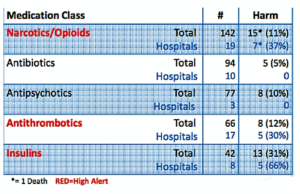
It’s crucial for pharmacists to be aware of medications associated with high risk for error and harm to patients, and to look for best ways to implement practices for improving safety and patient care...The Institute for Safe Medication Practices...Compiled data gathered from hospital medication error reports, risk assessments, consumer reports, and FDA collaboration...to name the top medication classes involved in adverse events...the top 5 high-alert medication classes based on data from 2016. Opioids, antithrombotics, and insulins topped the list, followed by antipsychotics and antibiotics...data pegged wrong dosage as the top reason for adverse events in most cases, except in the use of antibiotics, for which wrong drug was the top reason...
- As drug approvals dive in 2016, returns on R&D deteriorate (reuters.com)

The global pharmaceuticals industry is set to win the lowest annual number of new drug approvals this year since 2010...drugmakers' returns on research investment are deteriorating...Only 19 new drugs have been approved in the key U.S. market so far in 2016 and, with less than three weeks to go, it is clear the full-year tally will be well down on 2015 and 2014's bumper haul of 45 and 41 new products respectively...At the same time the profitability of drug research is being squeezed by steadily rising costs and increasing political pressure over the high prices of many modern medicines...As a result projected returns on investment in research and development for the top 12 pharmaceutical companies have fallen to just 3.7 percent this year from a high of 10.1 percent in 2010…
- U.S. Files First Charges in Generic Drug Price-Fixing Probe (bloomberg.com)Two former pharma execs first to be charged in generic price-fixing probe (statnews.com)

The Justice Department accused two executives of colluding with other generic pharmaceutical companies to fix prices, the first criminal charges stemming from a sweeping two-year investigation...Jeffrey Glazer, a former chief executive officer of Heritage Pharmaceuticals Inc., and Jason Malek, an ex-president...Each were charged in a criminal information with two counts of conspiring with other drug makers to fix the prices of an antibiotic and a drug used to treat diabetes (doxycycline and glyburide) . An information is often used as part of a plea agreement with prosecutors...Glazer and Malek accomplished this brazen theft by creating at least five dummy corporations, which they used to siphon off Heritage’s profits through numerous racketeering schemes," Heritage alleges. "Through one particularly audacious scheme...secretly arranged deeply discounted sales of Heritage products to their dummy corporations or through complicit third parties willing to act as straw buyers in return for bribes...Glazer and Malek then illicitly pocketed the profit that resulted when Heritage customers paid the market price for the drugs...The U.S. antitrust investigation spans more than a dozen companies and about two dozen drugs...
- Supreme Court urged to weigh in on six-month biosimilar delays (fiercepharma.com)

Novartis’ Sandoz unit has been marketing Zarxio, its biosimilar version of Amgen’s blockbuster drug Neupogen, for more than a year, but the drug is still tangled in a patent fight that boils down to one central question: Should biosimilar makers have to give six months' notice to the original drugmaker after they receive FDA approval for their copycat version? The answer will affect not only Novartis and Amgen, but any company seeking to make a biosimilar product…The U.S. Solicitor General...asked the Supreme Court to interpret the 2009 law that originally laid out the proper procedure for seeking FDA approval for biosimilar drugs.
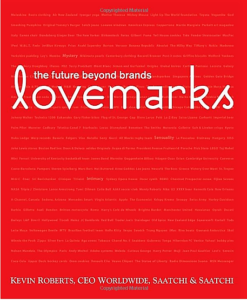
Merck KGaA has taken a page from consumer packaged goods’ playbook for its consumer OTC marketing strategy—and it's working...The German-based maker of a $1 billion portfolio of healthcare brands refers to the strategy as creating “lovebrands,” in a recent report on the companywide success of its new approach. The familiar consumer-goods strategy builds brand identities that not only depend on the technical or functional assets of the product, but also create an emotional benefit or connection with consumers...The word Merck uses—“lovebrand”—is associated with...Kevin Roberts, who wrote the book Lovemarks about the ways brands can transcend even loyal consumer status to become loved by people...Merck uses the strategy across all six global consumer brands and also its five or six regional brands...and is looking at how to use it with its local brands. The consumer-driven strategy hasn't been picked up by Merck’s pharma prescription drugs as of yet...The Merck consumer brands under the long-term strategy have “grown significantly in the past two to three years," and consumer perception, attitudes and awareness of the brands have also been increasing…The consumer-style brand strategy isn't meant to take away from the products' technical or scientific strength...We take our strong scientific and medical expertise and add that (lovebrand) component on top and that makes us stronger...
- Report: London Drugs could be first to market with medical marijuana (tricitynews.com)

A B.C. (British Columbia)-based pharmacy chain is itching to be the first in Canada to sell medical marijuana...London Drugs vice-president John Tse says that the pharmacy has already begun training to pharmacists to dispense marijuana as soon as regulations are in place. The federal government is expected to introduce legislation on both medical and recreational marijuana in the spring...London Drugs is only interested in the medical side – foresees a longer wait time than that before it comes to pharmacy shelves...After the legislation comes out there’s still the regulation…. and then there’s provincial governments and each of our colleges of pharmacists need to write regulations to operationalize it...We’ll be as fast as the laws allow… but it could happen overnight, we’re that ready…London Drugs will purchase marijuana only from federally licensed cannibis producers and that the pharmacy chain will only purchase if conditions are right...It’s not overly difficult to grow but what are the growing conditions like? Is there mold or pesticides… chemical compounds can be varied by different strains...They’ve already begun discussions with pot producers to lay the groundwork of setting up a supply chain...
- Following EpiPen controversy, federal watchdog to review Medicaid rebates (statnews.com)

A government watchdog agency is conducting three new reviews of the Medicaid Drug Rebate Program to determine the extent to which drug companies are properly paying required givebacks to the health care program...Under the Medicaid Drug Rebate Program, companies must accurately report — and pay — a rebate on drugs paid for by the agency...The ruckus erupted because Mylan reported EpiPen as a generic product for nearly a decade. This is an important distinction, because classifications are used to determine the size of rebates...are lower for generics — 13 percent versus 23 percent for a brand-name product...The more we learn about the misclassifications, the more we know this program is in dire need of proper oversight...It’s unclear whether CMS took any action between 2009 and now to get the EpiPen classification back on track after being told about the misclassification...