
- Map of all medicines and their mode of action is created (pharmaceutical-journal.com)

Paul Workman, chief executive of the Institute of Cancer Research
Scientists have mapped all 1,578 licensed drugs licensed by the US Food and Drug Administration according to their mechanisms of action to help researchers visualize the ‘uncharted waters’ where they may find future treatments...Scientists at The Institute of Cancer Research in London...extracted data from their own drug database, as well as databases at European Bioinformatics Institute in Cambridge and the University of New Mexico. They matched each drug with prescribing information and data from published scientific papers to build up a picture of how each existing medicine works. The analysis, published in Nature Reviews Drug Discovery (A comprehensive map of molecular drug targets) reveals that there are just 667 unique human proteins targeted by existing approved drugs (or only 3.5% of the estimated 20,000 human proteins), and a further 189 drug targets in pathogenic organisms...This new map of drugs, created through the latest computational analytical technologies, will enhance our ability to use rational, data-driven approaches to identify the most promising future targets and treatment combinations for the next generation of cancer and other diseases...
- U.S. Doctors Still Over-Prescribing Drugs: Survey (realclearhealth.com)

Despite evidence that certain drugs aren't always necessary, doctors are still prescribing these treatments, a new survey of doctors reveals...Antibiotics are by far the drugs most frequently used in situations where they'll provide no value for patients. The survey found that more than a quarter of doctors surveyed (27 percent) said that antibiotics are often administered to patients when the drugs will do no good...antibiotics are prescribed to treat upper respiratory infections even though these are most often caused by viruses unaffected by the medication…Other treatments that doctors use frequently despite their questionable value include aggressive treatments for terminally ill patients (9 percent), drugs prescribed for chronic pain (7 percent), and dietary supplements such fish oil and multivitamins (5 percent), the survey revealed...Physicians also might be practicing defensive medicine to ward off potential malpractice suits, or trying to meet clinical performance measures that call for blanket treatments that must be applied to all patients...
- FDA finalizes quality guidelines for contract manufacturers (biopharmadive.com)
The Food and Drug Administration has finalized guidelines, three-and-a-half years in the making, suggesting what should go into quality agreements between pharmaceutical companies and outsourced contract manufacturers...The agency's recommendations come at a time when fully two-thirds of pharmaceutical manufacturing is outsourced, putting significant demand on contract manufacturing organizations (CMOs)…Current Good Manufacturing Practice requirements apply to all contract facilities, including analytical testing labs...FDA recommends that owners and contract facilities implement written quality agreements delineating manufacturing activities to facilitate compliance with CGMP. The agency suggests that quality contracts between companies and CMOs include the purpose and scope of contract manufacturing services to be provided; provisions on how to resolve disputes and how to change manufacturing processes, and contract revision policies...
- Implementing cloud marketing technology (pharmaphorum.com)

Sanofi Pasteur MSD’s journey to digital has helped sales rep engagement, as well as compliant content creation and distribution...Nearly three years ago, Sanofi Pasteur MSD1 was preparing to launch three new products and decided to take the opportunity to incorporate new, digital channels for better customer engagement… we proposed to reframe our commercial strategy with new technology…The company chose to standardise globally on a cloud-based multichannel CRM solution. Armed with new digital capabilities fully integrated across email, face-to-face, and web, the company’s sales representatives immediately began sending compliant emails directly from the system to customers and personally engaging with healthcare professionals via self-directed, interactive web presentations...The company tripled the expected adoption rates six months ahead of forecasts...To improve the speed of content development and distribution, Sanofi Pasteur MSD took a two-pronged approach...First, it sought to consolidate its agency partners globally, to harmonise content development and increase content reuse across the company...Second, the company looked to streamline content production by adopting a cloud-based commercial content management solution with a critical digital asset management component...The results were transformational, with content production centralised, but with local regions still able to adapt content to meet specific regulatory or cultural needs. And, as it was a cloud-based solution, global agencies now had easy access to promotional assets.
- Makers of Abilify drug settle with 43 states, including Nevada, for $19.5M (reviewjournal.com)

Nevada is expected to receive nearly $300,000 in a multistate settlement with a pharmaceutical company accused of marketing a drug to patient groups for which they didn’t have federal approval and mischaracterizing the drug’s risks...Bristol-Myers Squibb Company, which partnered with Otsuka America Pharmaceutical, Inc. to market antipsychotic drug Abilify, settled with 43 states for $19.5 million, according to an announcement Thursday by the office of Nevada Attorney General Adam Laxalt...The company was accused of marketing the drug to seniors with Alzheimer’s disease and dementia despite the fact the drug wasn’t approved for those purposes by the U.S. Food and Drug Administration...
- McKesson’s Pharmacy Optimization team identifies 5 key pharmacy trends headed into 2017 (drugstorenews.com)

...the McKesson Pharmacy Optimization team...has identified the top five trends that will impact hospital and health system pharmacies in 2017...McKesson's advisory team addressed these trends with health system pharmacy leaders at the American Society of Health-System Pharmacists Midyear Clinical Meeting 2016...The role of the clinical pharmacist is rapidly expanding to stay ahead of the changing dynamics brought upon by healthcare reform...The expanding scope of pharmacists’ service and increasing clinical collaboration illustrate key trends and opportunities facing health system pharmacies in the coming year...here are the five trends McKesson's pharmacy optimization team identified:
- Continued Growth in Specialty Market
- Leveraging Pharmacy Analytics to Make Strategic Business Decisions
- Health System Pharmacy Seen as a Revenue and Margin Generator
- Centralizing Pharmacy Operations and Improving Clinical Services
- Future Directions for Reform and the Affordable Care Act
- Some drug makers are better corporate citizens than others (statnews.com)

...a new nonprofit (JUST Capital) created by...hedge fund manager has ranked nearly 1,000 publicly traded companies to determine the extent to which they pursue "just" policies and practices. And leading the pack among drug makers is Amgen...The goal is to maintain an information clearinghouse that can be used to spur companies to make improvements while, at the same time, giving the public tools to make more informed decisions about purchasing, investing, and employment...40,000 Americans to gauge their views on "just" behavior by corporations...the team identified...nine categories...fair pay; the quality of employment benefits; workplace treatment; product attributes; customer satisfaction; leadership and ethics; supply chain standards; and environmental performance...Of the nearly two dozen publicly traded US drug makers, the biggest names largely dominate the rankings, although some smaller companies also ranked highly. After Amgen, the top 10 is rounded out by Biogen, Johnson & Johnson, Agilent Technologies, Eli Lilly, Bristol-Myers Squibb, Quintiles, United Therapeutics, BioMarin Pharmaceutical, and AbbVie...the rankings did incorporate fines and violations racked up by drug makers. And there have been many of those in recent years in which companies reached settlements for illegal marketing, paying kickbacks to doctors, and offering bribes to officials and health care providers in foreign countries
- The Cost of Counterfeits (pharmtech.com)

The proliferation of counterfeit medicines is nothing new to pharma; however, the scale of the problem seems to be escalating, especially with the Internet providing an easy means for fraudsters to dispense their fakes. Counterfeiting has a devastating impact on public health and the economy. Not only are consumers paying for products of inferior quality, but their well-being is also put at risk. For genuine drugmakers, profits are diluted, but the repercussions extend beyond that...The European Union Intellectual Property Office reported...that the pharmaceutical industry is stripped of approximately €10 billion of revenue every year because of counterfeit medicines; this figure accounts for 4.4% of the sector’s sales...the lost sales translate into 37,700 jobs lost across the pharmaceutical sector in the EU as a result of legitimate manufacturers and distributors employing fewer people than they would do had this problem not existed…With serialization and track-and trace legislations being rolled out over the next few years, pharma is doing its part to secure its supply chain. The problem will be an ongoing challenge for the industry, but with advances in technology, it will become easier to detect the fakes in the near future.
- Global prescription drug spend seen at $1.5 trillion in 2021: report (reuters.com)

Global spending on prescription medicines will reach nearly $1.5 trillion by 2021, although the annual rate of growth will decrease from recent years, according to a forecast by Quintiles IMS Holding…based on wholesale pricing, is up nearly $370 billion from estimated 2016 spending. The United States will account for up to $675 billion of the $1.5 trillion...Annual spending growth over the next five years is forecast at 4–7 percent, primarily driven by newer medicines for cancer, diabetes and autoimmune diseases in developed markets...The report projects a slowdown in U.S. branded drug price increases, possibly a result of rising political pressure. It sees annual wholesale price increases of 8 to 11 percent and net prices rising 2 to 5 percent...The report predicts an average of 45 new drug launches each year, a historically high rate. While many will be very expensive treatments, the report sees rising costs partially offset by a higher level of drugs going off patent than in the previous five years. That includes the anticipated effect of more biosimilars - cheaper versions of high-priced biotech medicines - entering the market.
- Mylan CEO accepts full responsibility for EpiPen price hikes, but offers little explanation (statnews.com)
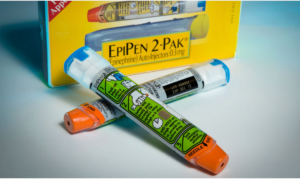
...Mylan Pharmaceuticals CEO Heather Bresch accepted "full responsibility"...for the price hikes that caused national outrage..."If EpiPen had to be the catalyst to show what hardworking families are facing, it will have been worth it," she said...referring to the upfront costs that many people encounter with high-deductible health plans. Mylan increased the price of an EpiPen two-pack nearly 550 percent to $608 over the past decade...Bresch reiterated remarks she made...at a congressional hearing...citing a lack of transparency in the pharmaceutical pricing system for the controversy surrounding the product. She justified the price increases by pointing to what she insisted were "investments" made to improve the device and patient access...the company has made plans to sell its own authorized generic version of EpiPen at roughly half the price. And...agreed to a $465 million settlement with the Department of Justice for shortchanging Medicaid over rebates...Meanwhile, the Federal Trade Commission was asked by various lawmakers to investigate whether Mylan violated antitrust laws because the contract for one option in the discounted school program, at one time, contained a clause forbidding school districts to buy rival products...