
- Sandoz to donate up to $10 million in generics to Americares (drugstorenews.com)

Sandoz...announced that it would be donating up to $10 million in generic medicines annually to Americares, an organization that responds to those affected by poverty or disaster with health programs, medicine and medical supplies. The initial donation will include more than 25 Sandoz products for treatment of infections, cardiovascular condition, eyecare, skin conditions and musculoskeletal pain…Limited access to healthcare poses a significant barrier to long-term social and economic development around the world...Sandoz has partnered with Americares since 1989 and Novartis and Sandoz have donated more than $230 million worth of medicine to the organization since then...
- High prices for some leukemia drugs will make them less cost-effective (statnews.com)

Pills used to treat a form of leukemia may be more effective and convenient than chemotherapy, but a new study suggests pricing is projected to raise the annual cost of care by 590 percent – to more than $5 billion – over the next decade, straining payer budgets and causing financial hardship for patients...Here’s why: The number of people in the US living with chronic lymphocytic leukemia, which is a rare blood and bone marrow disease, is forecast to reach 199,000 in 2025, up from 128,000 five years ago, thanks to more effective treatment. But a higher-priced pill, which is used as a first-line therapy and taken indefinitely, will also outpace the cost of chemotherapy, which has a fixed duration for treatment...As a result, the annual cost of managing the disease is projected to rise to $5.1 billion by 2025, up from $740,000 million in 2011, based on current pricing. And the cost of treating each patient for a lifetime is expected to increase 310 percent, to $604,000 from $147,000 during that same period. And for Medicare patients, the out-of-pocket cost is forecast to jump 520 percent, to $57,000 from $9,200.
- Two biosimilars approved, but litigation delays launch (pharmacytoday.org)
FDA recently approved the first biosimilars for adalimumab (Humira—AbbVie) and etanercept (Enbrel—Amgen), known as adalimumab-atto (Amjevita—Amgen) and etanercept-szzs (Erelzi—Sandoz), respectively. These approvals came after unanimous votes of support by FDA’s Arthritis Advisory Committee in July. Unfortunately, the launch of both biosimilar products will be delayed because the manufacturers of the reference products are involved in litigation against biosimilar manufacturers for patent infringement...A recent meta-analysis...suggest these products have nearly identical pharmacokinetics, efficacy, and toxicity…Although the trials cited by this meta-analysis involved limited numbers of patients, there is no reason to suspect these biosimilars will not be nearly identical to their reference product...
- AMA embraces value-based drug pricing (modernhealthcare.com)

The nation's largest physician organization is supporting value-based pricing for medications...The American Medical Association...announced it supports initiatives...aimed at changing the fundamentals of prescription drug pricing without compromising patient outcomes and access...Its new policy...seeks to blunt growing pharmaceutical spending rates...by incorporating a balance of benefits and cost when pricing drugs. The organization believes prices should be set by objective, independent agencies that use evidence and data. Processes to set those prices should be transparent, not burden physicians or patients and maintain affordability for patients...The new AMA policy acknowledges the carte blanche approach to drug pricing needs to change to align with the health system's drive for high-quality care based on value...This transformation should support drug prices based on overall benefit to patients compared to alternatives for treating the same condition. We need to have the full picture to assess a drug's true value to patients and the health care system...
- Juno says two more patients die in leukemia drug trial (reuters.com)

Juno Therapeutics Inc said two more patients had died after suffering brain swelling during a trial of its experimental genetically engineered leukemia drug, bringing the total up to five...Juno said...it had voluntarily put the mid-stage study on hold and informed the U.S. Food and Drug Administration earlier this week...The company is still evaluating the cause of the deaths and has not yet decided whether it will continue developing the drug...JCAR015 is an experimental chimeric antigen receptor T-Cell therapy...The FDA, which had imposed a hold on the trial after the first three deaths, lifted it soon after Juno agreed to revert to its original drug regimen that excluded fludarabine...The elimination of fludarabine reduced toxicity but has not proved to be the only contributing factor...
- NYPD Union Goes After Drug Prices Amid DOJ Pharma Probe (bloomberg.com)

As the generic drug industry braces for charges from a two-year U.S. Justice Department antitrust investigation, a union representing the sergeants of the New York Police Department is attempting to hit some companies with civil penalties as well...A pair of lawsuits filed by the Sergeants Benevolent Association Health & Welfare Fund against two groups of drugmakers, which include...Novartis AG’s generic drug unit,...Perrigo Co., India’s Wockhardt Ltd. and Taro Pharmaceutical Industries Ltd., allege the companies colluded to raise prices on two dermatological creams as much as 1,000 percent…U.S. pharma sector is now facing sharp scrutiny on pricing, including a sweeping Justice Department probe. That antitrust investigation spanning companies from around the world is examining whether some executives agreed with one another to raise prices on generic medicines in the U.S...
- Launching a drug? Be prepared to show it’s cost-effective up front, consultant says (fiercepharma.com)

On the heels of Trinity Partners’ first medicines index, president John Corcoran said the biopharma industry can expect a continued focus on specialty drugs and drastically different drug launches in the years to come...Gone are the days of "brute force marketing" propelling new drugs to big sales...with concepts such as "real-world evidence," "outcomes," "cost effectiveness," and "health economics" expected to play a bigger role than ever moving forward...drugmakers who place lofty stickers on their meds will increasingly be tasked with defending their high prices. These days, cost effectiveness concepts are "much more evident in the conversation now than at any point…"
- Mylan refuses to testify at Senate hearing about EpiPen rebates to Medicaid (statnews.com)
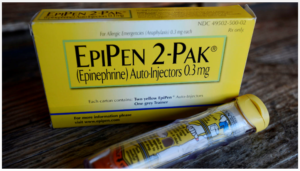
In a move that angered a key Senate lawmaker, Mylan Pharmaceuticals has declined to testify at a planned Nov. 30 Senate hearing to review a $465 million settlement the drug maker purportedly reached with the US Department of Justice for shortchanging Medicaid...In a letter to...the Senate Judiciary Committee...Mylan explained the company will not appear for three reasons – the “stated focus of the hearing,” because the hearing involves a “pending matter,” because both the Justice Department and the Centers for Medicare & Medicaid Services have already said they will not send officials to testify...(Senator) Grassley (chairs the Senate Judiciary Committee) responded by blasting the feds, as well as the drug maker...“The Obama Administration is dodging accountability for an expensive problem, and now a company is following its bad example,” he said in a statement. “Taxpayers have paid and [reportedly] continue to pay hundreds of millions of dollars more for the EpiPen than they have to pay. This happened because either the agencies in charge dropped the ball, the company gamed the system, or both.”
- 5 Most Expensive Medicare Drugs — and Which Companies Are Getting Rich from Them (fool.com)

Medicare spends billions of dollars each year on prescription drugs. That's not surprising. What might be surprising, though, is how much the federal healthcare program spends per patient on some of these drugs. Here are the five most expensive drugs covered by Medicare on a per-patient basis -- and which companies are making a lot of money from them.
- H.P. Acthar (corticotropin)…Medicare spent $162,371 per patient in 2015 on a drug that's been around since the 1950s -- H.P. Acthar. The drug, which is made from an extract from the pituitary glands of pigs, is used to treat several indications, including multiple sclerosis relapse and infantile spasms.
- Remodulin (treprostinil)…which treats pulmonary arterial hypertension, ranked as the second most expensive drug covered by Medicare. The average cost per patient for Remodulin in 2015 was $144,070. Unlike most of the high-cost drugs reimbursed by Medicare, the price for Remodulin didn't increase last year.
- Tyvaso (treprostinil inj)…Another pulmonary arterial hypertension treatment, Tyvaso, came in right behind Remodulin on Medicare's list of costly drugs. Medicare spent $107,489 per patient for Tyvaso in 2015.
- Provenge (sipuleucel-T)…ranks as the most expensive cancer treatment (on a per-patient basis) for Medicare. The federal program spent $95,290 per patient for the advanced prostate cancer immunotherapy last year.
- Harvoni (ledipasvir and sofosbuvir)…Medicare spent $92,847 per patient last year for Harvoni. That landed the hepatitis C drug at No. 5 on the list of most expensive drugs covered by Medicare. However, Harvoni is at the very top of the list when it comes to total spending. Medicare spent over $7 billion in 2015 for Harvoni, by far the most of any drug covered by the program.
These five most expensive drugs covered by Medicare have one surprising thing in common: None of them had big price increases last year...Another thing that most of these drugs have in common is that they play a significant role in the fortunes of the companies that sell them.
- Chicago will license pharma sales reps to fight opioid overprescribing (statnews.com)
In hopes of reducing inappropriate opioid prescribing, the Chicago City Council...passed an ordinance that requires all pharmaceutical sales reps to become licensed...The ordinance, which the pharmaceutical industry opposed, will require sales reps to undergo training for ethics, marketing regulations, and applicable laws. Reps will also have to file reports with the city that disclose the names of doctors they visit as part of their work, the number of visits, and any samples, materials, or gifts provided, along with their value. Reps will also have to pay a $750 licensing fee and renew the licenses annually...The move is the latest effort by the city to combat an epidemic of deaths and overdoses attributed to opioid painkillers...The city expects to collect more than $1 million in licensing revenue and will use that to support ongoing efforts to educate doctors and the public about opioids, and cover the cost of regulation...I think will be hard to prove its an effective way to control the prescribing, so I don’t think it’s really going to solve the problem directly. It might help indirectly if the city can say that overprescribing is caused by aggressive sales tactics...I’m not sure how they can manipulate the data to prove anything. But they may be able to squeeze something out of the data. They’re asking for a lot...