
- Pfizer sues Texas agency over releasing Medicaid data to lawmakers (statnews.com)
In the latest struggle over pharmaceutical costs, Pfizer has filed a lawsuit against a Texas state agency for releasing Medicaid rebate data to a pair of state lawmakers, claiming the move violated federal and state laws that protect its confidential information...By releasing the data, Pfizer argued the Texas Health and Human Services Commission compromised “valuable and commercially sensitive trade secrets” that could hurt its ability to compete with rivals, according to the lawsuit…The drug maker...contended that disclosure can lead to “uniform pricing” that could harm Medicaid. How so? Pfizer maintained that, if other large purchasers were to know about — and then demand — the same prices offered to the Texas Medicaid program, the company “would not be able to provide such pricing and rebates to every entity due to their unique differences in size, market and particular needs.”...the cat is out of the bag, Pfizer asked the court for a temporary restraining order and a preliminary injunction to prevent the Texas Health and Human Services Commission from releasing data in response to any additional requests...This is likely to be a closely watched case, given the tremendous interest in pharmaceutical costs and the mystery surrounding rebates.
- Teva says production halted at Rimsa plant at the request of Mexican regulator (fiercepharma.com)
Teva has halted production at the Rimsa plant in Mexico and idled some of the workers, laying the blame for the issues at the feet of the brothers with whom they are battling in court over the $2.3 billion buyout...Teva acknowledged today that Mexican authorities suspended manufacturing at the plant in October saying the action followed...discovery of the serious violations committed under the Espinosa brothers, Rimsa's former owners....We are working closely with the Mexican authorities in order to restore production and products to the market…Mexico’s Federal Commission for Protection against Health Risks...took its action in response to a complaint by Teva. The agency is now said to be verifying that the 140 products manufactured at the plant in Guadalajara meet quality, safety and efficacy standards. COFEPRIS expects to complete its analysis by year-end...
- Pharm Exec’s 2017 Pipeline Report (pharmexec.com)

The industry is readying for a leap into a new age of complex therapies, as major advances seem mere steps away from market approval. Regenerative cell-based therapies, CAR-T and immuno-oncology combinations are just some of the fields where researchers are reaching for new heights that could alter the treatment paradigm. Elaborate manufacturing and rising drug costs, however, loom as deep chasms to cross.
- CAR-T cutting it close
- Combos, to name a few
- A PD-1 backbone?
- Targeted therapy: Is that still a thing?
- NASH players
- State of Alzheimer’s
- Moving fast in Zika
- An eye on complexity
- The verdict: A pipeline of puzzles
...As researchers blaze the meandering and thorny path toward curative treatments, a clearing is visible on the horizon. But to get there, the industry must confront a daunting chasm—making the previous generation’s small molecule-to-antibody transition look like an easy stride across a tame stream....
- The drug industry wins pricing battle in California, likely to fare better with Trump (mmm-online.com)

The defeat of a ballot measure in California that sought to set limits on drug prices as well as the election of Donald Trump are expected to lessen the pressure on drug pricing that pharmaceutical companies had anticipated...The pharmaceutical industry aggressively opposed the California ballot measure, which was backed by groups like the AIDS Healthcare Foundation and AARP...the two sides had spent a combined $115 million on campaigns, with $106 million of that coming from pharma and industry groups...The defeat of Proposition 61 in California reaffirmed the power of the biopharma lobby... the prospect of a Republican-led White House and Congress doesn't mean that the pricing debate will fade away. Owing to the continued furor...
- Most doctors don’t cite cost as a factor when deciding treatments (statnews.com)

The rising cost of medicines may be a growing problem for many Americans, but a new survey finds that cost is generally not a key factor when doctors decide which treatments to prescribe their patients. Among six different types of doctors queried, only primary care physicians cited cost as among their most important considerations. Forty-seven percent ranked the issue as a key concern, behind evidence that a drug is safe, effective and well-tolerated…many physicians remain more concerned with finding the best medicine for the ailment at hand, as they should. But this will also place more of the onus on patients to talk to their doctors about affordability when reviewing treatment options...
- Teva sets aside $520M to settle bribery investigations by DOJ, SEC (fiercepharma.com)

Teva is trying to clean the slate on its history of allegedly paying bribes in foreign countries to boost sales. Having revamped its governance programs and set a new tone about bad behavior, it has now put aside more than half a million dollars to cover anticipated settlements with U.S. authorities...Teva revealed it was in “advanced discussions” to settle investigations by the Justice Department and SEC into violations of the Foreign Corrupt Practices Act and set aside about $520 million to cover the expected settlements. It said those discussions concern matters that occurred in 2007-2013 in Russia, Mexico and Ukraine...Teva emphasized that none of the conduct involved its U.S. business, inferring instead that it was problems with third parties and subsidiaries. It pledged to do whatever it can to prevent a repeat...The compliance program that Teva has in place now is serious, rigorous, and comprehensive and is designed to protect the company and its subsidiaries against future violations…
- Which drug makers do a good job getting poor patients access to their medicines? (statnews.com)

The pharmaceutical industry is regularly chastised for failing to do enough to ensure that people in low and middle-income countries have access to its medicines. Yet the real picture is actually more nuanced, according to a newly released report that finds some — but not all — drug makers are making headway...Some companies...are partnering to develop needed medicines. Others are pledging to waive or abandon patent rights and granting licenses so that generic versions of their drugs become available. At the same time, the report finds that much more can be done…“...progress is slower than many of us would like,”...executive director of the Access to Medicine Foundation…The foundation...compiled an index...Here are some key findings: GlaxoSmithKline led the index for the fifth time and was followed by Johnson & Johnson and Novartis, while Astellas had the poorest showing...the number of companies using equitable pricing strategies increased from 16 in 2012, to 18 in 2014, to 19 in 2016. Ischemic heart disease replaced HIV/AIDS as the disease with the most products with equitable pricing...As for drugs being developed...420 R&D projects that address specific needs of people in low and middle-income countries, up from 93 in 2014. The pipeline focuses heavily on five diseases —lower respiratory infections, diabetes, malaria, viral hepatitis and HIV/AIDS — that cause relatively large burdens and either have large commercial markets or are high priorities.
- Theranos voided one in every 10 test results conducted on behalf of Walgreens (drugstorenews.com)

One day before Walgreens Boots Alliance severed its relationship with the blood-testing laboratory Theranos in June 2016, Theranos acknowledged to Walgreens executives that more than 10% of the test reports — totaling 31,000 test reports altogether — that were provided to Walgreens customers who used Theranos' services had to be voided. "[Theranos] stated that 31,000 Walgreens customers had received voided test reports, which was 11.3% of total Walgreens customers," Walgreens alleged in court papers filed Tuesday...According to Walgreens, Theranos broke each of the promises made to the Chicago-based retail pharmacy operator, which had entered into an exclusive arrangement with Theranos in July, 2010, and which was later amended in June, 2012. The 2012 agreement provided the framework under which Theranos Wellness Centers could operate inside Walgreens' stores...
- More generics consolidation coming? Novartis deal rumors point up the industry’s troubles (fiercepharma.com)
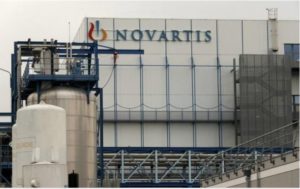
If Novartis does snap up Amneal to beef up its own Sandoz unit, the deal will say as much about the state of the generics industry as it does about Novartis...True, Novartis is having trouble with its Alcon ophthalmology unit and it's been shopping for deals for some time. But generics companies have their own struggles, and building up by dealmaking is one way to combat them…Pricing pressures are putting a damper on sales and profits, and many analysts believe this pressure will only increase. The bigger generics makers are consolidating to become even bigger, because scale means better margins...Meanwhile, the FDA is under pressure to speed generics through the approval process, thanks to Mylan’s EpiPen pricing scandal and the attention it brought to copycat drugs with few-to-no generic competitors...the FDA is planning a renewal of the Generic Drug User Fee Act that would limit review time to 8 months...Look for the consolidation discussion to continue in generics, because the pricing problems, accelerating approvals and margin pressure aren’t going away anytime soon...
- A New Test of Pot’s Potential to Replace Painkillers (theatlantic.com)
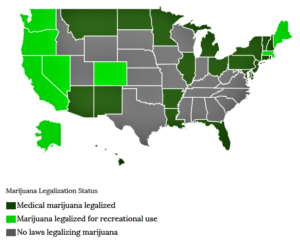
Emily Lindley’s stash of marijuana is going to be very, very secure...Lindley, a neurobiologist, is about to begin the first study ever to directly compare cannabis with an opioid painkiller for treating people with chronic pain. She got a grant for this research two years ago, but it has taken that much time to meet all the requirements for working with a drug the federal government still considers highly dangerous...The current status of medical marijuana research is rife with irony. As states have liberalized marijuana laws, they’ve created new opportunities: Lindley’s grant is part of $9 million Colorado awarded for medical research in 2014, using tax money from marijuana sales. But since pot remains illegal at the federal level, researchers have to jump through regulatory hoops—lots of them—to do legitimate research...Physicians have commented for more than a century on the potential for cannabis to substitute for opioid drugs, and several recent studies seem to bolster this hypothesis...The idea has not been tested with rigorous clinical trials, however. Such trials are expensive, and they’re normally paid for by a pharmaceutical company hoping to bring a new drug to market. Because a plant that exists and reproduces in nature can’t be patented, cannabis offers few opportunities for patents (and thus profits), which makes it look like a loser to most companies...Lindley is eager to get on with her study...Given that so many people are already self-treating with marijuana, Lindley says, it’s important to know whether there are actually therapeutic effects. “I’m not a proponent one way or another,” she says. “I think we need to do the research.”