
- General Chapter <800> Hazardous Drugs—Handling in Healthcare Settings to be Published in USP 39–NF 34, First Supplement (usp.org)Draft <800> Hazardous Drugs—Handling in Healthcare Settings (usp.org)
The Compounding Expert Committee approved a new General Chapter, <800> Hazardous Drugs—Handling in Healthcare Settings. The purpose of this General Chapter is to provide standards to protect personnel, patients and the environment when handling hazardous drugs (HDs). The chapter applies to all healthcare personnel and all entities which handle HDs. Building on existing standards and guidelines, General Chapter <800> provides a comprehensive approach for handling HDs in healthcare settings with the ultimate goal of preventing and/or limiting potential exposures to HDs...The revised General Chapter <800> will be published on February 1, 2016 in the First Supplement to USP 39–NF 34. Additionally, the Expert Committee approved a delayed official implementation date of July 1, 2018 to allow entities more than two years to implement the chapter.
- These 10 S&P 500 Health Care Companies Are the Most Shareholder Friendly (thestreet.com)
Which health care companies have traditionally been the most shareholder friendly? Turns out Pfizer…is one of them. But what about the rest of the sector?...Health care companies have been actively returning capital to shareholders over the past 10 years, but not all of its sub-industries were active participants. However, that may change, particularly as several biotech companies start to mature…"Biotech has been increasingly active in repurchasing shares during the past five years,"…."We expect these trends to continue in the next several years, and we anticipate that more biotech companies will engage in similar capital deployment activities in the future as their businesses mature and they begin generating steady cash flows. Although we do not anticipate biotech to overtake the pharmaceutical industry."…So which health care companies have led the way with the most returned capital to shareholders over the past 10 years? Here's the list..
- Pfizer Inc.; Pharmaceuticals; YTD return: 3.3%; TRC 2005-2014: $127.37 billion
- Johnson & Johnson; Pharmaceuticals; YTD return: -2%; TRC 2005-2014: $108.4 billion
- Merck & Co. Inc.; Pharmaceuticals; YTD return: -4.7%; TRC 2005-2014: $68.1 billion
- Amgen Inc.; Biotech; YTD return: 0.39%; TRC 2005-2014: $39.56 billion
- United Health Group Inc.; Managed Health Care; YTD return: 11.7%; TRC 2005-2014: $36.27 billion
- HCA Holdings Inc.; Health Care Facilities; YTD return: -8.1%; TRC 2005-2014: $33.54 billion
- Abbott Laboratories; Health Care Equip ; YTD return: 2.2%; TRC 2005-2014: $33.16 billion
- Anthem Inc.; Managed Health Care; YTD return: 4.5%; TRC 2005-2014: $33.11 billion
- Bristol-Myers Squibb Co.; Pharmaceuticals; YTD return: 14.9%; TRC 2005-2014: $27.6 billion
- Medtronic Plc ; Health Care Equip ; YTD return: 4.7%; TRC 2005-2014: $24.4 billion
- Sustainable Business Models that Expand the Role of the Pharmacist (pharmacytimes.com)
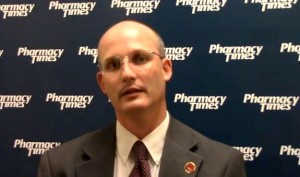
Bryan Ziegler, PharmD, executive director of Kennedy Pharmacy Innovation Center, gives some examples of sustainable business models that can expand the role of the pharmacist.
- Sanofi whistleblower lawsuit kicks into higher gear (cnbc.com)

A whistleblowing former paralegal at drug giant Sanofi is now claiming she was aware of "many instances" where Sanofi lawyers destroyed documents to avoid turning them over to opponents in prior legal cases…Ex-Sanofi paralegal Diane Ponte's new allegation comes in an affidavit she filed in her pending lawsuit against the company...claims she learned of an alleged scheme at Sanofi to pay more than $30 million in kickbacks to promote the company's diabetes drugs. The suit came a year after the France-based drug company already agreed to pay more than $100 million to the U.S. federal government to settle other claims related to alleged kickbacks to doctors, and seven months after Sanofi agreed to pay a nearly $40 million fine in Germany in connection with two employees who were convicted there of paying bribes to boost drug sales.
- Las Vegas woman in middle of brain death battle (reviewjournal.com)Supreme Court orders Vegas woman to be kept on life support (reviewjournal.com)

The battle over maintaining life support for a 20-year-old Las Vegas woman continues this week in Reno. It focuses on the question of when is a person considered dead…The unknown is whether doctors for Saint Mary's Regional Medical Center in Reno will continue to try to pull the plug on Aden Hailu, who sought treatment for abdominal pain in April and suffered catastrophic lack of oxygen and brain damage during an exploratory surgery…An attorney for Hailu's family said the next step must be to develop a plan of care…"There is hope that she will regain consciousness," said David O'Mara, the…attorney representing, Hailu's father…The state Supreme Court ruled last week that the standards used by the hospital to make a determination of brain death might not satisfy state law. Hailu was declared brain dead at the hospital May 28 after doctors concluded that she was unresponsive, lacked brain activity as determined by reflexes and eye movement, and could not breathe on her own.
- White House reaction to AGN/PFE deal (video.cnbc.com)Pfizer's 'holiday' gift (video.cnbc.com)Pfizer to buy Allergan for $363 per share (video.cnbc.com)Pfizer and Allergan to create the world’s largest drug maker (statnews.com)Pfizer-Allergan deal: A boon to shareholders, a blow to R&D (statnews.com)Inside Pfizer's $160B Allergan Merger (forbes.com)With veteran job-choppers Pfizer and Allergan joining hands, how many layoffs are in the cards? (fiercepharma.com)
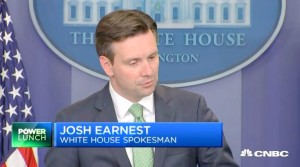
CNBC's Eamon Javers reports on the White House and Democratic Presidential Candidate Hillary Clinton's reaction to the Pfizer-Allergan deal.
- How Pharmacies Can Maintain Business Continuity During a Disaster (pharmacytimes.com)
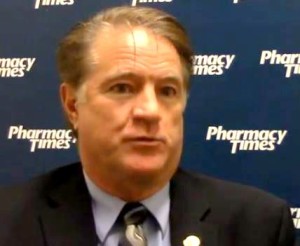
Donnie Calhoun, RPh, PD, National Community Pharmacists Association Foundation vice president, discusses how pharmacists can maintain business continuity during a natural disaster or other emergencies.
- Dr Reddy’s sues AstraZeneca over purple colour of Nexium generic (economictimes.indiatimes.com)Despite Legal Troubles, Is Dr. Reddy's a Buy? (thestreet.com)

Hyderabad-based drug maker Dr Reddy's has filed a lawsuit in a US court against Anglo-Swedish drug giant AstraZeneca alleging material breach of a settlement agreement that had released the company from any liability in connection with generic versions of Nexium (esomeprazole)…Last week, AstraZeneca as part of a lawsuit against Dr Reddy's moved in a Delaware Court obtained a temporary restraining order preventing the Indian firm from selling copies of Nexium on grounds of trademark infringement for using the colour purple, which was similar to the original brand.
- How Pharmacists Can Encourage Prescribers to Adopt E-Prescribing (pharmacytimes.com)Getting Started with EPCS (getepcs.com)
Ken Whittemore Jr, Surescript's senior vice president of professional and regulatory affairs, talks about some ways independent pharmacists could encourage local prescribers to adopt e-prescribing of controlled substances.
- Experts foresee big premium increases for Medicare drug plan (hosted.ap.org)

…many seniors are facing sharply higher premiums for Medicare's popular prescription drug program (Part D). The reason: rising drug costs have overtaken a long stretch of stable premiums…"Premiums are going up. Deductibles are going up,"…Government spending on the program also has risen significantly, driven by pricey new drugs, notably for hepatitis C infection. The cost for the hepatitis drugs in the Medicare program is expected to be $9.2 billion this year, a near doubling from 2014. Because of the prescription program's financial structure, taxpayers cover most of the cost for expensive medications. Three out of four adults infected with hepatitis C are baby boomers…Indicators signal rising costs across the program. Among them:
- independent estimates…show increasing premiums for stand-alone drug plans. The average premium will rise from $36.68 to $41.46 per month next year, or 13 percent…biggest increase since 2009.
- maximum deductible for prescription coverage will rise by $40, to $360…biggest increase in the deductible since the inception of Part D in 2006.
- taxpayer expenditures for the "catastrophic" portion of the benefit - in which beneficiaries with high drug bills pay only 5 percent of the cost - will rise by $4.5 billion in 2016, an increase of more than 14 percent. Spending for catastrophic coverage has doubled in just a short time, from $15.5 billion in 2012 to an estimated $31.2 billion this year.
The analyses...seemingly at odds with the message coming from the Obama administration, which estimates that drug premiums will remain stable in 2016, averaging $32.50 a month.