
- Cryotherapy use spreads, though it’s unproven, unregulated (cnsnews.com)Whole-body cryotherapy (extreme cold air exposure) for preventing and treating muscle soreness after exercise in adults (researchportal.port.ac.uk)What are DOMS? How can you recover from them? And the science behind cryotherapy (researchportal.port.ac.uk)

Mr. Freeze
…cryotherapy…treatments…have come under scrutiny after a Las Vegas spa employee was found dead last month in the chamber of a cryotherapy machine chilled by liquid nitrogen…Las Vegas police and Nevada state officials have opened investigations into the circumstances involving the death, but it has moved slowly because the industry is so new in the state that no one agency assumed responsibility for it…Nevada's chief medical officer said Tuesday that the Bureau of Health Care Quality and Compliance will assume responsibility for investigating complaints as the state health department takes over an expanded probe to determine whether or not the treatment itself is safe. The long review process is now only in its fact-finding stage, but Dr. Tracey Green said some form of education, regulation, scope of work agreement and/or licensure could ultimately be proposed…any rules or policies put in place in Nevada would mark some of the first regulations in the world governing cryotherapy.
- DEA Releases 2015 Drug Threat Assessment: Heroin and Painkiller Abuse Continue to Concern (dea.gov)2015 National Drug Threat Assessment Summary (dea.gov)Heroin top U.S. drug threat; (reuters.com)
DEA…today announced results from the 2015 National Drug Threat Assessment, which found that drug overdose deaths are the leading cause of injury (and) death in the United States, ahead of deaths from motor vehicle accidents and firearms. In 2013, more than 46,000 people in the United States died from a drug overdose and more than half of those were caused by prescription painkillers and heroin…Since 2002, prescription drug deaths have outpaced those of cocaine and heroin combined. Abuse of controlled prescription drugs is higher than that of cocaine, methamphetamine, heroin, MDMA, and PCP combined… Fentanyl, a synthetic opioid 25 to 40 times more potent than heroin, has caused more than 700 deaths in the U.S. between late 2013 and early 2015. Fentanyl is sometimes added to heroin batches, or sold by itself as heroin, unknown to the user...
- MRSA treatment could be transformed by new precision drug therapy (theguardian.com)‘Stealth bomb’ antibiotic vanquishes drug-resistant bacteria (nature.com)

Radical combination of antibodies and antibiotics could effectively clear up ‘superbug’ infections and TB, as well as reducing harm to healthy microbes…A precision drug therapy that wipes out bugs that hide in the body could help clear up persistent infections that do not respond to standard antibiotics…The treatment works by tagging antibiotics onto antibodies (antibody-antibiotic conjugate) which home in on pathogens and deliver a lethal dose of drug directly to the heart of the infected tissues…The strategy could transform the treatment of patients with recurring bacterial infections, such as the hospital superbug MRSA (methicillin-resistant S. aureus), which can be extremely hard to treat even with powerful antibiotics. The approach also raises hopes for treating relapses in tuberculosis patients, and chronic infections that can take hold after heart surgery.
- U.S. Senate panel probing Valeant, Turing over drug costs (reuters.com)Senators probe Valeant and Shkreli over drug prices, while House Dems form a task force (pharmalot.com)
...Senate panel on Wednesday launched a bipartisan probe into pharmaceutical pricing, seeking documents from four drugmakers including Valeant Pharmaceuticals and Turing Pharmaceuticals, companies embroiled in controversy over price hikes on lifesaving drugs…Senate's Special Committee on Aging also requested information from Retrophin Inc and Rodelis Therapeutics…Drugmakers and their defenders say drugs are priced to help enable discovery and development of innovative new treatments…House...could authorize an investigation…
- No more prescriptions for common drugs (theaustralian.com.au)Over-the-counter items recommended for de-listing or amendment from 1 January 2016 (pbs.gov.au)
PATIENTS and taxpayers are set to save some cash as the federal government announces it'll no longer subsidise basic over-the-counter medicines like paracetamol and aspirin...17 common drugs that treat issues like headaches, heartburn and constipation will be removed from the Pharmaceutical Benefits Scheme from January 1, 2016…The move is expected to save taxpayers half a billion dollars over the next five years, which…says will instead be spent on listing new life-saving drugs…The Consumers Health Forum is concerned consumers will now be buying and taking medicines without a treatment plan and regular monitoring from their doctor... the move will have no impact on a patient's ability to speak to their doctor or pharmacist about over-the-counter medicines… Australian Medical Association…said doctors welcomed the announcement, which was based on advice from the independent Pharmaceutical Benefits Advisory Committee.
- BMA refuses to re-enter contract talks (bbc.com)BMA presses ahead with juniors' ballot (bma.org.uk)
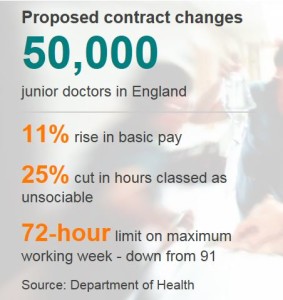
Junior doctors' leaders have refused to return to the negotiating table despite government pleas to end the dispute over a new contract in England…Earlier ministers had published more detail on the new deal, which included a few concessions…British Medical Association said the contract was not safe or fair and accused ministers of putting out "misleading" claims… Health Secretary Jeremy Hunt had made a last ditch attempt to persuade them not to push ahead with the ballot…he had set out fresh detail about the offer…the promise of an 11% rise in basic pay, but the BMA said this was misleading as it was offset by curbs to other elements of the pay package, including unsociable hours payments…BMA has claimed there are insufficient safeguards to stop hospitals over-working doctors and that some medics stand to lose up to 15% of their salaries…The union also said it could not return to talks unless the government lifted the threat to impose the new contract.
- Pharmacy Podcast – Mobile Health Driving Adherence in Specialty Pharmacy (pharmacypodcast.com)
...interview with Eric Sredzinski, Pharm.D., about improving medication adherence in HIV patients through mobile health technologies... (podcast 19:29)
- OpenNotes shows success with medication adherence (healthcareitnews.com)OpenNotes patients and clinicians on the same page (myopennotes.org)

This is the first large-scale study to reveal how doctors' notes affect patients when it comes to taking their prescriptions…the OpenNotes initiative, first conceived at Beth Israel Deaconess Medical Center in Boston…The program directly connects patients to their physician's notes through an online portal…Encouraging patients to utilize a Web portal to view their doctors' notes is a cost-effective and efficient way to influence medication-taking behavior…reminding them to read them before visiting their doctor is key to reinforcing the doctors' rationale for prescribing specific medications and dosage…increasing patient access to fully transparent doctors' notes should be on the radar screen of all healthcare providers…
- Can Hospitals Waive The Costs of Certain Drugs? (bna.com)OIG Policy Statement Regarding Hospitals That Discount or Waive Amounts Owed by Medicare Beneficiaries for Self-Administered Drugs Dispensed in Outpatient Settings (oig.hhs.gov)
Federal laws and regulations generally frown on hospitals providing Medicare patients with free or discounted medications, but a recent policy statement from the OIG appears to buck that trend. From now on, hospitals won’t face any administrative sanctions for waiving or discounting self-administered drugs (SADs) that are either administered or ingested in an outpatient setting and aren’t covered under Medicare Part B…policy statement was prompted by reports that some hospitals were charging Medicare patients for SADs, resulting in financial hardships for the patients. The hospitals believed that the anti-kickback statute required them to bill for the SADs, and at higher rates than patients would receive at retail pharmacies...Many hospitals are already waiving or discounting patient costs for SADs, as Medicare patients can end up paying more for the SADs than they would have if the drugs were dispensed at a retail pharmacy...
- Breast cancer drug Kadcyla to remain on NHS after manufacturer lowers price (theguardian.com)Cancer Drugs Fund: Kadcyla back on list (bbc.com)National Cancer Drugs Fund List Ver 6.0 (england.nhs.uk)

Drug was set to be dumped from UK’s list of approved medicines before deal was reached with pharmaceutical firm Roche...An expensive drug that could prolong the lives of women with advanced breast cancer by at least six months will remain on the list of medicines available on the NHS (National Health System) after the manufacturer agreed to lower the price…Roche’s Kadcyla was one of a number of drugs set to be dumped from the Cancer Drugs Fund list of medicines that the government pays for because the National Institute for Health and Care Excellence does not consider them to be cost-effective…In the case of Kadcyla, cost was the only issue. Nice and NHS England accept that the drug works well and can extend women’s lives significantly without severe side-effects. But Roche launched the drug at a reported £90,000 ($138,000) per patient per year, which is nearly double the limit for Nice approval…