
- NICE unconvinced of Duchenne drug benefit (pharmatimes.com)

Cost regulators for health technologies funded by the National Health Service in England and Wales have rejected a novel treatment for the genetic condition Duchenne Muscular Dsytrophy, seeking more data from the firm to confirm its benefit and justify its high cost...PTC Therapeutics’ Translarna (ataluren) is the first licensed treatment for DMD that addresses the loss of dystrophin, the underlying cause of the condition…NICE has recognised that the drug represents "an important development in the treatment of DMD and could potentially prolong the time before children have to use a wheelchair"…data…show that the therapy failed to achieve its main goal of significantly improving the distance achieved by patients in the standard six-minute walk test….the firm’s task of justifying the £220,256 ($340,000) per patient per year cost of the drug just got somewhat harder.
- Pharmacy Podcast – Transformation of Community to Specialty Pharmacy (pharmacypodcast.com)
Ron Lanton – Government Affairs Strategist for the Pharmacy Podcast Show interviews Phil LaFoy with Blount Specialty Pharmacy.
- India drug industry says U.S.-led trade deal will raise prices (reuters.com)
Leaders of India's $15 billion pharmaceuticals industry, a major supplier of affordable generics to the world, have joined public health activists in criticizing a new U.S.-led trade deal they say will delay the arrival of new cheap drugs…The impact of the Trans-Pacific Partnership struck last week between 12 nations…but not India, is still being studied by Indian drug makers. But in initial comments, industry executives said provisions in the deal that shield new drug data from competitors would hurt their business in those nations…Countries from the United States to Africa rely on India as a supplier of cheap medicines, earning it the "pharmacy to the world" nickname.
- Roseman College of Medicine one step closer to reality (reviewjournal.com)New medical schools will shift doctors' affiliations, move students around Nevada (reviewjournal.com)

Roseman University of Health Sciences College of Medicine has been approved as a candidate for accreditation, a key step in the process of the school's goal of admitting 60 medical students each year starting in 2017…Liaison Committee on Medical Education accepted the self-study submitted by Roseman officials over the summer, and the next step in the process is a site visit by the accreditors. The self-study detailed all aspects of the medical education programs including what curriculum, resources, faculty and facilities will be needed.
- Australia to allow marijuana to be grown locally for medical trials (reuters.com)
Australia is altering its drug laws to allow for the cultivation of marijuana for medicinal and scientific purposes, removing a major hurdle to the establishment of clinical trials of the drug, the government said…Draft amendments to the Narcotics Drugs Act are being finalised to allow for the controlled cultivation of marijuana, giving patients access to "a safe, legal and sustainable supply of locally produced products for the first time,"…Australian manufacturers, researchers and patients currently have to access international supplies of legal medicinal marijuana, with cost, limited supply and export barriers making this challenging.
- Pharma wins lawsuit over orphan drug discounts to hospitals (pharmalot.com)ASHP Disappointed in 340B Orphan Drug Court Decision (ashp.org)340B Health’s Statement on Orphan Drug Court Decision (340bhealth.org)

In a victory for the pharmaceutical industry, a federal judge decided the Health Resources and Services Administration cannot enforce a rule that would allow many so-called safety-net hospitals and clinics to obtain orphan drugs at a discount… The decision caps more than two years of feuding between drug makers and the agency over a federal program known as 340B. This requires drug makers to offer discounts of up to 50 percent on all outpatient drugs to hospitals and clinics that serve indigent populations...
- Pharma’s newest nemesis? Nestlé works at the intersection of food and drugs to attack illnesses (fiercepharma.com)

Swiss food company talks turkey with the FDA even as it researches conditions like Alzheimer's…If Big Pharma didn't already have enough to worry about, with patent cliffs, drug price investigations and reluctant payers, it now will have to face the onslaught of a large, well-funded company trying to create hybrid pharma and food products company that would treat conditions from stomach disorders to Alzheimer's disease…the four-year-old health-focused unit of Swiss food giant Nestlé is acting very much like a Big Pharma player these days. It is doing deals for pipeline projects, talking to the FDA about approvals on health-proven products and eyeing the same emerging markets that Big Pharma players have looked to improve their margins…
- Hospital treatments severely threatened by antibiotic resistance (medicalnewstoday.com)Potential burden of antibiotic resistance on surgery and cancer chemotherapy antibiotic prophylaxis in the USA: a literature review and modelling study (thelancet.com)
Up to a half of infections after surgery and over a quarter of infections after chemotherapy are caused by organisms already resistant to standard antibiotics in the US… Researchers have reported the strongest evidence yet that rising antibiotic resistance could have disastrous consequences for patients undergoing surgery or cancer chemotherapy… A 30% reduction in the efficacy of antibiotic prophylaxis could result in 120,000 additional infections and 6,300 infection-related deaths every year… Prophylactic antibiotics are used routinely in surgery, organ transplantation and cancer chemotherapy to prevent infections…Increasing antibiotic resistance threatens the safety of these procedures and could result in increased rates of morbidity, amputation or death.
- Medicare Part D: A First Look at Plan Offerings in 2016 (kff.org)

This issue brief provides an overview of the 2016 PDP marketplace, focusing on key changes from 2015…Many will see higher premiums and deductibles…highlights include:
- beneficiaries in each region will have a choice of 26 PDPs, on average,
- average PDP premium…to increase by 13 percent…from $36.68 to $41.46 per month…largest since 2009
- More than one-third of the 11.2 million PDP enrollees who do not receive Low-Income Subsidies would pay premiums of $60 or more per month…
- Nearly 4.4 million of these enrollees not receiving the LIS face a premium increase of at least $10 per month...
- Two-thirds of all PDPs will have deductibles…a higher share than in previous years. A growing share of PDPs will impose the maximum deductible…to $360..the largest increase in the deductible since the start of the program
- Most PDPs charge coinsurance, rather than flat copayments, for non-preferred brand-name and specialty drugs, which could lead to higher out-of-pocket costs for those who use high-cost drugs.
- Nearly all PDPs use tiered pharmacy networks, with lower cost sharing in selected network pharmacies and higher cost sharing in other network pharmacies, a significant increase
- Beneficiaries receiving the LIS will have access to 7 plans for no monthly premium…fewer than in any past year.
- Superbug infections drop in China with new controls on antibiotics (fiercepharmaasia.com)Antibiotic control leads to superbug drop in China (english.cntv.cn)
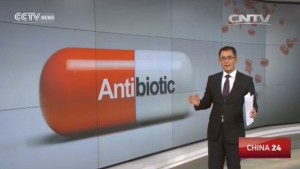
..overuse of antibiotics is one of the greatest threats facing the pharmaceutical, farming and medical industries. Overuse or abuse of the drugs has led to increasing resistance and given rise to "superbugs" that threaten patients and the world's food supply…threat is especially acute in poorer, developing countries where antibiotics are routinely overprescribed or given without a prescription…a plan in China to control the use of antibiotics has shown positive results, at least for one kind of superbug (MRSA)…Data..showed…rates of infection…decreased…from 70% to 30% …in many hospitals in China, thanks to the strict control…Part of those new controls include requiring prescriptions…and doctors are also being required to cut down on the use of the drugs.