
- Indian drug retailers protest against e-pharmacies (reuters.com)Chemists all over India on strike today (timesofindia.indiatimes.com)
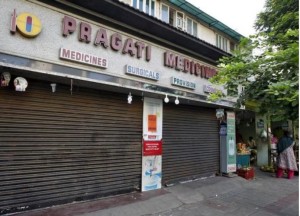
Indian drug retailers shut up shop for the day on Wednesday to protest against the country's growing online pharmacy industry, and threatened to close indefinitely if the federal government did not shut down e-pharmacies…nationwide protest was widely supported, with as many as 850,000 chemists closing their doors, leaving patients waiting in long queues at any pharmacies that were open…Drug retailers are worried…"It is a matter of our livelihoods, we must be prepared for a fight," said pharmacist Satish Vij, who traveled from northern Haryana state to take part in a protest in New Delhi, where about 1,000 people, mostly pharmacists, wore black arm bands, held placards and shouted slogans against e-pharmacies.
- This Drugmaker Suffered the Consequences of Price Increases (bloomberg.com)

...drugmaker Mallinckrodt Plc spent $1.3 billion to buy a company that sold an injectable form of acetaminophen… the new owner more than doubled the price of the drug, called Ofirmev. Revenue from the medication shot up… hospitals were able to fight back by seeking other options, cutting into Mallinckrodt’s projected sales growth… Mallinckrodt earnings report Aug. 4 that sent shares down 14 percent in a single day, their worst drop on record...stock has slid an additional 38 percent… Ofirmev demand is starting to turn a corner after hitting a low point earlier this year…revenue from the drug will decline year-over-year until the second half of fiscal 2016..Mallinckrodt’s experience underscores the risk for drugmakers that increase prices on medicine that doctors and health-care providers are already accustomed to using. As expenses mount, customers will look for alternatives, no matter how popular or useful the product.
- U.S. prescription opioid misuse and deaths increase (reuters.com)
The proportion of people reporting use of prescription opioids for reasons other than medical necessity fell between 2003 and 2013, but use disorders and overdose deaths increased…rate of nonmedical use of opioids – not using a prescription as directed, or using a prescription that was written for someone else – fell from 5.4 to 4.9 percent…the rate of use disorders rose from 0.6 to 0.9 percent… more patients are experiencing…progression from initial opioid use to frequent use…Drug overdose deaths involving prescription opioids increased from 4.5 to 7.8 per 100,000 people.. These numbers could come down if we reduce inappropriate opioid prescribing and use and develop new treatments for pain that are safer…
- NHS seven-day plans will fail without more resources, warns doctors’ chief (theguardian.com)
The government’s "utopian" plan for a seven-day NHS (National Health Service) is doomed to failure due to a lack of doctors, money and diagnostic testing services…This idealised...NHS where you can have seven-day services, access to care seven days a week…sounds brilliant, but I suppose the best predictor of future performance is past performance…need as many as 40% more hospital doctors…if it was to provide full emergency care services at weekends…We are overstretched, overstressed and overloaded, and ministers are out of touch if they think that routine seven-day services are achievable with the current resource and workforce pressures facing our profession…
- NCPA Digest: Adherence, Diversified Revenue Critical for Community Pharmacies (ncpanet.org)
…independent community pharmacies are essential to patients and particularly those in underserved inner city and rural areas…These innovative small business owners are defining the future of pharmacy… the challenges of declining, even negative, revenue from prescription drug reimbursement…underscores the urgency with which community pharmacy owners must address two areas.
- improve patient adherence to make your pharmacy indispensable to payers who are under increasing pressure to demonstrate success in that area.
- take advantage of every opportunity to diversify pharmacy revenue streams beyond prescription drug payments.
- As U.S. insurers aim to get bigger, hospitals eye health plan entry (reuters.com)
As U.S. health insurers chart an unprecedented consolidation of the industry, hospitals are taking a fresh look at becoming insurers themselves to keep more of their patients' healthcare dollars in house… some hospitals are concerned about the impact of this consolidation in their local markets, and are considering offering their own insurance plans… Many hospital systems have also been buying up individual doctor practices, as well as rehabilitation and skilled nursing facilities, which give them a broader network of services…Among for-profit hospital operators, Tenet Healthcare Corp operates six health plans…
- Report: AstraZeneca funnels billions into Dutch tax-avoidance scheme (fiercepharma.com)Revealed: how AstraZeneca avoids paying UK corporation tax (theguardian.com)

AstraZeneca is not the first company to employ questionable tax-planning strategies, and it certainly won't be the last. But the U.K.-based drugmaker is the latest poster child for tax avoidance…AstraZeneca funneled billions of dollars into the Netherlands to get out of paying corporate taxes back home…AstraZeneca set up a Dutch lending operation and channeled $2.7 billion of internal group loans through its Dutch subsidiaries, charging interest of more than $140 million a year…then registered huge tax breaks in the U.K. and the Netherlands through a process known as "double dipping," or claiming a deduction on the same payment twice…result, the company did not pay corporation tax in the U.K. even though it posted global profits of $4.5 billion in 2013 and 2014.
- USDA awards first manufacturing contracts for bird flu vaccine stockpile (reuters.com)

Department of Agriculture…said it has awarded contracts to two drug companies to manufacture doses of avian influenza vaccine for poultry, in preparation for the potential return of the fast-spreading avian influenza virus later this year…The two contracted firms - Iowa-based Harrisvaccines, and France-based Ceva Corp. - will manufacture an undisclosed number of vaccine doses…The agency's Animal and Plant Health Inspection Service has not approved the use of an avian influenza vaccine in birds, and has not made a decision whether to use such vaccines in a future outbreak..
- D.E.A. Effort to Curb Painkiller Abuse Falls Short at Pharmacies (nytimes.com)DEA’S Prescription Drug Take-Back Effort-- A Big Success (dea.gov)
When the Drug Enforcement Administration announced last year that pharmacies nationwide could accept and destroy customers’ unwanted prescription drugs, experts in substance abuse called it a significant step toward easing the painkiller and heroin epidemic…the response has been insignificant…about 1 percent of American pharmacies have set up disposal programs, with none of those belonging to the two largest chains, CVS and Walgreens, which have balked at the cost and security risks… at least eight states, including New York, have laws that forbid pharmacies to take back controlled substances…D.E.A. has held 10 so-called take-back days — with the latest on Sept. 26 — these have collected 2,400 tons of pills, limited research suggests that the vast majority are non-controlled medications…
- Patients’ social media posts may be the next big thing for big data (healthcareitnews.com)
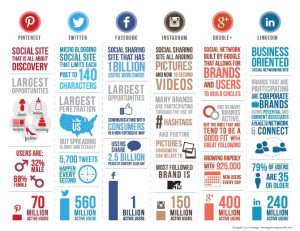
There is a rich potential to identify health trends…Mining patients' social media data could provide enormous insight into overall health outcomes…By handling social media posts much like big data, it just may be possible to link social media posts to health outcomes…If patients consent to sharing this data, a research database could be created, comparable to that of genomic databases. This database could be used by researchers to better understand the relationship between certain patients and their health.