
- NPAC advocates separation of medical and recreational cannabis (drugstorenews.com)
The Neighbourhood Pharmacy Association of Canada...applauded the federal government's Task Force on Marijuana Legalization and Regulation for recognizing the need to preserve the system of medical cannabis separate from the recreational system...the Task Force clearly noted Neighbourhood Pharmacies' proposition that medical cannabis is a serious drug and that Canadians expect that strength and packaging standards applied to prescription medications be applied to cannabis...We're looking forward to meeting with provincial pharmacy regulatory authorities, the pharmacy community and lawmakers to shape retail rules...We will continue to advocate for patient centric regulations that bring those using medical cannabis into the circle of care…
- Five Industry Trends for U.S. Drug Wholesalers in 2017 (drugchannels.net)

Here are five significant industry trends that will substantially impact the drug wholesaling industry in the coming years.
- U.S. pharmaceutical spending – and drug prices – are still growing. - We project that in 2016, for the first time, the Big Three wholesalers’ combined drug distribution revenues will exceed $400 billion.
- The consolidation of pharmacy and provider markets shows no sign of slowing - Mergers and acquisitions among pharmacies and payers are pressuring wholesaler margins, especially as the acquiring companies consolidate buying power.
- Payers and manufacturers are narrowing drug channels, pressuring wholesalers’ profitability - Narrow pharmacy networks – either preferred or limited models – are now a widely accepted element of pharmacy benefit design.
- Large pharmacies have entered into multifaceted partnerships with wholesalers – This...consolidation is creating a channel supply alignment among the largest wholesalers, largest PBMs and largest retail chains.
- Biosimilars are unlikely to provide superior profits to wholesalers. - Competition between a biologic drug and biosimilar is therefore likely to resemble brand-to-brand competition rather than brand-to-generic competition.
- This Week in Managed Care: December 16, 2016 (ajmc.com)
Laura Joszt with The American Journal of Managed Care. Welcome to This Week in Managed Care, from the Managed Markets News Network.
- U.S. Files First Charges in Generic Drug Price-Fixing Probe (bloomberg.com)Two former pharma execs first to be charged in generic price-fixing probe (statnews.com)

The Justice Department accused two executives of colluding with other generic pharmaceutical companies to fix prices, the first criminal charges stemming from a sweeping two-year investigation...Jeffrey Glazer, a former chief executive officer of Heritage Pharmaceuticals Inc., and Jason Malek, an ex-president...Each were charged in a criminal information with two counts of conspiring with other drug makers to fix the prices of an antibiotic and a drug used to treat diabetes (doxycycline and glyburide) . An information is often used as part of a plea agreement with prosecutors...Glazer and Malek accomplished this brazen theft by creating at least five dummy corporations, which they used to siphon off Heritage’s profits through numerous racketeering schemes," Heritage alleges. "Through one particularly audacious scheme...secretly arranged deeply discounted sales of Heritage products to their dummy corporations or through complicit third parties willing to act as straw buyers in return for bribes...Glazer and Malek then illicitly pocketed the profit that resulted when Heritage customers paid the market price for the drugs...The U.S. antitrust investigation spans more than a dozen companies and about two dozen drugs...
- Pharmacies miss half of dangerous drug combinations (chicagotribune.com)
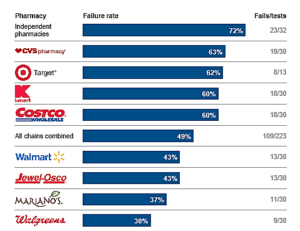
In the largest and most comprehensive study of its kind, the Tribune tested 255 pharmacies to see how often stores would dispense dangerous drug pairs without warning patients. Fifty-two percent of the pharmacies sold the medications without mentioning the potential interaction, striking evidence of an industry-wide failure that places millions of consumers at risk...CVS...had the highest failure rate of any chain in the Tribune tests, dispensing the medications with no warning 63 percent of the time. Walgreens...had the lowest failure rate at 30 percent — but that's still missing nearly 1 in 3 interactions... There is a very high sense of urgency to pursue this issue and get to the root cause...test after test, other pharmacists dispensed dangerous drug pairs at a fast-food pace, with little attention paid to customers. They failed to catch combinations that could trigger a stroke, result in kidney failure, deprive the body of oxygen or lead to unexpected pregnancy with a risk of birth defects...The Tribune study...exposes fundamental flaws in the pharmacy industry. Safety laws are not being followed, computer alert systems designed to flag drug interactions either don't work or are ignored, and some pharmacies emphasize fast service over patient safety. Several chain pharmacists, in interviews, described assembly-line conditions in which staff hurried to fill hundreds of prescriptions a day.
- NACDS hails rule relaxing access to pharmacy rewards (chaindrugreview.com)

The Department of Health and Human Services is giving pharmacies more flexibility to extend their reward and loyalty programs to beneficiaries in government programs such as Medicare and Medicaid…it will allow government program beneficiaries to enjoy access to programs voluntarily implemented by pharmacies, which reduce health care costs, improve quality and promote patient health...This is a very positive step forward for pharmacy patient care...and of the expanded innovative programs that pharmacies provide...Programs vary in their designs but often include cost savings or other rewards for filling prescriptions or engaging in other health-related activities, such as health screenings, medication adherence programs or healthy lifestyle behaviors…
- Pharmacy Week in Review: December 16, 2016 (pharmacytimes.com)
Kelly Walsh, PTNN. This weekly video program provides our readers with an in-depth review of the latest news, product approvals, FDA rulings and more.
- China’s OxyContin Boom Is a Gold Mine for This Drugmaker (bloomberg.com)
With its harsh anti-narcotics laws and painful history with debilitating opium epidemics in the 19th-century, China wouldn’t spring to mind as a promising market for OxyContin, a painkiller that has been at the center of an opioid addiction outbreak in the U.S…Yet in China, powered by soaring cancer rates and an aging population, OxyContin is turning into a hit. And the drug company behind the brand is giving sales an added boost through an outreach push to physicians and by working with the most powerful of allies—the Chinese government...OxyContin is sold...by Mundipharma (China) Pharmaceutical Co., a company associated with...Purdue Pharma LP, the seller of the long-acting opioid in the U.S...China faces ever greater challenges in managing the use of inherently risky opioids within its sprawling, state-run health-care system.
- New Data Show Prescription Profits Under Pressure at Independent Pharmacies (drugchannels.net)

I review our latest estimates on pharmacy economics and margins. The data reveal that independent pharmacy owners are starting to perform poorly. In 2015, the average pharmacist owning a single pharmacy earned about $200,000. It’s the second year in which the average owner’s compensation declined. The number of independent pharmacies and gross margins also are trending downwards...independent pharmacies are under-performing with generic substitution…
SIX OBSERVATIONS ON THE 2015 DATA
Overall independent pharmacy profit margins have remained stable.
Independent pharmacies’ prescription profit margins are trending downward.
Independent pharmacies’ gross profit per prescription was stable.
Independent pharmacies have lower generic dispensing rates.
The average pharmacist owning a single pharmacy earned about $200,000 in 2016—down for the second year.
- Naloxone now available without a prescription at all CVS Pharmacy locations in Nevada (drugstorenews.com)
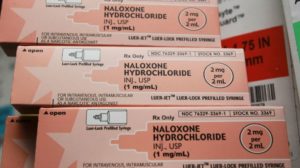
Naloxone is now available without a prescription at all CVS Pharmacy locations in Nevada...(CVS) stated it established a standing order with physicians in the Sliver State that allows CVS Pharmacy to expand access to the medication across the state...Naloxone is a safe and effective antidote to opioid overdoses and by expanding access to this medication in our Nevada pharmacies by the use of a physician's standing order for patients without a prescription…We are dedicated to helping the communities we serve address and prevent drug abuse and we are expanding access to naloxone to give more people a chance to get the help they need for recovery...CVS Health now dispenses naloxone in 37 states.