
- Pharmacy Week in Review: November 4, 2016 (pharmacytimes.com)

Kelly Walsh, PTNN. This weekly video program provides our readers with an in-depth review of the latest news, product approvals, FDA rulings and more.
- DOJ turns tables on Express Scripts, demands info on pharma deals (fiercepharma.com)
Express Scripts disclosed this week that the U.S. Attorney’s offices in New York and Massachusetts had demanded information about two different issues: financial ties with pharma companies, and relationships among drugmakers, patient assistance programs and the specialty pharmacies that fill prescriptions...Specifically, the federal prosecutors in New York want information about money changing hands between Express Scripts and pharma companies. That would include rebates that drugmakers pay to win favorable reimbursement deals for their products...The newly disclosed Express Scripts probes aren’t the first DOJ demands for information about PBM-pharma relationships. In a series of financial filings in May, it became clear that the DOJ was looking for information across the industry. Johnson & Johnson, Merck & Co. and Endo International all said they were being asked for info...secrecy could be coming to an end. Politicians and patient advocates are calling for more transparency from PBMs and drugmakers alike, and obviously, the DOJ is doing the same.
- Pharmacy Week in Review: October 28, 2016 (pharmacytimes.com)
Kelly Walsh, PTNN. This weekly video program provides our readers with an in-depth review of the latest news, product approvals, FDA rulings and more.
- Inside big pharma’s fight to block recreational marijuana (theguardian.com)
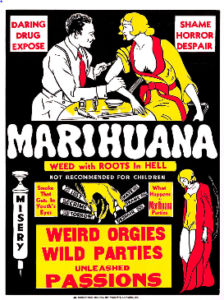
Pharma and alcohol companies have been quietly bankrolling the opposition to legal marijuana, raising questions about threats to market share...Marijuana legalization will unleash misery on Arizona, according to a wave of television ads that started rolling out across the state last month...the surprise lies in who is backing them. In August, the pharmaceutical company Insys Therapeutics also cited concerns for child safety when, with a $500,000 contribution, it became the largest donor to Arizona’s anti-legalization drive. But their stated concerns have raised a few eyebrows across the state. Insys manufactures Subsys, a prescription painkiller derived from fentanyl…critics say, the Insys contribution in Arizona is a ploy to protect market share. And it mirrors other large donations to anti-marijuana campaigns by pharmaceutical and alcohol companies that fear the growing clout of legal marijuana...Research conducted...shows that medical cannabis patients are substituting cannabis for pharmaceuticals at a very high rate, and for alcohol at a pretty high rate as well...Opiate overdoses dropped by roughly 25% in states that have legalized medical marijuana compared to states that have prohibited sales of the plant, according to a 2014 study from the Journal of the American Medical Association. The study implies that people could be using medical marijuana to treat their pain rather than opioid painkillers, or they’re taking lower doses...
- Bartell ensures visually impaired patients know their Rx (chaindrugreview.com)

Bartell Drugs is making sure that visually impaired customers are able to understand their prescription information. The...drug chain...has started offering three solutions for people with visual impairment who can’t read the print on their prescription drug container labels. Based on their need, these patients can now receive ScripTalk audible labels, ScripView large-print labels or Braille labels...It’s extremely important that patients know and understand the instructions for their medications. This can be challenging for our patients with visual impairments…
ScripTalk features a label embedded with a microchip containing all the printed prescription label data. The patient places the container onto a handheld reader and presses a button to listen to the prescription information, including patient name, drug name and medication instructions, as well as pharmacy contact information, contraindications and more.
ScripView is a large-print, booklet-style label attached to the prescription container that enables patients with low vision to read prescription information more easily. The label contains all the same information as the pharmacy’s regular label but in large print. Pharmacist can edit the font size based on the need of the patient.
Braille label tape can be added to a prescription with basic medication information...
- Nevadans will pay more for Obamacare plans, but it could have been much worse (reviewjournal.com)

It may not feel like it, but Nevadans who get their health insurance courtesy of the Affordable Care Act can consider themselves relatively lucky as 2017 comes into focus...Yes, they will pay an average of 11 percent more in premiums for their coverage than they did this year. And, yes, many will only be able to pick from plans offered by a single insurer...But it could have been far worse. Proof lies just across the border in Arizona, where some premiums are skyrocketing by triple digits and most insurers have fled the market...A new federal report on insurance premium prices released earlier this week and a county-level analysis published...by the Associated Press and consulting firm Avalere Health painted a comprehensive picture of the state of ACA health care insurance entering 2017...It wasn’t pretty...report by the Department of Health and Human Services showed that premiums for a midlevel benchmark plan will increase an average of 25 percent in 2017 across the 39 states served by the federally run online market, including Nevada...HHS officials noted that a majority of those who purchase plans through HealthCare.gov and its state-run counterparts – including Nevada’s Silver State Health Insurance Exchange — receive financial assistance and may not see their out-of-pocket expenses increase much, if at all. It may not feel like it, but Nevadans who get their health insurance courtesy of the Affordable Care Act can consider themselves relatively lucky as 2017 comes into focus.
- New research reveals pictograms help seniors understand medication instructions (medicalxpress.com)
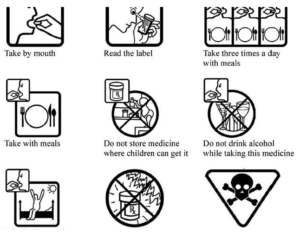
Nine different pharmaceutical pictograms that could help older people understand written medical information...Simple images designed to convey information about prescription drugs could help save lives and reduce the economic burden of non-adherence to treatment. New research...shows that including pictograms on written medication instructions helps seniors take their drugs correctly...Patients with multiple prescriptions can easily get confused and take the wrong medication, leading to hospitalization and even death…pictograms on a prescription drug label does help older people understand medical information and instructions. The pictograms provided information such as "take with meals" or "do not leave in direct sunlight" and warnings such as "poison" and "do not leave near children."...This not only prevents accidental overdose, it relieves some of the pressure that our aging population is putting on the health service by avoiding preventable tragedies...
- Physicians exhibit knowledge gap with biosimilars (chaindrugreview.com)

Though the vast majority of specialty physicians know what biosimilars are, their knowledge about these emerging medications falls short, according to a survey by the Biosimilars Forum...Of 1,201 U.S. physicians polled, 76.8% had heard the term biosimilars within the previous month...Yet respondents exhibited five key gaps in knowledge: defining biologics, biosimilars and biosimilarity; understanding the biosimilar approval process and the Food and Drug Administration’s use of totality of evidence to assess biosimilars; appreciation that biosimilars’ safety profile is expected to be the same as that of the originator biologic; understanding how the FDA makes decisions for extrapolation of indications; and defining interchangeability and the related rules regarding pharmacy-level substitution...With four biosimilars approved by the FDA and more than 60 in development, the survey highlights the need for greater biosimilars education for physicians and health care professionals...
- This Week in Managed Care: October 28, 2016 (ajmc.com)
Sara Belanger With The American Journal of Managed Care. Welcome to This Week in Managed Care from the Managed Markets News Network
- Electronic prescriptions associated with less nonadherence to dermatologic Rx (medicalxpress.com)

Does how a prescription for dermatologic medicine is written - either on paper or electronically—matter when it comes to whether patients will fill it and pick it up?...A new study...used data from a large, urban county health system to measure primary nonadherence—defined as not filling and picking up all dermatologic prescriptions within one year of the prescription date—and to study whether electronic prescribing impacted primary nonadherence...electronic prescribing increases the coordination between pharmacists and clinicians, less is known about how electronic prescribing affects the rate at which patients will fill or won't fill new prescriptions...The risk of primary nonadherence was 16 percentage points lower among patients given electronic prescriptions than patients given paper prescriptions...As the health care system transitions from paper prescriptions to directly routed e-prescriptions, it will be important to understand how that experience affects patients, particularly their likelihood of filling the prescriptions. Primary nonadherence is a common and pervasive problem. Steps should be taken to better understand why primary nonadherence happens and how it can be improved...