
- Pharmacy Benefit Management Tools Could Save Billions Over the Next Decade (ajpb.com)
Pharmacy benefit managers have been the target of scrutiny lately, in the media and even in proposed legislation. Detractors have called for more transparency for PBMs, accusing them of passing unnecessary drug costs along to plan sponsors and beneficiaries...To educate the public about the significant cost savings PBMs actually produce for plan sponsors and patients, the Pharmaceutical Care Management Association recently launched a national ad campaign..."This campaign is focused on educating policymakers and opinion leaders on how PBMs reduce costs, expand access and improve the quality of prescription drug..." said PCMA President and CEO Mark Merritt...today’s average level of PBM tool utilization yields a 10% to 20% cost savings for payers, and that a higher level of use could save payers an additional 10%.
- How Do PBM Tools Work?
- The Extent of PBM Tools in Current Practice
- Projected PBM Savings
- How Could PBM Savings Impact Employment?
- DH launch consultation on hub and spoke and prices on labels (psnc.org.uk)Is hub and spoke really the answer for pharmacy? (pharmacymagazine.co.uk)

The Department of Health and the Medicines and Healthcare products Regulatory Agency have launched a consultation on changes to the Human Medicines Regulations and the Medicines Act...The consultation seeks views on the following proposed changes:
- allowing independent pharmacies to make use of ‘hub and spoke’ dispensing models – a ‘hub’ pharmacy dispenses medicines on a large scale, often by making use of automation, preparing and assembling the medicines for regular ‘spoke’ pharmacies that supply the medicines to the patient;
- allowing the price of medicines and a statement on how the costs of medicines are met to be published on dispensing labels should this be required for NHS medicines dispensed as part of NHS pharmaceutical services;
- clarifying the current dispensing label requirements for monitored dosage systems and medicines supplied under patient group directions; and
- amending the pharmacists’ exemption in section 10 of the Medicines Act, regarding the preparation and assembly of medicines, following a judgment of the Court of Justice of the European Union.
- U.S. spends $3 billion a year on unused cancer drugs (reuters.com)
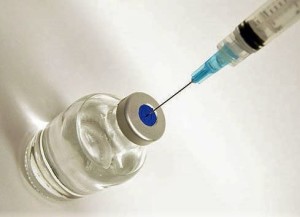
U.S. doctors and hospitals throw out almost $3 billion in unused cancer drugs each year because the medicines come in supersized single-use packages and excess medicine must be discarded for safety reasons, a recent paper suggests...Researchers focused on 20 expensive medicines that are given by injection or intravenous drip and require doses adjusted based on the patient’s body size. Often, the packages contain much more medicine than patients need, and the leftovers wind up in the trash...The waste is driving up the cost of their care and it is money that they are spending that provides them no benefit...It also drives up the cost for their insurance, which leads to higher premiums, which costs them more money too...Patients and insurers pay drug manufacturers about $1.8 billion a year for medicines that are thrown away...Biologic medicines often lack preservatives and have a higher risk of contamination than other drugs, and leftovers from single-use vials are thrown out because using them could give patients infections...One of the clearest solutions to this waste is to have more dosing options available...That would require drug makers to sell the medicines in a variety of package sizes.
- Pharmacy Week in Review: March 24, 2016 (pharmacytimes.com)

Mike Glaicar, Business Development: Pharmacy Times...(PTNN) This weekly video program provides our readers with an in-depth review of the latest news, product approvals, FDA rulings and more.
- Substances Doubtful for Bulk Drug Substances List Could Be INDs (ashp.org)Individual Patient Expanded Access Applications: Form FDA 3926 (fda.gov)

Pharmacists, physicians, and advocacy groups that want patients to use substances unlikely to be on the upcoming "bulk drug substances list" for compounders should consider submitting "treatment" investigational new drug applications, FDA personnel recently suggested...FDA-cleared treatment IND applications...offer a legal workaround that can benefit many patients...a compounding pharmacy, could submit a treatment IND, which once that was in place could be expanded to treat a large number of patients...ASHP stated, absent "significant" revision, FDA's current expanded-access IND application process will not facilitate access to any drug available only from compounders...Jarow (Jonathan Jarow, from the Center for Drug Evaluation and Research)...acknowledged that submission of an IND application has seemed difficult to many individual healthcare providers seeking a drug for a single patient..."There's now a special form in development that has not been finalized—it's available in draft form—that caters to that specific type of IND rather than the general form that's used for all types of INDs, which looks very complicated," he said...Form FDA 3926, also known as "Individual Patient Expanded Access Investigational New Drug Application," went on display in February 2015 as part of a draft guidance for the pharmaceutical industry....
- Lawyers consider judicial review of consultation on community pharmacy (pharmaceutical-journal.com)Hundreds of local chemists set to close leaving sick and elderly without vital lifeline (express.co.uk)
Lawyers have given health minister Alistair Burt a deadline of 4pm on 18 March 2016 to respond to claims that the consultation on proposed cuts to the pharmacy budget in England is illegal and should be abandoned...If the government does not accept that the consultation is illegal then lawyers will consider going to the High Court to seek a judicial review of the consultation process and the content of the consultation document...The prospect of legal action comes three months after the Department of Health first outlined its proposals for the community pharmacy sector in England in a letter to the Pharmaceutical Services Negotiating Committee. The letter...set out plans to cut the community pharmacy contractual framework by 6.1% in 2016. As well as the funding cuts, the proposals include a range of measures to make efficiency savings in the sector while extending clinical roles for the profession...Healthwatch England told the government that there is a "clear appetite" for community pharmacy to play a greater role in health prevention, the treatment of minor ailments and supporting people with long-term conditions. It says consumers value pharmacy’s accessibility and some believe co-locating pharmacies to GP surgeries makes sense...However, the organisation gives a cautious welcome to the idea of ‘hub-and-spoke’ dispensing and says that where medicines are assembled centrally, patients will still need local access to expert pharmacy advice.
- Pharmacists Should Target ACS Patients with Low Health Literacy (pharmacytimes.com)
Patients with limited health literacy are especially vulnerable to medication-related problems that contribute to hospital readmissions...recently published a study that shows targeted pharmacist interventions may reduce unplanned health care utilization among patients with limited health literacy...This...study employed medication reconciliation, inpatient counseling, low-literacy adherence aids, and individualized telephone follow-up to reduce 30-day hospital readmissions. It enrolled patients with acute coronary syndrome and acute decompensated heart failure...pharmacist intervention...reduced health care utilization...primarily through decreased emergency department visits...Patients with limited health literacy have more to gain from pharmacist intervention. They face barriers to care that pharmacists can help bridge...targeting patients with low health literacy to produce the greatest benefit with limited resources. The researchers recommended stratifying patients based on health literacy at admission and including pharmacist-driven medication-related problem interventions in a multidisciplinary and multifactorial initiative.
- iMedicare launches RefillReport.com (drugstorenews.com)

iMedicare, a company that provides Medicare Part D plan comparison software to pharmacies, announced recently that it had launched RefillReport.com, a platform that aims to help patients connect with local pharmacies to save money on their Medicare plan...The site is looking to help patients compare plans at different community pharmacies and potentially save money on a Medicare plan. It also features information about how Medicare Part D works, answers frequently asked questions and keeps information updated about different challenges that could affect patients throughout the year...
- Drug Diversion and Appropriate Opioid Use (pharmacypodcast.com)
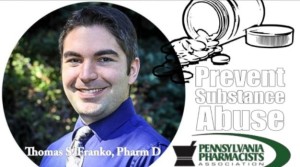
Dr. Thomas S. Franko discusses drug diversion and prescription drug abuse (podcast 30:10m).
- Pharmacy Residency Match Results for 2016 Released (pharmacytimes.com)
Nearly 4000 pharmacy students recently matched with 1797 residency programs across the country...For residency applicants who haven’t matched into programs, the good news is that they have another chance to do so though the Second Residency Match...Interest in residencies is on the rise, and pharmacy students increasingly have more opportunities to land them. The American Society of Health-System Pharmacists Resident Matching Program noted that 322 residency positions were added to this year’s Match...The Match results show that the growth in numbers of both residency programs and available positions is outpacing the growth in the number of applicants...That’s definitely a win in ASHP’s efforts to grow residency program capacity across the country...ASHP stated that it added the Second Match this year because of the increasing number of pharmacy students and pharmacists who wish to pursue residencies, as well as the number of programs who want pharmacy students and pharmacists.