
- 8 Interesting Pharmacy Facts (pharmacytimes.com)
 Are you familiar with the following interesting facts about pharmacy?
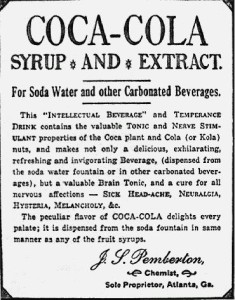
- Coca-Cola was invented by a pharmacist named John Pemberton. He carried the jug of the new product down the street to Jacob's Pharmacy where it was sampled and pronounced "excellent" and placed on sale for 5 cents a glass as a soda fountain drink...Another pharmacist, Charles Alderton, invented Dr. Pepper. Pepsi was also invented by a pharmacist, as was Vernor’s Ginger Ale by Detroit pharmacist James Vernor.
- The first licensed pharmacist set up shop in the French Quarter. Louis Dufilho Jr. of New Orleans became American’s first licensed pharmacist in the early 1800s. Prior to then, you did not need a license to become a pharmacist.
- The global pharmaceuticals market is worth $300 billion.
- Benjamin Franklin was a pharmacist, while Agatha Christie was a pharmacy technician.
- Lipitor is the best-selling drug of all time. It was introduced in 1997 and its patent expired in 2011, making about $125 billion.
- Insulin is one of the most common medications that cause adverse events.
- Hydrocodone/acetaminophen is the most commonly prescribed medication in the United States. Lisinopril is No. 2, as of 2014.
- The most expensive drug is Glybera (alipogene tiparvovec) at a wholesale cost of $1.21 million per year. It is a gene therapy that helps restore lipoprotein lipase enzyme activity in those with familial lipoprotein lipase deficiency. Only 1 million patients have this extremely rare condition.
- Opinion: The AMA is wrong about banning drug ads (statnews.com)
...American Medical Association recently called for a ban on advertising prescription drugs and medical devices directly to consumers. The effort is largely symbolic...But doctors resent the increasing pressure the ads place on them to write prescriptions out of concern patients will switch physicians...they argue that many ads aimed at consumers promote more expensive medicines...and pushes patients to ask for products that either they may not need or is not right for them. This approach is, at best, misguided, and, at worst, ignores the benefits of direct-to-consumer advertising for patients...DTC advertising increases awareness of health problems and leads to a better informed and educated patient who can engage their physician in a dialogue rather than a monologue...So what’s really going on here?...insurers are taking more prescription writing power away from doctors. They first want patients to try generic medications which now make up 88 percent of all available prescription drugs. Second, higher patient copayments for office visits and insurance mean consumers are “shopping” for health care and health care treatments...This makes doctors very uncomfortable. Even with all these changes, research continually validates the notion that patients view their doctors as the gatekeepers to their prescription medicines...DTC advertising leads patients to their health care providers and, depending on the health condition, does not lead to high-priced unnecessary scripts. The AMA should reach out and work with pharma to improve DTC marketing, not request a ban on all DTC ads.
- Clark County reports the first flu-related child death of the season (reviewjournal.com)Southern Nevada Health District: Immunization Program (southernnevadahealthdistrict.org)

A Clark County child died from the flu, being the first pediatric flu-related death in Clark County for the 2015-16 season, the Southern Nevada Health District said Wednesday...The health district said the child was younger than 5 and that no other information about the death will be released...Clark County reported 26 deaths, 318 hospitalizations and 583 cases of the flu from Oct. 1, 2014, to May 31, 2015.
- Many medications actually became cheaper this year — but that doesn’t mean Americans are paying less overall (washingtonpost.com)

Skyrocketing drug costs became the stuff of congressional hearings and presidential campaign speeches in 2015...The federal government announced this month that prescription drug spending hit $297.7 billion last year -- up more than 12 percent...A new generation of specialized drugs and price hikes on existing medications helped to drive that spike...If there's a bright spot amid the troubling rise in the cost of prescription drugs, perhaps it is this: Many of the most widely used generic drugs actually were cheaper at the end of 2015 than when the year began, according to an analysis released...by...GoodRx...The reality is that about 85 percent of drugs taken in this country are generic...Those are surprisingly inexpensive and getting less expensive, in many cases...For [many] generic drugs, there's a lot of competition...while the retail price of some drugs decreased by 30 percent or more, some generic drug products had...extraordinary, price increases...the rate of generic price declines has been slowing for the past decade, indicating that the era of consistent generic drug price decreases may be coming to an end...it's a complicated...exercise to determine what any person, company or insurer pays for a particular drug...The system is opaque...Between changing insurance premiums, greater overall health-care costs, the arrival of new high-priced therapies and the ongoing possibility of price spikes in once-cheap drugs, many patients can count on continuing worries about the impact on their pocketbooks.
- Smokers more likely to get antibiotics prescriptions than others (reuters.com)Abstract - Tobacco Smoking as a Risk Factor for Increased Antibiotic Prescription (sub. req.) (ajpmonline.org)

Doctors are more likely to give smokers antibiotics for an infection, a bad habit that may endanger public health by promoting antibiotic resistance...Smokers were 20 percent to 30 percent more likely than non-smokers to get an antibiotic prescription when they were diagnosed with infections...If smokers are being prescribed antibiotics...if not indicated, it’s going to contribute to that antibiotic resistance...and bacteria are going to become more and more resistant...You would think that the number of bacterial infections where antibiotics are clinically indicated should be evenly distributed among smokers and non-smokers...The study can't say why smokers are more likely to get antibiotics for infections...it may be due to an inaccurate belief among doctors that people who smoke are more susceptible to infections.
- University of Wisconsin-Madison School of Pharmacy C.E. Programs (pharmacypodcast.com)

Guest host Blair Green Thielemier, PharmD interviews Dr. Alan L Hanson, Division Chair and Professor at Melvin H. Weinswig University of Wisconsin-Madison School of Pharmacy.
- Few Consequences For Health Privacy Law’s Repeat Offenders (propublica.org)HIPAA Helper - Who is Revealing Your Private Medical Information? (projects.propublica.org)HHS - OCR - Breach Portal: Notice to the Secretary of HHS Breach of Unsecured Protected Health Information (ocrportal.hhs.gov)
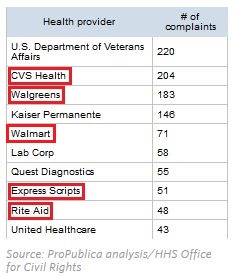
Repeat HIPAA Violators - These health providers have the most privacy complaints that resulted in corrective-action plans or “technical assistance” being provided by the OCR from 2011 to 2014.
Regulators have logged dozens, even hundreds, of complaints against some health providers for violating federal patient privacy law. Warnings are doled out privately, but sanctions are imposed only rarely. Companies say they take privacy seriously...CVS is among hundreds of health providers nationwide that repeatedly violated the federal patient privacy law known as HIPAA between 2011 and 2014...Other well-known repeat offenders include the U.S. Department of Veterans Affairs, Walgreens, Kaiser Permanente and Walmart...I don’t like the idea of repeat offenders not being called to task for that behavior and I would like to see us doing more in this regard...The number of health information privacy complaints submitted to the Office for Civil Rights within the Department of Health and Human Services has increased dramatically in recent years, in part because of the introduction of an online complaint portal...Using data provided by OCR under the Freedom of Information Act, ProPublica is launching a new tool, HIPAA Helper, which allows users to look up reports of privacy violations by provider for the first time. OCR’s material often referred to the same entities by multiple names. CVS was listed as “CVS,” “Pharmacy, CVS,” “Caremark, CVS,” “CVS Caremark”...We have standardized organizations’ names to make searching easier.
- WellCare makes CVS Health its pharmacy benefit manager (reuters.com)

Health insurer WellCare Health Plans said it would change its pharmacy benefit manager to CVS Health Corp from UnitedHealth Corp's Optum Rx, effective Jan. 1...About 3.8 million WellCare members enrolled under its Medicaid, Medicare and prescription drug plans will be able to access CVS' pharmacy network, WellCare said on Thursday...CVS is the second-largest U.S. pharmacy benefit manager and drugstore.
- What’s Next? The Year in Preview 2016, A Sneak Peek at 11 Developments that will Shape the Future of Health Care (managedcaremag.com)

We’re unwrapping the future. Here’s our list of 11 developments in the next 12 months that will change the course of American health care for many years to come.
- On or off track? 2016 could be the year that value-based payment arrives–or maybe not
- Sagging sign-ups: Slowing enrollment may mean big trouble for the ACA
- Sticker shock waves: Players to respond to drug priciness
- Slimming too fast: New rules coming for narrowing networks
- Picking up the tab: Out-of-network bills will be a hot issue
- The 2016 election season: Democrats to play D while GOP devises a game plan
- The hunger gains: Appetite for quality to grow
- Cyberthievery: Will health care companies respond in 2016?
- Too much of a good thing: Overdiagnosis to get its due
- Doing the MACRA-ena: Will the celebrations continue in 2016?
- Growing testiness: Disagreements between insurers, labs about new molecular tests
- Opinion: Stop giving antibiotics to cows, pigs, and chickens now (statnews.com)

Antibiotic resistance has been blamed for at least 2 million illnesses and 23,000 deaths in the US. Researchers are especially concerned about the widespread use of antibiotics in raising cattle, pigs, and other animals for food production. The drugs help the animals bulk up, which boosts their value, but experts warn that they can also promote antibiotic resistance....The recent discovery in China of a new gene found in bacteria in both pigs and humans...The gene is called mcr-1, and it is responsible for a new, specific type of bacterial antibiotic resistance...many antibiotics, which once easily cured infections, have stopped working....Bacteria have...the ability to transfer genetic information via plasmids...which easily carry genes from one bacterium to another, even if the two are unrelated...exposure of bacteria to subclinical doses of any antibiotic will generate bacteria that are resistant to that drug. But, worse still, sometimes this can result in resistance to multiple, unrelated antibiotics simultaneously...Studies in Europe have shown that bringing animals to market, without the use of growth-promoting antibiotics, is no costlier than doing so with them, so using these drugs actually provides little benefit...