
- The Medicines Patent Pool Signs Licence with Bristol-Myers Squibb to Increase Access to Hepatitis C Medicine Daclatasvir (medicinespatentpool.org)

Medicines Patent Pool…announced its first licence for a hepatitis C medicine, signing an agreement with Bristol-Myers Squibb for daclatasvir, a novel direct-acting antiviral that is proven to help cure multiple genotypes of the HCV virus. The royalty-free licence will enable generic manufacture of daclatasvir for sale in 112 low- and middle-income countries (LMICs)...Nearly two-thirds of all patients living with hepatitis C in the LMICs reside in the territory covered by this agreement…Hepatitis C is a major public health threat affecting up to 150 million people globally, with the vast majority living in low- and middle-income countries. Earlier this year the World Health Organization added several new hepatitis C treatments, including daclatasvir, to its Essential Medicines List, underscoring the urgent need to promote equitable access to innovative medicines.
- Doctors should prescribe generic medications whenever possible rather than more expensive brand name drugs (acponline.org)Improving Adherence to Therapy and Clinical Outcomes While Containing Costs: Opportunities From the Greater Use of Generic Medications: Best Practice Advice From the Clinical Guidelines Committee of the American College of Physicians (annals.org)
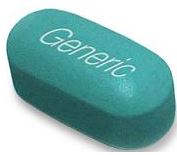
All clinicians should prescribe generic medications whenever possible as a way to improve adherence to therapy and clinical outcomes while containing costs, “While the use of generic drugs has increased over time, clinicians often prescribe more expensive brand name drugs when equally effective, well proven, and less expensive generic versions are available,”…“The use of generic drugs is a High Value Care way to improve health, avoid harms, and eliminate wasteful practices.”… “ACP (American College of Physicians) recognizes that there are situations where generic substitution is not possible and the use of brand name drugs is clinically appropriate,”…Some of the underuse of generic medications is likely the result of patient and physician perceptions about the safety and a perceived lack of efficacy of the lower cost options. Patients may also associate the lower price of generics with lower levels of effectiveness… Public awareness and advertising campaigns similar to those used for brand name drugs might help to alter patient perceptions about generics…
- How Pharmacists Can Encourage Prescribers to Adopt E-Prescribing (pharmacytimes.com)Getting Started with EPCS (getepcs.com)
Ken Whittemore Jr, Surescript's senior vice president of professional and regulatory affairs, talks about some ways independent pharmacists could encourage local prescribers to adopt e-prescribing of controlled substances.
- Experts foresee big premium increases for Medicare drug plan (hosted.ap.org)
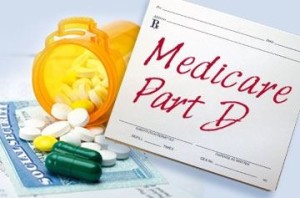
…many seniors are facing sharply higher premiums for Medicare's popular prescription drug program (Part D). The reason: rising drug costs have overtaken a long stretch of stable premiums…"Premiums are going up. Deductibles are going up,"…Government spending on the program also has risen significantly, driven by pricey new drugs, notably for hepatitis C infection. The cost for the hepatitis drugs in the Medicare program is expected to be $9.2 billion this year, a near doubling from 2014. Because of the prescription program's financial structure, taxpayers cover most of the cost for expensive medications. Three out of four adults infected with hepatitis C are baby boomers…Indicators signal rising costs across the program. Among them:
- independent estimates…show increasing premiums for stand-alone drug plans. The average premium will rise from $36.68 to $41.46 per month next year, or 13 percent…biggest increase since 2009.
- maximum deductible for prescription coverage will rise by $40, to $360…biggest increase in the deductible since the inception of Part D in 2006.
- taxpayer expenditures for the "catastrophic" portion of the benefit - in which beneficiaries with high drug bills pay only 5 percent of the cost - will rise by $4.5 billion in 2016, an increase of more than 14 percent. Spending for catastrophic coverage has doubled in just a short time, from $15.5 billion in 2012 to an estimated $31.2 billion this year.
The analyses...seemingly at odds with the message coming from the Obama administration, which estimates that drug premiums will remain stable in 2016, averaging $32.50 a month.
- Safeway brushes off Theranos, enlists local lab for DTC testing in Arizona (medcitynews.com)Theranos Fails to Deliver as Safeway Deal Unravels (foxbusiness.com)
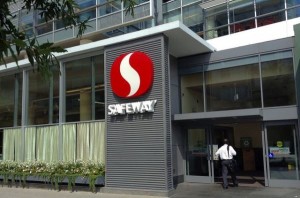
Take that, Theranos!..Clearly determined to offer direct-to-consumer lab testing through pharmacies, grocery chain Safeway seems to be shaking off the reported demise of a partnership with the not-so-revolutionary-after-all testing company (Theranos)… Sonora Quest Laboratories, a joint venture of Quest Diagnostics and Phoenix’s Banner Health, has opened its first testing center at a Safeway in...Scottsdale, Arizona. A second one will open next week in an upscale part of Phoenix...
- Manhattan U.S. Attorney Announces $370 Million Civil Fraud Settlement Against Novartis Pharmaceuticals for Kickback Scheme Involving High-Priced Prescription Drugs…Exjade and Myfortic (fbi.gov)

..FBI…announced a $390 million settlement against NOVARTIS...in a civil fraud lawsuit based on claims that NOVARTIS gave kickbacks to specialty pharmacies in return for recommending two of its drugs, Exjade (deferasirox) and Myfortic (mycophenolic acid)…two specialty pharmacies, Bioscrip, Inc. and Accredo Health Group, agreed to pay a total of $75 million to resolve federal and state claims against them based on the same allegations...today’s settlement, the federal and state governments will recover $465 million in total based on the kickback allegations in this lawsuit…a whistleblower, and asserted that NOVARTIS violated the False Claims Act and the Anti-Kickback Statute…by giving kickbacks to specialty pharmacies in return for recommending Exjade…and Myfortic…With respect to Exjade, the Government alleged that NOVARTIS gave kickbacks in the form of patient referrals and rebates to Bioscrip and Accredo to induce those pharmacies to recommend Exjade refills…the Government alleged that, to increase Exjade sales, Novartis incentivized and pressured the pharmacies to emphasize Exjade’s benefits to patients while understating the drug’s serious, potentially life-threatening, side effects. With respect to Myfortic, the Government alleged that NOVARTIS gave rebate contracts to specialty pharmacies to induce the pharmacies to recommend to doctors that they switch patients to Myfortic from competitor drugs.
- Sustainable Business Models that Expand the Role of the Pharmacist (pharmacytimes.com)
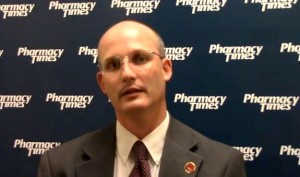
Bryan Ziegler, PharmD, executive director of Kennedy Pharmacy Innovation Center, gives some examples of sustainable business models that can expand the role of the pharmacist.
- California, Oregon pharmacists to be allowed to prescribe birth control (seattletimes.com)
California and Oregon…will soon make access to birth control easier for millions of women by allowing them to obtain contraceptives from pharmacists without a doctor’s prescription…Most Western countries require a doctor’s prescription for hormonal contraceptives…but starting sometime in the next few months, women in California and Oregon will be able to obtain these types of birth control by getting a prescription directly from the pharmacist who dispenses them, a more convenient and potentially less expensive option than going to the doctor…Pharmacists will be authorized to prescribe contraceptives after a quick screening process in which women fill out a questionnaire about their health and medical histories…pharmacists’ organizations, plan to lobby for it across the country…One unanswered question, however, is whether insurers will pay for the time pharmacists spend reviewing women’s questionnaires or helping evaluate options. To cover that cost, some pharmacists may charge fees...The laws in Oregon and California differ in some ways. California’s has no age restriction; the Oregon law requires that teenagers under 18 obtain their first contraceptive prescription from a doctor. In California, pharmacists will also most likely have to take women’s blood pressure for contraceptives containing estrogen.
- General Chapter <800> Hazardous Drugs—Handling in Healthcare Settings to be Published in USP 39–NF 34, First Supplement (usp.org)Draft <800> Hazardous Drugs—Handling in Healthcare Settings (usp.org)
The Compounding Expert Committee approved a new General Chapter, <800> Hazardous Drugs—Handling in Healthcare Settings. The purpose of this General Chapter is to provide standards to protect personnel, patients and the environment when handling hazardous drugs (HDs). The chapter applies to all healthcare personnel and all entities which handle HDs. Building on existing standards and guidelines, General Chapter <800> provides a comprehensive approach for handling HDs in healthcare settings with the ultimate goal of preventing and/or limiting potential exposures to HDs...The revised General Chapter <800> will be published on February 1, 2016 in the First Supplement to USP 39–NF 34. Additionally, the Expert Committee approved a delayed official implementation date of July 1, 2018 to allow entities more than two years to implement the chapter.
- How Pharmacies Can Maintain Business Continuity During a Disaster (pharmacytimes.com)
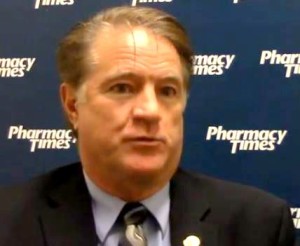
Donnie Calhoun, RPh, PD, National Community Pharmacists Association Foundation vice president, discusses how pharmacists can maintain business continuity during a natural disaster or other emergencies.