
- Public perception of pharmacists: Film and television portrayals from 1970 to 2013 – Abstract (japha.org)W.C. Fields - Arthur Ripley - The Pharmacist (1933) (youtube.com)
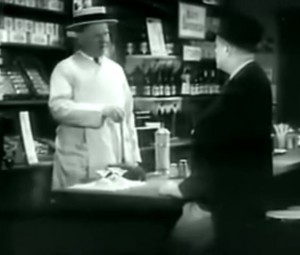
W.C. Fields - The Pharmacist (1933)
Objectives…To determine the percentage of pharmacists portrayed in a positive, negative, or neutral light in films and television shows available in the United States from January 1970 to July 2013. Secondary objectives were to evaluate pharmacist characters as heroes, villains, or victims; assess pharmacist characters’ demographics...Results…In the films and television shows reviewed, there were 231 pharmacist portrayals, with 160 unique pharmacist characters…145 (63%) were negative, 30 (13%) were positive, and 56 (24%) were neutral. Of the 160 unique characters, 121 (76%) were male, 120 (75%) were Caucasian, and 86 (54%) were younger than 50 years old…Conclusion…The portrayal of pharmacists in U.S. film and television is primarily negative. Pharmacists and pharmacy organizations are encouraged to be vocal proponents of the profession and educate trainees on the importance of an enhanced public perception. (membership or payment for full access)
- School of Pharmacy Team Publish Research on Improving Entrepreneurship in Pharmacy Students (qub.ac.uk)INSTRUCTIONAL DESIGN AND ASSESSMENT - Developing Entrepreneurial Skills in Pharmacy Students (ajpe.org)

(L-R): Dr Garry Laverty, Dr Sharon Haughey, Lindsay Crockett, Lynsey Martin, Matthew Neill, and Dr Lezley-Anne Hanna
A team of academic staff from the School of Pharmacy have just published research work on their project to further improve upon entrepreneurship and leadership skills which are developed during the MPharm programme…The team, led by Dr Garry Laverty (Queen’s University Belfast School of Pharmacy), developed a “Dragon’s Den” style workshop, in which student groups participated to pitch their business ideas. The workshop, based on the popular BBC TV programme, required students to develop skills in communication, leadership and business promotion…This project has culminated in the publication of research within the American Journal of Pharmacy Education, and the approach adopted in this workshop resulted in the project reaching the penultimate round of The Innovation and Entrepreneurship Teaching Excellence Awards at the 10th European Conference on Innovation and Entrepreneurship.
- Novartis, Roche find ‘outcome-based’ drug pricing an elusive dream (reuters.com)
Novartis's heart drug Entresto cuts the risk of re-hospitalization might have helped Chief Executive Joe Jimenez realize his ambition of getting insurers to pay more for treatments when they cut overall medical costs…Instead Jimenez and Severin Schwan, CEO of cross-town rival Roche, have been forced to concede that insurance companies…are not yet ready for such "outcome-based" pricing models…A key hurdle…is that electronic medical record systems aren't capable of accurately tracking a drug's role in reducing hospital stays or preventing further trips to the emergency room…This gap has largely stymied a push to change how drugs are priced and reimbursed by insurers and governments, even though both CEOs contend today's pay-per-pill approach can't be sustained…Drugs account for only around 10 percent of U.S. healthcare costs, Jimenez said, with hospital stays, medical personnel and other costs making up the rest. But existing records systems aren't up to the task of putting this data into perspective.
- Pharmacy Week in Review: November 13, 2015 (pharmacytimes.com)
Mike Glaicar, Business Development: Pharmacy Times...(PTNN) This weekly video program highlights the latest in pharmacy news, product news, and more. (video)
- Challenges Pharmacists Need to Overcome as Health Care Models Shift (pharmacytimes.com)
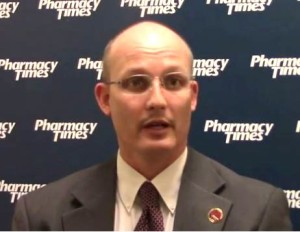
Bryan Ziegler, PharmD, executive director of Kennedy Pharmacy Innovation Center, discusses challenges pharmacists need to overcome as health care models shift to pay-for-performance reimbursement models.
- Health literacy startup wants to redefine personalized videos to improve adherence (medcitynews.com)

Israeli digital health startup Telesofia Medical has set out to be as specific as possible when it comes to developing personalized video content for health literacy program. Many of its customers are big pharma companies but some are health systems keen to prepare patients for an upcoming procedure or help patients follow a care plan when they are diagnosed with a condition or discharged from the hospital…part of the problem is people hear instructions like “take two pills twice daily” and accept it without really understanding what that means…The problem isn’t with the patient, it is with us not providing easy to understand information...or taking it for granted that patients understand the imparted information correctly…The videos, with content that can be customized by each customer, can include the patient’s care manager, doctor, or another healthcare professional. Depending on the person’s name, age and sex, the video will factor that data and address individuals personally.
- Rite Aid launches genetic testing for Rx (chaindrugreview.com)Theranos isn’t the only diagnostics company exploiting regulatory loopholes (theverge.com)
Rite Aid Corp. has begun offering Harmonyx Diagnostics genetic testing for medications, making it the nation’s first drug chain to provide the service…Rite Aid said…that the self-administered oral swab test — available in all of its pharmacies…helps patients determine the efficacy of their prescription medication based on their genetic makeup…Patients can buy the test kit at any Rite Aid…In the pharmacy, patients then swab inside their cheek, and then a Rite Aid pharmacist takes the sample and returns it to Harmonyx for processing. Harmonyx provides a state-licensed physician to review each patient’s test, and detailed results are sent to the pharmacist and the treating doctor. The results are received as soon as 24 hours after the laboratory receives the test, according to Rite Aid.
- 5 Reasons Not to Do a Pharmacy Residency (pharmacytimes.com)
The final year of pharmacy school is a truly exciting time…and it’s finally time to decide which direction to start a career within the honorable pharmacy profession...One major decision many pharmacy students struggle with is whether to pursue post-graduate pharmacy residency training…I believe residencies play an important role in the advancement of the pharmacy profession today…I do not believe that going into a residency program is the right course of action for all graduating pharmacists…I pose the following 5 reasons not to pursue a pharmacy residency. Note that this is meant to provoke self-reflection during the decision-making process, and potential applicants are additionally encouraged to explore all opportunities at hand.
- Because you feel you feel obligated to do a pharmacy residency.
- Because you should stay in college.
- Because you should do a pharmacy fellowship instead.
- Because a pharmacy residency is the wrong financial decision for you.
- Because a pharmacy residency is the wrong personal decision for you.
- India’s drug regulator handcuffed by low funding, lack of trained personnel (fiercepharmaasia.com)

The reputation of India's massive $15 billion drug industry is being threatened at the federal and state level by a lack of properly trained personnel and a shortage of funding that points out possible changes may be needed in how the country finances inspections and quality control work…almost half of all regulatory positions in the country's central and state drug offices remain unfilled and that "existing staff (are) not trained to meet the regulatory requirements of the growing sector."…Officials…said the government's recommendations of having one inspector for 50 manufacturing plants and retail outlets means the country should have 3,200 inspectors, but in reality the country only has 846 currently working…This means key regulatory functions such as inspections are undertaken in an ad-hoc manner…There is a risk of large-scale corruption because inspectors perform sensitive functions, including launching of prosecution...
- Drug Prices, Manufacturer Rebates, and the Risk to Channel Economics (drugchannels.net) Prescription Medicines: Costs in Context (phrma.org)
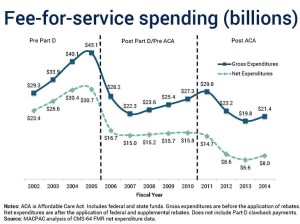
Gross Expenditures = payments to pharmacies Net Expenditures = payments to pharmacies minus federal and state supplemental rebates
When does a price increase not increase the price?...This riddle came to me while reviewing the excellent new Pharmaceutical Research and Manufacturers of America slide deck called Prescription Medicines: Costs in Context. The slides argue—...that pharmaceuticals have been undervalued as a source of health benefits and unfairly maligned as the key driver of costs… Despite the growth in drug list prices, manufacturers are experiencing limited growth in net revenues, which deduct payer rebates. As the data show, this difference has grown sharply over the past two years. Meanwhile, drug list price increases are boosting revenues at drug channels companies—pharmacies, wholesalers, and PBMs. These intermediaries are still compensated on gross (not net) revenues. I wonder: Will the growing gross-to-net disparity make current channel economic arrangements unsustainable for wholesalers and pharmacies?...