
- Investigation Reveals FDA Was ‘Lax’ In Approving Blood Thinner Pradaxa (ibtimes.com)Drug Problems: Dangerous Decision-Making at the FDA (pogo.org)

…nonpartisan watchdog group called Project on Government Oversight published a report…that highlights flaws in the FDA’s 2010 approval of Pradaxa…group says this case study is a "cautionary tale" for U.S. legislators considering the 21st Century Cures Act which aims to expedite the drug approval process…Food and Drug Administration was "lax" and "permissive" in its approval…analysis suggests the FDA rubber-stamped the drug on the basis of a single poorly designed clinical trial that overlooked safety concerns…damning report comes at a time when Congress is considering the 21st Century Cures Act…
- Seizure-Symptom App Is Latest Apple Health Research Tool (bloomberg.com)

...soon, Apple Inc. iPhones and watches may be able to recognize when someone’s having an epileptic seizure, and call for help…Researchers at Johns Hopkins University have developed an app that can track and measure seizure symptoms, and is the first research app to combine sensors on both Apple’s watch and phone. Eventually, it may run in the background and alert caregivers that a patient is having an event….the app measures heart rate, movement and other data as the seizure progresses. The watch will also display queries designed to test whether the wearer is alert…
- Top Challenges Facing Independent Specialty Pharmacies (specialtypharmacytimes.com)
Jay Greco, RPh, owner of Jersey Shore Pharmacy, discusses significant issues causing difficulties for specialty pharmacy.
- Infographic: Greatest areas of improvement in cybersecurity (healthcareitnews.com)
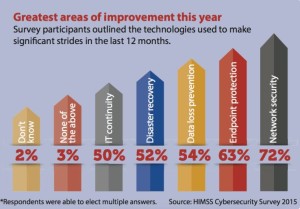
This infographic from the 2015 HIMSS Cybersecurity Survey shows the greatest areas of improvement in cybersecurity that healthcare organizations were able to achieve this year.
- Pfizer CEO: Drug-pricing snafu isn’t pharma’s fault. It’s insurers and their poor coverage (fiercepharma.com)Pfizer's CEO Faces The Drug Pricing Firestorm (forbes.com)

Pfizer CEO Ian Read says he's met the drug-cost enemy, and it isn't pharma. The firestorm over U.S. drug pricing isn't a problem for drugmakers to solve…The public debate about rising drug prices--be they increases for existing meds or 6-figure cancer-treatment costs--overlooks the financial benefits of drug treatment...Read cites cost-benefit analyses showing that Lipitor and other statin meds cost $305 billion between 1987 and 2008, but they generated $1.3 trillion in economic benefits, by preventing heart attacks and strokes, and their costs to the healthcare system.
- The Merging of Medical Products: Enhancing review of therapeutic and diagnostic combination products (blogs.fda.gov)

Combination products – medical products that do not fit into the traditional categories of drugs, devices, or biological products – are a growing and important category of therapeutic and diagnostic products under FDA’s regulatory authority…These products, that combine drugs, devices, and/or biological product ("constituent parts") with one another… Products in this category range from familiar products such as prefilled syringes and surgical kits to novel and innovative products, which target and enhance therapies. Examples of groundbreaking combination products include antibodies combined with drugs for targeted cancer therapy and products that mimic or replace organs, such as an artificial pancreas….we’re taking a number of steps to clarify regulatory requirements and improve our internal processes and IT systems.
- Issuing more guidance for review of combination products (e.g., our pending draft guidance document on human factors);
- Enhancing and simplifying data access and sharing for internal staff;
- Making it easier for staff to request and monitor inter-center consults;
- Updating and maintaining our internal contact directory for experts to review a combination product; and
- Improving our internal standard operating procedures for premarket reviews and compliance activities.
- UK healthcare workers back pharma payments disclosure (pharmatimes.com)

..majority of healthcare professionals in the UK support greater transparency on payments received from pharmaceutical companies, but some feel the move could make working with the industry more difficult…87% agreed that payments from pharma to individually named healthcare professionals should be disclosed…32% of healthcare professionals surveyed feel the disclosure of individual payments is unnecessary, while 26% believe that doing so will adversely affect medical innovation… survey results come as pharmaceutical companies gear up to unveil payments and other ‘transfers of value’ …on a publicly accessible database…the new ‘Sunshine rule’, which comes into force next year, NHS staff who fail to disclose perks received from drug companies could face being disciplined, dismissed or even sent to jail for breach of the Bribery Act.
- Pharmacy Podcast – Interview with Alex Barker PharmD, founder of Pharmacy School HQ (pharmacypodcast.com)

Dynamic podcast interview with Alex Barker PharmD, founder of Pharmacy School HQ Alex is a self proclaimed ‘neopharmaphobic’ clinical pharmacist in Michigan.
Nick Gentile, Director of State Grassroots Advocacy and Political Action for ASHP, provider status update
- 18k chemists down shutters in nat’l strike (timesofindia.indiatimes.com)Chemists’ strike hits patients (indianexpress.com)

Ranchi: Around 18,000 licensed chemists of Jharkhand participated in the nationwide strike of drug sellers on Wednesday to protest against the growing online sale of medicines in the country, posing problems for customers…Private drug stores in Ranchi and across 24 districts kept their shutters down while the Jharkhand Chemists and Druggists Association, the umbrella organization of drug sellers in the state, kept a handful of medicine shops operational to sell emergency medicines to consumers. They demanded the Union government check e-commerce in medicine.
- DNA4Life announces U.S. launch of its pharmacogenetics report (drugstorenews.com)

DNA4Life announced the…launch of its Pharmacogenetic Report, which will be available…to patients… DNA4Life’s test analyzes a person’s DNA to predict how they will respond to 120 commonly prescribed medication. One of the main goals of pharmacogenetics is avoiding adverse drug reaction…"Our differentiated and more comprehensive analysis will assist healthcare professionals in customizing a personalized treatment plan for their patients…particularly those being treated for chronic conditions, like high cholesterol, depression, ADHD or pain."