
- Kentucky pharmacy PharMerica agrees to $9.25M settlement (washingtonpost.com)
..Kentucky pharmacy has agreed to pay $9.25 million to settle allegations that it solicited and received kickbacks from a manufacturer in exchange for promoting a drug with nursing home patients,… PharMerica Corp. resolves claims that it received kickbacks from Abbott Laboratories in exchange for recommending that physicians prescribe the Abbott-manufactured drug Depakote. The federal government alleged the kickbacks were disguised as rebates, educational grants and other financial support....
- Financial Capital Empowering the Business of Pharmacy (pharmacypodcast.com)

Pharmacy Podcast Show with Todd Eury
We interview pharmacy owner and operator Leonard Lynskey Chief Executive Officer of Complete Pharmacy Care. (podcast 20:52)
- A New Way to Define Value in Drug Pricing (hbr.org)
Prices for specialty drugs in the United States are out of control, with spending rising much faster than in many other health care domains. Some state Medicaid programs have been driven to the brink by the cost of new drugs for diseases such as hepatitis C, for which 12 weeks of treatment with Sovaldi can cost nearly $100,000…paying for drugs according to how well they actually work…A drug that works is worth something; one that doesn’t is not. If a new drug works no better than an older one, the two have equal worth. If a drug costs a lot, that’s OK only if it makes people so healthy that it reduces their spending on other forms of health care...
- Rise in online pharmacies sees counterfeit drugs go global (thelancet.com)

Increasing public use of online pharmacies, along with a new mass producer of fake medicines, have widened the global market for falsified drugs…. John Clark.. heads up Pfizer's Global Security team…has a question for doctors: do you know where your patients get their drugs from?...The official term for these types of medicines is spurious/falsely-labelled/falsified/counterfeit drugs….developing countries are more than aware of with estimates of the prevalence of counterfeit drugs in some parts of Africa and Asia reaching as high as 70%...it's hard to find a drug that's not being copied or falsified...Counterfeit drugs have been found in 124 countries across all continents and between 2011–14 more than 55 million doses were seized by authorities.
- U.S. cancer doctors drop pricey drugs with little or no effect (reuters.com)
…oncologists, aware that patients are paying more of the costs of expensive cancer drugs, are increasingly declining to prescribe medicines that have scant or no effect, even as a last resort…At least half a dozen drugs,..aren't worth prices that can exceed $100,000 a year… If specialists do start considering a drug's cost in their prescribing habits, such decisions could dent the multibillion-dollar cancer drug business…Doctors are unimpressed with so-called "me too" drugs developed by companies looking to grab market share from a more established product. "There are drugs that don't make much sense given how much they cost, given their small benefits,"…
- CMS drops final EHR meaningful use rule (healthcareitnews.com)
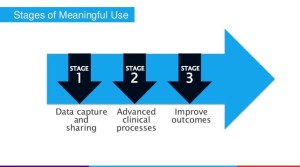
Centers for Medicare and Medicaid Services and ONC have released final rules for the EHR Incentive Programs, which they say will ease reporting requirements for providers and allow for 90-day reporting periods…also announced major news on Stage 3 of the program…CMS made some…big changes to the regulations:
- Give providers and state Medicaid agencies 27 months, until Jan. 1, 2018, to comply with the new requirements and prepare for the next set of system improvements.
- Give developers more time to create the next advancements in technology that CMS says will be easier to use and more appropriate to new models of care and access to data by consumers.
- Support provider exchange of health information and interoperable infrastructure for data exchange between providers and with patients.
- Address health information blocking and interoperability between providers.
- Express Scripts to cover pricey new cholesterol treatments (washingtonpost.com)Pricey new cholesterol Rx covered by big drug plan, but... (cnbc.com)
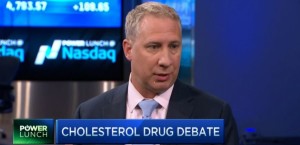
..nation’s biggest pharmacy benefits manager has decided to cover two new drugs that lower…cholesterol but raise concern over prices that can top $14,000 a year…Express Scripts said…that it will pay for prescriptions of…Repatha as well as Praluent…under a few conditions designed to control costs…It will require prior approval…before any prescriptions are filled…will need to see a patient’s cholesterol levels first as well as proof that the older statins failed…is requiring the drugmakers to provide rebates if prices climb more than a set amount each year…Express Scripts also has agreed to cover any costs that exceed a certain amount per person, annually.
- 4 facts on why importing drugs is bad for patients (catalyst.phrma.org)
Ensuring patients have access to needed medicines is critical, but importing medicines, whether from Canada or elsewhere in the world, is the wrong answer…Due to the Food and Drug Administration’s comprehensive drug approval process, medicines on the U.S. market are widely regarded as the safest in the world. The U.S.’s relatively closed distribution system plays a critical role in helping to keep the global proliferation of counterfeit medicines from infiltrating the U.S. prescription medicine system…Importation is often viewed as a means to lower drug costs, but these proposals ignore key facts about how importation impacts patient safety and access to new, innovative treatments. Consider the following four facts:
- To date, not a single Secretary of the U. S. Department of Health and Human Services has been able to certify that importation will both 1) pose no additional risk to public health and safety, and 2) generate cost-savings that are passed on to American consumers.
- Foreign governments will not ensure that prescription drugs entering the U.S. from abroad are safe and effective.
- There is no guarantee any potential savings generated from the importation of medicines will be passed on to the patient.
- Counterfeiters are becoming increasingly sophisticated with their technology and pose a significant health and safety risk to patients.
- 5 tips for fighting cybercrime (healthcareitnews.com)

If you want to know how well a health system is protecting against cybercrime, you would have better luck talking to the criminals…IT executives…in the healthcare industry – aren't doing a good job keeping the enterprise up to date on cyber threats, and that those looking to steal and make a profit from health information are much more informed… five tips for fighting cybercrime:
- Network segmentation: Make sure only those who need to see sensitive information have access privileges
- Dedicated incident response team: Set up a chain of command in the event of a breach, with roles clearly defined. In short, expect a breach, and plan accordingly
- Teach with breaches: Show staff what happens when a breach occurs, reviewing how other breaches have occurred and how they could have been avoided, so they're dealing with concrete examples rather than invented scenarios
- Drill your breach response: Practice often, so staff instinctively know what to do if/when something happens
- Include partners: With reports indicating as many as one-third of all healthcare data breaches are caused by vendors, it's wise to invite them and all others to the party
- Increasing Cost of Prescription Drugs: Capitalism should’t be blamed, it must be the government (nevadanewsandviews.com)

We are on the verge of a healthcare crisis in America. It is apparent that the cost of prescription drugs in this country is skyrocketing out of control, and it saddens me that government is at the root of the problem…What we are experiencing today is in no way a failure of capitalism, but rather a failure of government…as it stands, federal government regulations have made it so that pharmaceutical companies can charge whatever they want for…medications, If we really want to lower the cost of prescription drugs in this country, we must allow competition to flourish. This will make it so that all drug companies have to set fair prices in order to compete…