
- PharmTalk – Specialty Pharmacy (pharmacy.arizona.edu)
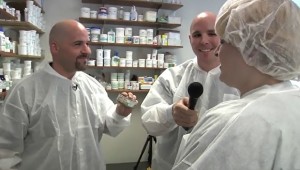
PharmTalk is a special production from the University of Arizona, College of Pharmacy that features Keith and Kevin Boesen.
Not every drugstore is the same. Some pharmacists work in small stores that provide specialized services for people with particular needs, like HIV or cancer.
- Xerox tackles opioid abuse in Mo. (drugstorenews.com)

Xerox announced…that it would be continuing its partnership with MO HealthNet, Missouri’s Medicaid division, to help combat prescription drug abuse by coordinating patient care between providers, MO HealthNet and pharmacists…Xerox’s prescription clinical authorization tool, pharmacists can investigate whether a patient recently received an opioid prescription and will receive a notice to acquire prior authorization before dispensing it…Missouri does not have a statewide, electronic prescription drug monitoring program, so physicians and pharmacists have limited visibility into other medications a patient has...
- State Efforts to Reform Secretive Pharmacy Benefit Manager Pricing Policies Gain National Momentum | Commentary (blogs.rollcall.com)
Americans today rightly demand more transparency...It is the foundation upon which to assess accountability, performance and trust… the Senior Care Pharmacy Coalition — a coalition dedicated to representing the exclusive legislative and regulatory interests of independent Long Term Care pharmacies and the vulnerable patients they serve — hopes to work with Congress on reforms that both increase transparency in drug pricing practices and ensure protection against Medicare Part D pricing policies that hinder LTC pharmacies’ ability to delivery quality pharmaceutical care and services...
- Pharmacy Week in Review: September 11, 2015 (pharmacytimes.com)
Ashley Talamo, Publisher: Pharmacy Times...(PTNN) This weekly video program highlights the latest in pharmacy news, product news, and more. (video)
- Retail clinics, apps change doctor-patient relationship (bigstory.ap.org)
Doctors say primary care is growing fragmented and turning into more of a commodity, with physician access based on what consumers will pay…the role of primary care has diminished ... and I don't see encouraging signs that it is having a renaissance,.. the result of technology and competition creating more convenient options for care that does not require an in-person doctor visit… changes have helped make basic care more accessible to patients and lowered the cost per visit for many consumers… Patients are opting for drugstore clinics over doctor's offices, and many will soon start wondering why they even need to leave the house when smartphone apps let them chat live with a physician.
- NCPA rolls out online community lab testing platform (drugstorenews.com)

National Community Pharmacists Association…announced that it will collaborate with consumer-direct lab testing innovator, Ulta Lab Tests, to roll out an online community lab testing platform to participating community pharmacy members across the country. The arrangement will offer community pharmacy patients direct access to lab tests and health screenings...customers can order select low-priced lab tests without the need to obtain a prescription from a local physician…then can easily access lab test information…review and track their test results for each biomarker from their personal and secured dashboard at their convenience.
- Lower Blood Pressure Guidelines Could Be ‘Lifesaving,’ Federal Study Says (nytimes.com)

Declaring they had "potentially lifesaving information," federal health officials said on Friday that they were ending a major study more than a year early because it has already conclusively answered a question cardiologists have puzzled over for decades: How low should blood pressure go? The answer: way lower than the current guidelines… The study found that patients who were assigned to reach a systolic blood pressure goal below 120 — far lower than current guidelines of 140, or 150 for people over 60 — had their risk of heart attacks, heart failure and strokes reduced by a third and their risk of death reduced by nearly a quarter.
- Inpatient Payment Rule for 2016 Continues Volume-to-Value Shift (ashp.org)
Medicare program's shift from volume to value continues with the finalization of the regulation setting inpatient payment rates for fiscal year 2016, the Centers for Medicare and Medicaid Services announced on July 31…annual update to Medicare's inpatient prospective payment system affects discharges occurring on or after October 1, 2015,..
- Hospital-acquired conditions reduction program…will continue its policy of reducing by 1% the reimbursement rate of hospitals in the bottom performance quartile...
- Value-based purchasing program…incentivizes rather than penalizes hospitals, will include new measures during 2016 that will be used for 2018 payment calculations, including one measure directly related to medication use.
- Add-on payments…authorizes a "new technology add-on payment" for blinatumomab,…for the treatment of a form of B-cell acute lymphoblastic leukemia…maximum add-on payment for the drug during 2016 is $27,017.85 per case,..authorize add-on payments for new technologies or medical services—including drugs—that produce greater clinical benefits than existing technologies..
- Update on "two-midnight rule."…rule was intended to clarify when patients should be treated as outpatients—generally under observation status—or admitted as inpatients…patients who are expected to require care spanning two midnights (i.e., 12:00 a.m. on two consecutive days) should be admitted as inpatients,… although inpatients and patients on observation status receive the same care, observation patients face higher out-of-pocket costs for medications because Medicare pays differently for drugs in inpatient and outpatient settings.
- Diplomat Pharmacy sells compounding business to focus on specialty (drugstorenews.com)

Restore Health…it has entered into an agreement to acquire the compounding pharmacy assets of Diplomat Pharmacy… services include the preparation of personalized medications for patients and compounding pharmacists who work with prescribers to customize a medication to meet a patient's specific health needs.
- ‘Jiffy’ Health Clinics Save Patients Money and Time, Undermine Obamacare (news.heartland.org)
"Jiffy" health care clinics represent one of the fastest-growing sectors of the health care industry, providing quick, convenient, and affordable primary care services without the long waits and higher costs of traditional family practices…In-and-out health clinics exist in states across the country and are often located inside pharmacies, such as CVS and Walgreens, as well as in grocery stores and large retail stores…more than ever, patients are looking for convenient and inexpensive ways to receive care, and the model utilized by in-and-out health facilities offers a seemingly perfect solution.