
- Better insurance coverage of non-drug therapies might help ease opioid crisis (reuters.com)Coverage of Nonpharmacologic Treatments for Low Back Pain Among US Public and Private Insurers (jamanetwork.com)

When it comes to non-drug therapies for back pain, U.S. insurance plans vary widely in what they will cover, a new study finds...Private and public insurers are missing important opportunities to promote alternatives to opioids...insurers often provide little or no coverage for evidence-backed interventions for chronic pain such as acupuncture and psychological counseling...“Insurers can be part of the problem or part of the solution,” said study coauthor Dr. Caleb Alexander...at the Center for Drug Safety and Effectiveness...“All too often doctors reach for the quick solution, prescription drugs, especially opioids, to manage pain that would be more effectively and safely treated with non-pharmacological approaches,” Alexander said. “This is a system that is designed with, and fosters, the idea that there is a pill for every ill...
- October 5 Pharmacy Week in Review: 2018 Next Generation Pharmacist Awards, Vaccines for Health Care Professionals (pharmacytimes.com)

Nicole Grassano, PTNN, Pharmacy Week in Review, this weekly video program provides our readers with an in-depth review of the latest news, product approvals, FDA rulings and more.
- Scientists behind game-changing cancer immunotherapies win Nobel medicine prize (reuters.com)2018 Nobel Prize in Medicine Awarded to 2 Cancer Immunotherapy Researchers (nytimes.com)

Tasuku Honjo and James P. Allison
American James Allison and Japanese Tasuku Honjo won the 2018 Nobel Prize for Physiology or Medicine on Monday for game-changing discoveries about how to harness and manipulate the immune system to fight cancer...The seminal discoveries by the two Laureates constitute a landmark in our fight against cancer...Allison...worked on a protein known as CTLA-4 and realized that if this could be blocked, a brake would be released, unleashing immune cells to attack tumors...Honjo...separately discovered a second protein called PD-1 and found that it too acted as an immune system brake, but with a different mechanism...The discoveries led to the creation of a multibillion-dollar market for new cancer medicines. In particular, drugs targeting PD-1 blockade have proved a big commercial hit, offering new options for patients with melanoma, lung and bladder cancers...
- September 28: Pharmacy Week in Review: Bills Receive Congressional Approval to Prohibit Gag Clauses (pharmacytimes.com)

Nicole Grassano, PTNN, Pharmacy Week in Review, this weekly video program provides our readers with an in-depth review of the latest news, product approvals, FDA rulings and more.
- Nevada again lands at bottom of national health-care ranking (reviewjournal.com)Nevada treading water despite efforts to address doctor shortage (reviewjournal.com)
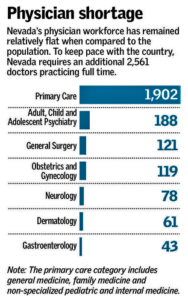
Despite improvements in several areas, Nevada is once again listed at the bottom of a new national health care ranking...Nevada ranked 50th nationwide in a review of more than 100 population-level and patient-level measures published by the Agency for Healthcare Research and Quality. Only the District of Columbia scored lower overall than the Silver State...“There (are) actually areas where Nevada does fairly well — chronic disease care, diabetes, heart failure, stroke...Access to care remains a big problem. Nevada’s physician workforce hasn’t kept up with the state’s ballooning population, causing a doctor shortage...issues in accessing care, including getting an appointment with a primary care physician, having enough time in a doctor’s office and finding a specialist.
- AmerisourceBergen to pay $625 million in U.S. civil fraud settlement (reuters.com)

AmerisourceBergen Corp...will pay $625 million to resolve civil fraud charges over the sale of syringes containing drugs for cancer patients, double billing, and providing kickbacks to doctors...The settlement...boosts AmerisourceBergen’s total payout to $885 million over its repackaging and distribution of pre-filled syringes that were not approved by the Food and Drug Administration...AmerisourceBergen admitted that from January 2001 to January 2014, its Medical Initiatives Inc pharmacy unit in Alabama shipped millions of syringes for patients undergoing chemotherapy that contained drugs prepared in an unsterile environment...Authorities said AmerisourceBergen would harvest “overfill” from the original vials of such drugs as Aloxi, Anzemet, Kytril and generic Kytril, Neupogen and Procrit...That enabled the company to create more doses than it bought, and generate at least $99.6 million of extra profit...
- New REMS for Immediate-Release Opioids in Outpatient Settings – Training for Pharmacists and Nurses, Not Just Prescribers (ptcommunity.com)
The FDA has approved a final Opioid Analgesic Risk Evaluation and Mitigation Strategy (REMS) that includes several measures to help better communicate the serious risks about the use of opioid pain medications to patients and health care professionals. This expanded REMS, for the first time...
- ….applies to immediate-release (IR) opioid analgesics intended for use in an outpatient setting. The new REMS also applies to the extended-release and long-acting (ER/LA) opioid analgesics…
- ….training be made available to health care providers who are involved in the management of patients with pain (e.g., nurses and pharmacists), and not only to prescribers.
- ...education cover broader information about appropriate pain management, including alternatives to opioids for the treatment of pain.
- ...new product labeling containing information about the health care provider education available through the new REMS.
- ,,,the agency has approved the new FDA Opioid Analgesic REMS Education Blueprint for Health Care Providers Involved in the Treatment and Monitoring of Patients with Pain (Blueprint). This includes updated educational content.
- This Week in Managed Care: October 5, 2018 (ajmc.com)
Laura Joszt, Managing Editor at The American Journal of Managed Care. Welcome to This Week in Managed Care from the Managed Markets News Network
- FDA Warns of Dosing Errors With Compounded Injectables (raps.org)
The Food and Drug Administration last week warned that differences in how drugmakers and compounders label the strength of injectable drugs may lead to dangerous dosing errors..."Conventional manufacturers label their injectable products with the strength per total volume as the primary and prominent expression of strength on the label, whereas some compounders label their injectable products differently,"...For small volume parenteral drugs and biologics, FDA recommends that strength per total volume be the primary and most prominent expression of strength, followed by strength per milliliter enclosed by parentheses...two recent MedWatch reports cited medication errors that led to patients overdosing on compounded injectables that featured strength per milliliter more prominently on the labels than the strength per total volume...Such mix-ups could be avoided...if compounders were to follow the same labeling conventions as traditional drugmakers, though FDA does not review the labels of compounded drugs before they are sold.
- This Week in Managed Care: September 28, 2018 (ajmc.com)

Laura Joszt, Managing Editor at The American Journal of Managed Care. Welcome to This Week in Managed Care from the Managed Markets News Network