
- This Week in Managed Care: April 6, 2018 (ajmc.com)

Laura Joszt, Managing Editor at The American Journal of Managed Care. Welcome to This Week in Managed Care from the Managed Markets News Network
- Ohio regulator orders insurers, benefit managers to give lowest drug price (reuters.com)

The Ohio Department of Insurance said...that pharmacy benefit managers and insurers would have to disclose the lowest price for a prescription drug for Ohio consumers, part of a move to prevent insured consumers potentially paying more than those without insurance...Two of the largest pharmacy benefit managers, Express Scripts Holding Co. and CVS Health Inc said their contracts include clauses by which members receive the lowest cost automatically...The agency said it would ban the practice in which some insurers and pharmacy benefit managers use contractual provisions to prevent pharmacists from discussing with consumers if low-cost options are available for prescriptions, effective immediately...It would also prohibit them from charging customers a higher amount for prescription drugs than what it would otherwise cost without insurance coverage
- This Week in Managed Care: March 30, 2018 (ajmc.com)
Laura Joszt, Managing Editor at The American Journal of Managed Care. Welcome to This Week in Managed Care from the Managed Markets News Network
- FDA issues draft guidance on compounding at outsourcing facilities (biopharmadive.com)

The FDA released a draft version of guidance covering compounding, called "Evaluation of Bulk Drug Substances Nominated for Use in Compounding Under Section 503B of the Federal Food, Drug, and Cosmetic Act Guidance for Industry," directed primarily at outsourcing facilities, addressing the use and qualification of bulk substances in compounding...The proposed rules are an extension of The Drug Quality and Security Act...which identified outsourcing facilities as its own category, separate from traditional compounders...Active pharmaceutical ingredients must be accompanied by a monograph from an appropriate governing party (if a monograph exists), must be made in a facility that has prior approval, and must come with a certificate of analysis (to prove they been characterized)...The agency proposes two specific ways to tell if a compounded drug at an outsourcing facility is safe: whether attributes of the approved drug may make it unsuitable to treat certain patients for particular conditions (including whether the compounded drug is intended to address that attribute), and second, if certain factors for each substance being proposed for use in a compounded drug product – specifically, "its physical and chemical characterization, possible or known safety issues, evidence or lack of thereof of effectiveness, and historical use" — would preclude its use by a third-party facility...The agency says the plan will "clarify and appropriately tailor the policies for traditional compounding pharmacies and the outsourcing facilities that may supply a broader market."...
- Pharmacy Week in Review: April 6, 2018 (pharmacytimes.com)

Nicole Crisano, PTNN. This weekly video program provides our readers with an in-depth review of the latest news, product approvals, FDA rulings and more.
- Study Estimates Nonoptimized Medications Cost the U.S. $528.4 Billion Annually (ptcommunity.com)

Researchers propose that pharmacists can help improve medication-related care and lower costs...the actual cost of prescription medications is more than just the dollars and cents on the bill, according to a recent study. Researchers...estimate that illness and death resulting from nonoptimized medication therapy costs $528.4 billion annually...when you’re sick, a health care professional prescribes you a medication, you take it as directed, and you get better...But what happens a lot of the time is the medication regimen is not optimized...the prescription may not be exactly appropriate for your indication—not quite the right medication or dose—or you just don’t take the medication for whatever reason, don’t take them as directed, or the medication causes an adverse event or a new health problem...the current cost of each possible consequence...illnesses and deaths that result from nonoptimized medication therapy to be $528.4 billion...Nonoptimized medication therapy is a massive avoidable cost. If medications were prescribed, monitored, and taken properly, we wouldn’t face this cost, and patients would be healthier...To improve medication-related care...authors...would like to see a systematic and coordinated effort to break down prescriber–pharmacist silos and expand comprehensive medication management programs, in which clinical pharmacists have access to complete medical records, improved dialogue with other members of a patient’s health care team, and input as a medication is prescribed—similar to what is now taking place at many U.S. Veterans Affairs clinics.
- Pharmacy Week in Review: March 30, 2018 (pharmacytimes.com)
Nicole Crisano, PTNN. This weekly video program provides our readers with an in-depth review of the latest news, product approvals, FDA rulings and more.
- CVS Health eyes kidney patients for next expansion into care (cnbc.com)

CVS Health is now planning to treat kidney failure patients, as the national drugstore chain continues to branch deeper into monitoring and providing care...it will offer home dialysis for patients through its Coram business, and it is working with another unspecified company to develop a new device for that...The companies will start a clinical trial of their device this year...CVS Health will begin its expansion into kidney care with a program that helps identify chronic kidney disease early. It will then connect those patients with nurses for training and nutritional counseling to help delay the need for dialysis...CVS Health Corp. has been broadening its reach beyond drugstores for years. It also runs a pharmacy benefit management business and is spending $69 billion to buy the insurer Aetna. It also has been expanding care offered through its more than 9,800 locations (1,100 clinics).
- Come for your drugs, leave with more shopping: Walmart’s new growth strategy? (reuters.com)
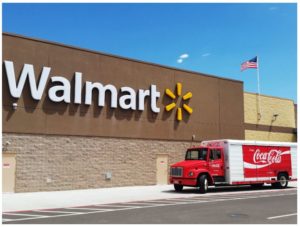
Walmart Inc’s efforts to develop closer ties with health insurer Humana Inc, which came to light...point to a brave new world of retail where superstores become healthcare centers offering basic medical care...They are also aimed at boosting Walmart’s slowing growth in brick-and-mortar store sales as it faces increasing pressure online from Amazon.com Inc. Deepening its existing partnership with Humana, or even acquiring the company outright, could be a step toward turning its 4,700 or so U.S. stores into healthcare centers that aim to attract more shoppers over 65...The end goal here is to get more people in their stores, get them to buy drugs and make an additional purchase while they are in the store...If Walmart can offer “competitive rates” on primary care and other health services...it “can grow traffic and push store visits.”...“It allows them to get ahead of everybody from warehouse club operators like Costco, Target and other retailers who run chain drugstores as well as food and drug combo operators like Kroger and Wegmans.”...
- Aetna will pass drug discounts along to some members at the pharmacy counter (marketwatch.com)

Aetna Inc. will automatically pass along drug rebates to a portion of its members starting in 2019....The policy will be applied to Aetna’s employer-sponsored group health plans, benefiting an estimated three million individuals. The population makes up a minority share of Aetna’s 22.2 million medical members...UnitedHealth Group Inc. made a similar move earlier this month, in what appears to be the first such instance. UnitedHealth’s decision was also geared towards health plans that UnitedHealth insures on behalf of employers...Aetna had previously passed “the majority of rebates” to plan sponsors and their employees through lower premiums, but is making the change in the hope that “additional transparency will encourage [drug] companies to rationalize their prices and end the practice of annual double-digit price increases...