
- This Week in Managed Care: December 1, 2017 (ajmc.com)
Laura Joszt, assistant managing editor at The American Journal of Managed Care. Welcome to This Week in Managed Care from the Managed Markets News Network
- UN: About 11 percent of drugs in poor countries are fake (ktvn.com)
About 11 percent of medicines in developing countries are counterfeit and likely responsible for the deaths of tens of thousands of children from diseases like malaria and pneumonia every year, the World Health Organization said...It's the first attempt by the U.N. health agency to assess the problem. Experts reviewed 100 studies involving more than 48,000 medicines. Drugs for treating malaria and bacterial infections accounted for nearly 65 percent of fake medicines... Between 72,000 and 169,000 children may be dying from pneumonia every year after receiving bad drugs. Counterfeit medications might be responsible for an additional 116,000 deaths from malaria mostly in sub-Saharan Africa...Counterfeit drugs include products that have not been approved by regulators, fail to meet quality standards or deliberately misrepresent an ingredient...In 2013, WHO set up a voluntary global monitoring system for substandard and fake drugs and has received reports of about 1,500 problematic medicines including drugs that claim to treat heart problems, diabetes, fertility problems, mental health issues and cancer. WHO also reported problems of fake vaccines for diseases including yellow fever and meningitis...
- Heated And Deep-Pocketed Battle Erupts Over 340B Drug Discount Program (khn.org)
A 25-year-old federal drug discount program has grown so big and controversial that it faces a fight for survival as federal officials and lawmakers furiously debate the program’s reach...The program, known as 340B, requires pharmaceutical companies to give steep discounts to hospitals and clinics that serve high volumes of low-income patients...The Centers for Medicare & Medicaid Services...cut Medicare payments for hospitals enrolled in the program by 28 percent...About 40 percent of the hospitals in the U.S. now buy drugs through the program...the hospital lobbying group 340B Health, said that for some small, rural hospitals the funding cut “could actually be the difference between staying open and closing.”...those supporting the cut, including drugmakers, argue that the program has grown beyond its original intent because hospitals have pocketed the discounts to pad profits — not to help indigent patients...Stephen Ubl, president of drug industry group PhRMA, said the program “needs fundamental reform” and that the latest rule change is merely a good first step. His group, which has deep pockets and an advertising campaign geared at pinpointing the program’s flaws, has a list of changes that Congress and the Trump administration could tackle. Those include limiting which hospitals should be eligible for 340B price breaks and making sure needy patients benefit when hospitals buy discounted drugs.
- CVS may have a secret weapon against Amazon’s move into healthcare (CVS, AMZN) (markets.businessinsider.com)
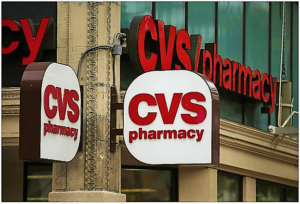
CVS is reportedly in talks to buy Aetna in a deal that could help protect its business from the entry of the tech giant in to the healthcare space...CVS should focus on its vertical integration strategy, according to Morgan Stanley, and steer clear of gong head to head with Amazon in next day or same day delivery...Don't go head-to-head with Amazon...Goldwasser said that CVS' strength is its vertical integration. CVS has made a number of acquisitions over the past decade, such as Caremark RX, a pharmacy benefits manager, Omnicare, a leading pharmacy services provider and Target's pharmacy and retail clinic businesses. That push puts the company on a better footing to engage consumers, improve access to care, and deliver cost savings, he said.Goldwasser said however that any plans to go head-to-head with Amazon in next-day or same-day delivery service of prescriptions may impact the company's front-store sales. CVS already offers this service and plans to expand it to all of its locations in 2018.
- Pharmacy Week in Review: December 1, 2017 (pharmacytimes.com)
Nicole Crisano, PTNN. This weekly video program provides our readers with an in-depth review of the latest news, product approvals, FDA rulings and more.
- New FIP report on the role of pharmacists in reducing harm associated with drugs of abuse includes marijuana (fip.org)Reducing harm associated with drugs of abuse: The role of pharmacists (fip.org)
New FIP report on the role of pharmacists in reducing harm associated with drugs of abuse includes marijuana...The value of involving pharmacists in reducing harm from drugs of abuse is highlighted in a report released...by the International Pharmaceutical Federation (FIP). The report describes harm reduction services such as needle exchange and opioid substitution in different regions and countries, including Europe, the USA, Canada, central Asia and the Middle East...FIP’s Working Group on Pharmacists’ Role in Harm Reduction...would like pharmacy organisations to engage with policymakers and health authorities to remove barriers to more involvement of pharmacists in harm reduction services...the benefits of harm reduction are many — both to individuals and society — including prevention of infection by HIV and hepatitis C, fewer overdoses and less drug-related criminal activity...The report specifies that a comprehensive service should include: syringe and needle exchange (with the provision of low-dead space syringes where possible); opioid substitution therapy (preferably with pharmacist prescribing or dose adjustment); naloxone supply for overdoses (including pharmacist-initiated supply); and health promotion (including advice on sexual health).
- This Week in Managed Care: November 24, 2017 (ajmc.com)
Laura Joszt, assistant managing editor at The American Journal of Managed Care. Welcome to This Week in Managed Care from the Managed Markets News Network
- Dark web drug market growing rapidly in Europe: report (reuters.com)Drugs and the darknet: perspectives for enforcement, research and policy (emcdda.europa.eu)

The illegal drug trade on the dark web is growing rapidly, despite authorities shutting down major market sites like AlphaBay, as crime gangs diversify and seek new clients online, a report by two European Union agencies warned...The report, which is the first of its kind to analyze the drug trade in Europe on the dark web, showed that online markets are becoming increasingly sophisticated and offering growing numbers of illegal products to buyers...Users are largely anonymous and untraceable and mainly pay with cryptocurrencies like bitcoin...Two thirds of dark web transactions involve drugs, the report by Europol and EMCDDA (The European Monitoring Centre for Drugs and Drug Addiction) found. The biggest European markets are Germany, Britain and the Netherlands. From 2011-2015, drugs worth more than 170 million euros were sold over the dark web worldwide, including nearly 80 million euros worth in Europe...the dark web is an increasingly attractive market because buyers and sellers are anonymous and there is a perception that drugs bought there are good quality...
- FDA issues guidance that could make it easier for EpiPen rivals to come to market (cnbc.com)
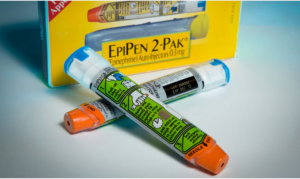
When the controversy over the price of the EpiPen exploded late last summer, many consumers asked why there was no substitutable generic version available...The answer was complex: while the key ingredient in the anaphylaxis treatment, epinephrine, has been available for decades and is no longer covered by a patent, the delivery device proved hard for generic competitors to copy to a degree that would satisfy regulators...the Food and Drug Administration announced guidance seeking to change that, potentially streamlining a path to market for generic copies of complex medicines like the EpiPen and others...The FDA guidance says that generic copies with some design differences may be approved as substitutable products, as long as those differences don't affect patients' ability to use the product the way it's intended...Dr. Scott Gottlieb, said.."Under this guidance, so long as the generic applicant is able to demonstrate with data, where appropriate, that differences in design of the generic product do not affect the clinical effect or safety profile when the generic is substituted for the branded product, the generic product can be approved as a competitor to the branded drug where all other requirements for generic approval are met,"...
- Pharmacy Week in Review: November 24, 2017 (pharmacytimes.com)
Nicole Crisano, PTNN. This weekly video program provides our readers with an in-depth review of the latest news, product approvals, FDA rulings and more.