
- U.S. drug pricing watchdog gets funding to expand efforts (reuters.com)
The...Institute for Clinical and Economic Review (ICER) announced a three-year, $13.9 million grant from the Laura and John Arnold Foundation, which follows its initial two-year $5.2 million award from the foundation in 2015...ICER has previously issued reports outlining what it believes to be an appropriate cost for new medicines to treat high cholesterol, lung cancer, hepatitis C and other conditions, typically suggesting a value to patients that is a fraction of prices set by drugmakers...The new funding will enable ICER to evaluate all newly approved medicines, rather than select high profile drugs...Pharmacy benefit managers, insurers and government agencies have all used ICER reports in negotiating pricing and preferred formulary placements with manufacturers, ICER President Steven Pearson said in an interview, mentioning Express Scripts, CVS Health, the U.S. Department of Veterans Affairs and others...Rather than working from list prices as it did initially, ICER now attempts to “come up with a more precise estimate incorporating average net prices, taking rebates into account, to determine what it considers fair value-based pricing,” Pearson said...“We want to come up with an approach at ... determining when price increases are or aren’t justified,”...
- Pharmacy Week in Review: November 2, 2017 (pharmacytimes.com)

Nicole Crisano, PTNN. This weekly video program provides our readers with an in-depth review of the latest news, product approvals, FDA rulings and more.
- Why CVS Won’t Buy Aetna (forbes.com)
Even before reports surfaced...claiming that CVS Health was in talks to buy Aetna, the nation’s third-largest health insurer, the two were known to be discussing forming closer ties...But a full-blown merger of the healthcare giants would be complicated and unlikely given recent antitrust scrutiny in the sector and given that the drugstore chain is already going into business with an Aetna rival, Anthem...Anthem just last week said it was forming its own pharmacy benefit management company, IngenioRx, with CVS, which operates a PBM. That was seen as a way to compete with the nation's largest health insurer, UnitedHealth Group, which owns the PBM OptumRx...But for CVS to operate a PBM with Anthem, the No. 2 health insurer, while owning Aetna, the No. 3 insurer, would be highly unusual coming off a period of intense antitrust scrutiny of the health insurance industry.
- Week in Review: October 27, 2017 (pharmacytimes.com)
Nicole Crisano, PTNN. This weekly video program provides our readers with an in-depth review of the latest news, product approvals, FDA rulings and more.
- Director of UNLV HIV program kicked off campus (reviewjournal.com)UPDATE: UNLV reopens HIV clinic on day of court hearing (unlvfreepress.com)

Dr. Echezona Ezeanolue
The maternal-HIV program at UNLV that was suspended by the university six weeks ago without notice is now without a director...The university...placed Dr. Echezona Ezeanolue, the program’s director, and Dina Patel, a pediatric nurse practitioner, on administrative leave. They were escorted off the campus...Shawn Gerstenberger, dean of the school of community health sciences, asked the university to prosecute Ezeanolue and Patel for various “unsubstantiated claims of wrongdoing.”...the grant-funded program, which provides outpatient HIV primary care services to low-income, vulnerable and medically underserved women, infants, children and youth, was suspended by the university six weeks ago...President Len Jessup said previously that there were irregularities with the way the grant is being administered. Gerstenberger said an administrative audit is underway.
- CMS Shifts Coding and Payment Policy for Biosimilars Under Medicare Part B (raps.org)
The Centers for Medicare and Medicaid Services...announced that it would finalize a policy to separately code and pay for biosimilar products under Medicare Part B, signaling a win for industry...CMS said it is making the change as it was "persuaded that that there is a program need for assigning Part B biosimilar biological products into separate HCPCS [Healthcare Common Procedure Coding System] codes, specifically that this policy change will address concerns about a stronger marketplace, access to these drugs in the United States marketplace, provider and patient choice and competition."...industry groups and companies urged CMS to revise its biosimilar reimbursement policy to provide for separate HCPCS codes for each biosimilar and to reimburse each biosimilar based on its own average sale price..."Effective January 1, 2018, newly approved biosimilar biological products with a common reference product will no longer be grouped into the same HCPCS code. We will issue detailed guidance on coding, including instructions for new codes for biosimilars that are currently grouped into a common payment code and the use of modifiers....
- What’s Causing America’s Rural Health Insurance Crisis? (realclearhealth.com)

...numerous rural health insurance markets have teetered on the brink of collapse. Rural areas have long posed a special challenge to health care policymakers, but a poorly-designed system of subsidies for rural hospital care has turned this into a crisis. It has fostered a rural hospital market structure that has crippled the ability of private insurers to negotiate reasonable payment rates, without fully securing the provision of essential care. By refocusing federal assistance on emergency care, it should be possible to restore rural insurance markets to health, while improving the affordability and access to care available to residents...MedPAC (Medicare Payment Advisory Commission)...has argued that CAHs (Critical Access Hospitals) are “not the best solution”, as “many small towns do not have the population to support efficient, high-quality inpatient services.” MedPAC has proposed...lump-sum payments to cover the overheads needed to provide 24/7 emergency care at geographically isolated outpatient-only facilities and suggested that Medicare reimbursement be extended to care provided by standalone emergency departments...This would focus subsidies to secure emergency services, which must be delivered locally, while leaving elective care to be located efficiently according to market demand. Such a reform would give emergency rural hospital care a firmer financial foundation while restoring payment rules for elective care that would make it possible for insurers to re-enter the rural marketplace.
- This Week in Managed Care: November 3, 2017 (ajmc.com)
Laura Joszt, assistant managing editor at The American Journal of Managed Care. Welcome to This Week in Managed Care from the Managed Markets News Network
- Potential CVS-Aetna merger: Top 6 industry implications (managedhealthcareexecutive.modernmedicine.com)
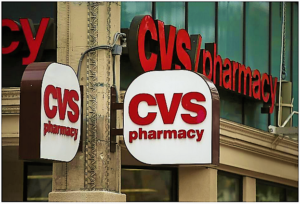
- The way could be paved for other new healthcare models...“Payers should pay close attention to the integration of pharmacy, retail, care management, and patient care that could be possible under a combined company,”...While being early to a merger like this could bode well for CVS-Aetna, it could also give other payers the roadmap they need to explore similar mergers, or scope similar partnerships without the full-scale merging of two companies...
- Intermediaries, which were intended to be the impartial arbiters, now have the ability to control markets on the demand (i.e., formulary) and the supply (i.e., provider networks, their own providers)...“While this has been a concern with the PBM industry for years, it is significantly exacerbated when the overall medical carrier is also the PBM,”...“Economically, why this is more significant is that unlike medical provider systems which have geographic diversity, making it difficult if not impossible to consolidate them, pharmacy chains have little diversity and are already organized into national chains...making it possible to buy and require the usage of their own chain, thereby controlling both what product is purchased, the price, and the supplier.”
- These complex mergers are new categories—neither payer nor provider—for which existing laws are insufficient to regulate...“It is almost impossible for a buyer to understand what they are buying, and in contracting, who is selling what,”...“Every deal now is a complex web of contracts, intermediaries, and providers. It is becoming harder and harder to understand the economics of what services are being purchased and how that compares to other alternatives, especially on the ‘vertically integrated bundles’ that are becoming the norm...
- Big data analytics technology will be front and center...“Big data will become even more important for private and government plans to more effectively coordinate and manage internally owned means of production,”..
- There will be increased negotiating power on large market drugs and fewer mouths to feed in the value chain...“Specialty higher priced drugs will likely not be too affected by the merger, but certainly larger market drugs are going to have potentially big players pushing hard on price and value to patients to drive share...”
- Patients might win—or lose...“The merger likely would lower prices and improve access, which is beneficial for both the pharmaceutical industry and patients,”...
- This Week in Managed Care: October 27, 2017 (ajmc.com)

Kelly Davio, welcome to This Week in Managed Care from the Managed Markets News Network