
- Pharmacy Week in Review: July 20, 2017 (pharmacytimes.com)
Nicole Crisano, PTNN. This weekly video program provides our readers with an in-depth review of the latest news, product approvals, FDA rulings and more.
- UNLV’s first doctors-to-be begin classes Monday (reviewjournal.com)

UNLV’s inaugural class of medical students won’t be listening to heartbeats quite yet, but the stethoscopes they receive on their first day of studies Monday will be put to good use over the next four years...On a landmark day for the university’s long-planned School of Medicine, the first class of 60 students will be presented with the medical instruments that will be their constant companions while they receive their medical educations and beyond during an afternoon celebration at the UNLV Student Union..."It’s a new day for medical education in Nevada," Jason Geddes, vice chairman of the Nevada Board of Regents, said. "The first class looks terrific. I’m looking forward to them getting on campus and getting started on the program."...The students, who were selected partly for their ties to Nevada and are receiving full-ride scholarships as part of the school’s inaugural class, form a gifted group.
- This Week in Managed Care: July 14, 2017 (ajmc.com)

Kelly Davio, Welcome to This Week in Managed Care from the Managed Markets News Network
- Doctors, nurses among hundreds charged with defrauding U.S. health programs (reuters.com)Sessions to Unveil Health-Care Fraud Crackdown This Week, Sources Say (bloomberg.com)

A total of 412 people, including almost 115 doctors, nurses and other medical professionals, have been charged in the sweeping enforcement action, the biggest ever by the multi-agency Medicare Strike Force, the Justice Department said...More than 120 people were accused of illegally prescribing and distributing opioids and other dangerous narcotics...Amazingly, some have made their practices into multi-million-dollar criminal enterprises...Those charged participated in schemes that billed Medicaid, Medicare and TRICARE...for unneeded drugs and treatments that were often never provided...In many cases, healthcare providers paid cash kickbacks to patients and others in exchange for medical data that would allow them to file fraudulent bills to Medicare...In addition to the hundreds charged, the Department of Health and Human Services has launched suspension procedures against almost 300 medical service providers, including doctors, nurses and pharmacists...
- Understanding CMS’s Surprising Reimbursement Cut for 340B Hospitals (drugchannels.net)
Centers for Medicare & Medicaid Services shocked everyone with a proposal altering a small part of the 340B Drug Pricing Program. CMS proposed reducing reimbursement for certain Medicare Part B drugs purchased by 340B-eligible hospitals: from Average Sales Price plus 6% to ASP minus 22.5%. Hospitals will also have to identify 340B claims with a new modifier...CMS explains its rationale for reducing reimbursement to hospitals. It references key studies from the Office of Inspector General, the Government Accountability Office, and the Medicare Payment Advisory Commission...The new ASP-22.5% reimbursement figure is based on a MedPAC study. It estimated that hospitals in the 340B program receive a minimum discount of 22.5% of the Average Sales price (ASP) for drugs paid under the outpatient prospective payment system…Three important items to note:
- The proposal would reduce patients’ coinsurance obligations.
- Manufacturers would not gain from this proposal. CMS designed the proposal to be budget neutral.
- The proposal does not address contract pharmacies.
- U.S. Proposes Deep Cuts to Some Drug Payments Under Medicare (bloomberg.com)The Booming 340B Contract Pharmacy Profits of Walgreens, CVS, Rite Aid, and Walmart (drugchannels.net)The 340B Program Hits $16.2 Billion in 2016; Now 5% of U.S. Drug Market (drugchannels.net)What I Told HHS Secretary Tom Price About the 340B Drug Pricing Program (drugchannels.net)
The U.S. Medicare program...proposed deep cuts to how much it reimburses hospitals to buy drugs under a policy that gives some health facilities access to cheaper medicines...The proposal...by the Centers for Medicare and Medicaid Services, would change the rate paid to hospitals for drugs under what’s known as the 340B program. The program gives hospitals who serve many poor patients access to deep discounts on some drugs. The new proposal would significantly cut the payments hospitals receive for those medications...Medicare would essentially be clawing back most of the discount from hospitals, (without any impact to payment made to drug manufacturers)…Medicare would pay hospitals for drugs purchased through the 340B discount program at a price more consistent with the actual cost hospitals and other providers pay to acquire those drugs. Seniors would see those savings passed on to them in the form of lower copays...The changes would cut seniors’ drug costs in Medicare by $180 million a year...Currently, hospitals are reimbursed for the drugs at their average sales price, plus 6 percent. The proposed rule would pay average sales price, minus 22.5 percent. The proposal would selectively hurt hospitals serving the poor, said Tom Nickels, executive vice president of the American Hospital Association.
- Updating drug labels would greatly help patients — but few companies do it (statnews.com)
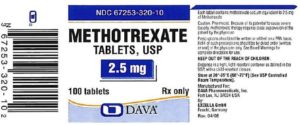
Unfortunately, information contained in the label often lags far behind the evolution of a drug’s use. Drug makers can update product labels to include additional uses when new data supports such modifications. In many cases, though, they don’t do this because there’s little incentive to do so, especially when a drug is no longer being actively marketed or when its patent has expired and it faces generic competition...The problem is widespread...Friends of Cancer Research, found that leading oncologists recommended additional uses beyond those listed on product labels for 79 percent of cancer drugs approved between 1999 and 2011. This means that a large number of well-accepted uses of cancer drugs that emerge over time are completely absent from drug labels...Take the drug methotrexate. Despite being the standard of care for a large number of rheumatologic conditions, the drug label lists only three. When labels are missing critical information like this, particularly regarding diseases other than cancer, insurers often refuse coverage, putting added strain on patients...In the long run, letting labels fall out of date will do a lot of damage by undermining reliance on the drug approval process, which was put in place to protect patients and safeguard public health…
- $1.2M from Nevada AG creates OB/GYN program at UNR (reviewjournal.com)

A $1.2 million allocation from the attorney general’s office to the University of Nevada, Reno Medical School should soon begin producing more pediatric doctors for the state...The funding from a settlement between the attorney general’s office and the drug manufacturer Pfizer is creating an OB/GYN department at the medical school...The new department will provide education for medical students in obstetrics and gynecology, as well as training for primary care residents and research...Having a department dedicated to research and the education of students and physicians in their understanding of women’s health ensures we are delivering the best care for patients...
- Nevada State Board of Pharmacy Newsletter, July 2017 (bop.nv.gov)
- Our Newest Board Member - Melissa Shake
- Prescription Transfers
- National Pharmacy
- WHO Launches Global Patient Safety Challenge on Medication Safety
- Continuous Quality Improvement and Patient Safety Organizations
- NCPDP Releases Guide to Ensure Patients Get Their Medications During a Disaster
- FDA Warns of Illnesses and Deaths in Pets Exposed to Fluorouracil
- FDA Revises Final Guidance Documents on Bulk Drug Substances Used in Compounding
- APhA Resource Guide Applies JCPP Pharmacists’ Patient Care Process to Immunization Services
- CPE Training on Older Adult Fall Prevention Available Online
- New FDA Drug Info Rounds Training Video Addresses the Combat Methamphetamine Epidemic Act
- FDA Presents Series of CE Webinars for Students and Clinicians
- E-Prescribed Faxed Prescriptions
- Biosimilar Uptake Challenges: Low-Cost Specialty Drugs Reduce Provider Profits (specialtypharmacytimes.com)

Biosimilars are heralded as an affordable alternative to expensive biologic medications. Despite their potential to reduce the overall cost of treatment, prescriber uptake has been slow. The primary barrier points towards the current reimbursement model: "buy-and-bill."...CMS incentivizes biosimilar use through differential reimbursement, but private payers generally do not use this approach...In new study...investigators examined the dynamics across provider types to determine the impact of provider setting and payer mix on biosimilar adoption...The health care system uses the "buy-and-bill" reimbursement model because biosimilars are administered by injection or infusion. Under this structure, providers are reimbursed for biologics with an additional percentage of the product price added to cover acquisition, storage, and dispensing costs associated with care...This environment disincentives providers from favoring lower-cost biosimilars because reimbursement for biologics typically ranges from 6% of the drug’s average sales price under Medicare coverage to a more robust 9% to 10% reimbursement from typical commercial plans…In designing this coverage model, CMS...mandated that physicians who dispense biosimilars will be reimbursed at ASP plus 6% of the...price,"..."While this mandate was enacted to remove a disincentive for prescribing biosimilars for patients on Medicare, it does not address considerations for patients covered by commercial insurers."...Patients with commercial insurance represent the majority of billings for most providers in the United States…