
- Pharmacy Week in Review: June 30, 2017 (pharmacytimes.com)
Nicole Crisano, PTNN. This weekly video program provides our readers with an in-depth review of the latest news, product approvals, FDA rulings and more.
- This Week in Managed Care: June 23, 2017 (ajmc.com)
Laura Joszt, assistant managing editor at The American Journal of Managed Care. Welcome to This Week in Managed Care from the Managed Markets News Network
- Will CVS Health’s Point-of-Sale Rebates Deflate the Gross-to-Net Bubble—and Disrupt the PBM Business? (drugchannels.net)
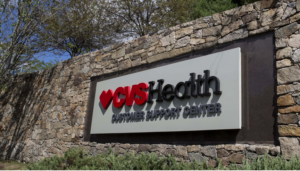
I examined the magnitude of the gross-to-net bubble—the growing spread between a manufacturer’s list price for a drug and the net price to a third-party payer after rebates...The bubble directly affects patients’ out-of-pocket costs. Many patients now have benefit plans with deductibles and are therefore required to pay the full, undiscounted cost of their prescriptions. Patients taking specialty drugs face large coinsurance computed using the undiscounted list price...One solution replaces formulary payments made to plan sponsors with prescription discounts for patients at the point of sale. Last week, CVS Health became the first pharmacy benefit manager to publicly embrace and explain this alternative benefit design...Do point-of-sale rebates solve the patients’ problems that the gross-to-net bubble causes? And will this benefit design mark the beginning of the end for the PBMs’ traditional economic model?
- This Week in Managed Care: June 16, 2017 (ajmc.com)
Laura Joszt, assistant managing editor at The American Journal of Managed Care. Welcome to This Week in Managed Care from the Managed Markets News Network
- New Pain Drug Likely To Face Price Challenges From Payers (forbes.com)

Centrexion Therapeutics announcing six-month data with its drug, CNTX-4975, for the treatment of moderate to severe knee osteoarthritis pain. The results are from a Phase 2b trial...and Centrexion is pretty excited by what has been seen so far:..The new data show large and statistically significant pain relief...a single 1 mg injection...resulted in large levels of pain reduction compared to baseline and statistical separation from placebo...These data represent the largest reductions seen in knee osteoarthritis reported for any drug treatment, marketed or in development…the active component is capsaicin...CNTX-4975 is "based on Centrexion’s proprietary STRATI technology (Synthetic TRans cApsaicin ultra-pure Injection), a highly potent, ultrapure, synthetic form of trans-capsaicin."...In certain ways, CNTX-4975 is reminiscent of the EpiPen. The active component of the latter is epinephrine, which, like capsaicin, is a drug that’s been known for decades. It’s the injector device, however, and not the drug, that drives Mylan’s proprietary position–and price–for the EpiPen. Similarly, the STRATI technology is what protects CNTX-4975 competitively, as anyone can easily access trans-capsaicin. In addition, epinephrine and trans-capsaicin are cheap drugs. These aren’t complex biologic molecules...The major cost will be for the STRATI technology...it is possible that Centrexion and its investors are going to demand premium pricing for the unprecedented pain relief...How will payers react?
- Week in Review: June 23 (pharmacytimes.com)
Kaitlyn Ellie, PTNN. This weekly video program provides our readers with an in-depth review of the latest news, product approvals, FDA rulings and more.
- AMA calls for more transparent prescription costs (healio.com)

In response to the recent spike of many prescription drug prices, the AMA adopted several policies to provide patients with more information about the drugs that they are prescribed and a rationale for price increases…Taken together, these policies would bring much needed transparency to drug pricing and provide a clear benefit to consumers struggling with exorbitant costs…There seems to be no logic — or warning — to these price spikes…The AMA urged federal agencies to require that manufacturers list the suggested retail prices of medications on direct-to-consumer ads...In addition, AMA encouraged drug companies to notify the public of price increases of more than 10% for certain medications over a 12-month period...
- The Benefits of Pharmaceutical Representatives in Health Care (pharmacytimes.com)

I know I am probably going to get some disagreement here and probably some emails (please feel free to!), but I feel that drug representatives have their place in the health care system. It is obvious that their role is to sell the drug they are tasked with selling and as pharmacists we must keep that in mind as we work with them. It is our job to protect and take care of our patients, which is definitely a different goal; however, given the right scenario, it does not have to be a mutually exclusive goal. With that in mind, here are my top reasons I work with and keep in touch with drug representatives:
- If they are selling an innovator or particularly beneficial drug (or vaccine), then both your goal and theirs is to increase the use of that product.
- They can help you with financial assistance programs for their products.
- They can help you when you are in a crunch.
- They can connect you with physician offices.
- They can help market your programs and pharmacy.
- Why did these generic drugs’ prices jump as much as 85%? (marketwatch.com)
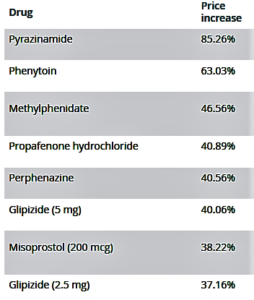
On June 13, as members of a Senate health panel gathered to discuss the rising cost of prescription drugs, the prices of 14 common medications were increased by some 20% to 85%...The blame for rising drug prices once fell squarely on drug makers. But it has shifted at least in part to industry middlemen, with critics saying those companies benefit from high prices and help drive them up. In turn, the middlemen point back to drugmakers, charging that they set the prices in the first place...The corporate blame game can make it hard to determine who is actually benefiting from higher drug prices. June 13’s price increases are a case in point as to why this has become a harder question to answer than it might at first seem...When it comes to drug pricing, AmerisourceBergen is best known as a bellwether for industry trends...competitors including McKesson and Cardinal Health make money based on drug sales and can thus predict how much prices will rise or fall in a given year. And, if they negotiate prices with a pharmacy, they can also play a role in setting prices...when questioned about these increases, executives from drug manufacturers...have pointed instead to pharmaceutical middlemen, which benefit from higher prices, too...But the role of these industry players, including pharmacy-benefit managers...may be shifting out of the regulatory limelight.
- FDA approves new, cheaper rival to EpiPen allergy shot (ktvn.com)
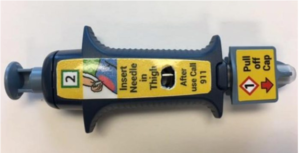
U.S. regulators have approved new competition for EpiPen, the emergency allergy medicine that made Mylan a poster child for pharmaceutical company greed...The Food and Drug Administration on Thursday approved Adamis Pharmaceuticals Corp.'s product, which should go on sale later this year...Symjepi is a syringe prefilled with the hormone epinephrine…Adamis says its product is easier to use than Mylan's EpiPen, a spring-loaded syringe filled with a set dose that comes with a training device...Symjepi also is smaller than EpiPen, so it's easier to fit in a pocket or purse. Most children and adults with severe food or insect allergies carry a device wherever they go and leave a spare at home, school or work...Just three years ago, EpiPens accounted for nearly 90 percent of both revenue and prescriptions filled in the U.S. for epinephrine injectors and syringes...In the first quarter of this year, brand-name EpiPens only drew about 60 percent of epinephrine device prescriptions, while generic EpiPens - mostly Mylan's - had captured 38 percent of prescriptions...